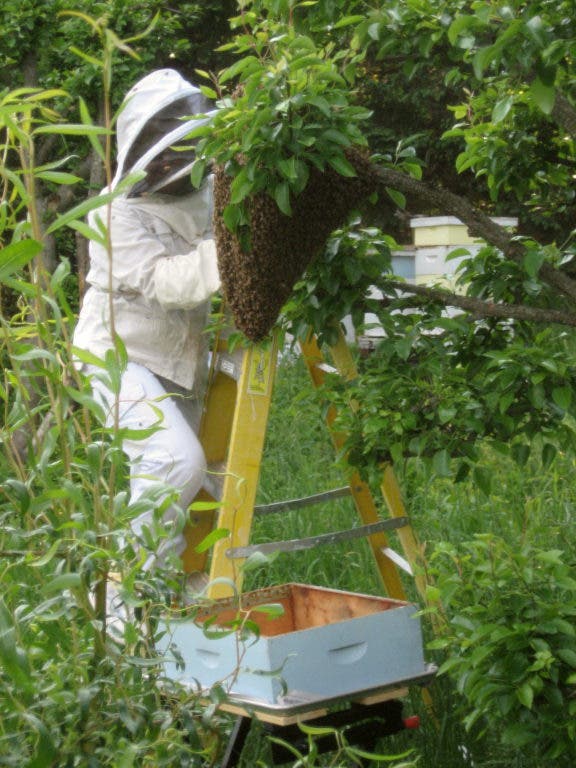
As a beekeeper, panicked homeowners, afraid of getting stung, sometimes call me when a huge swarm of noisy bees appear in their backyard.
In actuality, the swarming bees are just looking for a new home and are highly unlikely to sting.
Swarming is a natural duplication process for honeybees to form a new colony.
Find out what's happening in Hunt Valley-Cockeysvillefor free with the latest updates from Patch.
When a colony is bursting at the seams in its home, with little room to grow, the bees will raise a new queen. The old queen will take off with up to 10,000 to 15,000 bees from the home colony, fly a short distance away and cluster on a tree branch, shrub or other object. The queen is usually centered in this cluster.
After they have settled a bit, scout bees start looking for a suitable new home such as a hollow tree. The swarm can stay in its temporary location for several days as the scout bees do their job.
Find out what's happening in Hunt Valley-Cockeysvillefor free with the latest updates from Patch.
I have observed a swarm in progress several times, and it is quite impressive. The hive gets noisier as bees fly off in a huge wave from the hive box and head for some easily accessible structure, usually a tree. The new queen will remain in the original colony and the remaining worker bees will rebuild the hive.
Beekeepers try to avoid swarms because it splits their population and reduces the likelihood of producing honey to harvest that season. If the swarm originates in a beekeeper’s colony, he will likely capture it and put it in a new hive. But if it’s a wild colony, it can land in an unsuspecting homeowner’s yard.
If a beekeeper is sent to the home, and the swarm is not too far off the ground, he can knock it down with a firm yank into an empty hive box and take it away.
Because bees are expensive, about $125 for a laying queen and brood, beekeepers are usually delighted to take them off your hands. Sometimes beekeepers will charge the homeowner a fee for the service, especially if the swarm is located in a place that's difficult to access.
If you discover a swarm in your yard, the best thing to do is call a local beekeeper. To find one, check out the website for the Central Maryland Beekeepers Association, which keeps a database of beekeepers interested in capturing swarms.