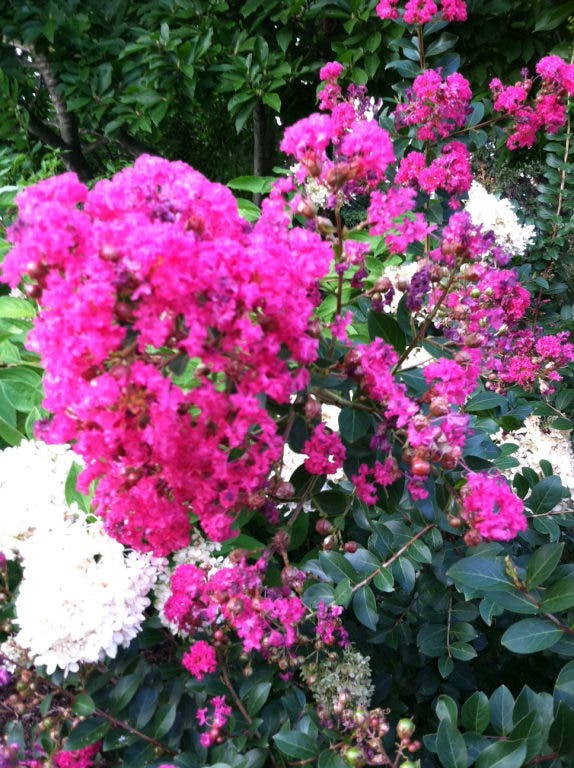
Here in Northern Baltimore County, we forget that we are south of the Mason Dixon Line. That means that we can grow some plants that Pennsylvania and parts north can only dream about. Nandinas, evergreen Magnolias, and Crepe Myrtles are the big three that can thrive here but will not grow in more Northern climes.
Crepe Myrtles are a personal favorite of mine, because they flower in August when little else is in bloom. And what blooms! The flowers are frilled, looking like 'crepe paper', and run the gamut of intense colors from bright pink, orchid purple, lavender, dark red, white, lilac, mauve, and fuschia. To complete the picture of a perfect plant, the bark is a beautiful exfoliating cinnamon color that you can enjoy when the plant is not in bloom.
Crepe Myrtles can be miniature plants just a foot high or giants towering 25 feet high. The ones you see dotting parking lots and commercial plantings are usually multi-stemmed small trees about 12 to 15 feet high. They are slow to send out foliage in the spring, sometimes leafing up in late June so that people sometimes think that they are dead.
Find out what's happening in Hunt Valley-Cockeysvillefor free with the latest updates from Patch.
The foliage is a bright green tinged with purple and burgundy hues and the fall color is outstanding - red, orange and yellow hues that last for weeks in the autumn. These attributes make the Crepe Myrtle a multi-season interest plant, one that is an asset in the landscape.
All Crepe Myrtles demand a lot of sun and heat so place your tree in full sun for the best blooms. I have seen many Crepe Myrtles in partial shade and they bloom sparsely.
Find out what's happening in Hunt Valley-Cockeysvillefor free with the latest updates from Patch.
One variety that I recommend is 'Rhapsody in Pink', a small tree that has burgundy tinged foliage and is covered with lavender pink blooms. There are many other varieties available in the trade and you get can just about any shade that tickles your fancy. It is best to plant them early rather than late so that they have time to root in before winter.