Kids & Family
High Fat, Low Carbs Help Epileptic Severn Girl
Nadiya Pelovitz has a challenging form of epilepsy. But a special high-fat, low-carb diet has helped reduce her seizures.




In many respects, Nadiya Pelovitz is like a typical 7-year-old girl. She likes princesses and The Little Mermaid. She laughs at crude jokes with her older sister. She has fun on family trips to Disney World.
But she doesn’t eat birthday cake. You’ll never get her to chomp on a candy bar. And spaghetti? Forget it.
Nadiya isn’t picky, but is instead held to a strict diet designed to control severe seizures. Instead of typical kid foods, she’ll eat small portions of turkey with slabs of butter. Or applesauce with a piece of turkey and whipping cream. High fat, low carbs.
Find out what's happening in Odenton-Severnfor free with the latest updates from Patch.
It’s called the ketogenic diet, and it’s widely accepted as an effective treatment for those battling seizures.
At first glance, it seems a bit wacky. But to Nadiya’s parents, Jill and Dave, it’s saved their lives and helped their daughter flourish.
Find out what's happening in Odenton-Severnfor free with the latest updates from Patch.
Early Signs
In an interview last week at their Severn home, Jill and Dave Pelovitz said they did not notice anything different about Nadiya when she was born. They acknowledged that in retrospect, there were small signs she was slow to develop, but they didn’t worry at first. Their older daughter, Anastasiya, was slow to develop physically, but turned out fine.
But after several months, they started to see strange behavior, including odd facial expressions and gestures.
“It was just very hard to get her to interact with us,” said Jill Pelovitz, a former middle school teacher who now stays home to care for Nadiya.
Eventually, a neurologist took a look at a electroencephalogram (EEG) and found that Nadiya’s brain waves were often chaotic and disorganized. It was a condition known as hypsarrhythmia, or infantile seizures.
The seizures continued well past Nadiya’s second birthday, and worsened. They were often violent, and lasted longer than an hour. Anti-seizure medications didn’t help much.
“It was a wake-up call that, ‘Wow, this was out of control,’” Jill Pelovitz said. “We were at the point where nothing was working.”
That’s when they learned about the ketogenic diet and met with Dr. Eric Kossoff, a specialist in child neurology at Johns Hopkins, who specialized in treating epilepsy. Kossoff explained that the diet required a special balance of high fat and low carbohydrates, with moderate protein. Meals were heavy on butter and cream, with a small portion of meat. There was no bread or pasta, and virtually no sugar.
“It was so out there and seems so crazy,” Jill Pelovitz said. “It was like, ‘How are we going to manage that? I had a lot of reservations, but I was at the point where I’d try anything.’”
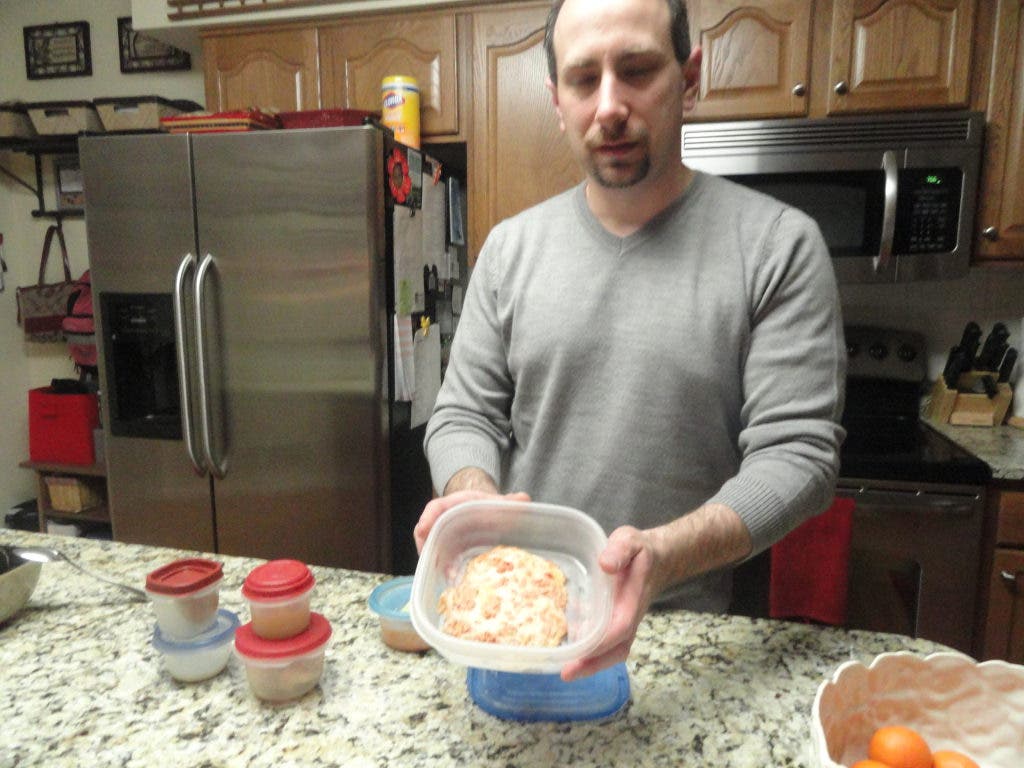
Dave Pelovitz, an IT guy by trade, became Nadiya’s specialty cook, assembling small meals with a very specific balance of fat, carbohydrates and protein. A typical meal included some butter with beef baby food, or whipping cream with a bit of turkey and applesauce. There was even a special “keto” pizza made from egg whites, pepperoni and cheese. It was hardly exciting, but it worked.
Nadiya went on the diet around her third birthday. After an adjustment period, doctors saw positive signs. While Nadiya was not free of seizures, she no longer experienced the most severe, debilitating forms. While on the diet, she was eventually diagnosed with Lennox-Gastaut syndrome, a form of epilepsy that is often associated with cognitive and developmental delays. Getting the seizures under control helped Nadiya improve her physical development and her ability to communicate.
Jill Pelovitz said there was a big moment that summer when the family took a trip to the beach.
“She just stayed there sitting in the sand,” she said. “It blew my mind. We started realizing that she was just locked into a body that doesn’t work properly.”
Not a Fad
The ketogenic diet is rarely the first treatment doctors prescribe for those dealing with seizures. Medications are common, and often quite effective. But for those who aren’t helped by medicine, the diet is quite common and in medical circles, it is widely accepted and hardly new.
Kossoff said the ketogenic diet was first used in 1921, though it has not evolved much since then. It had fallen out of favor for many years when anti-seizure drugs were introduced, but resurfaced again in the 1990s.
“It’s a well-established treatment. It’s used all over the world,” Kossoff said in an interview with Patch.
The science behind the diet is not entirely understood. For a long time, doctors and scientists believed that the burning of extra fat in the body created compounds in the liver known as “ketones,” which were helpful in controlling seizures. But Kossoff said that while the ketone production does occur, it may not be relevant. He said research indicates that the fats themselves may have helpful qualities, or that seizures are kept at bay by the diet’s ability to keep blood sugar level.
“It’s not that we don’t know how it works, it’s just that there may be several ways it works,” Kossoff said.
He said the ketogenic diet is helpful about 60 percent of the time, and that 10 percent of people on the diet become seizure-free. In Nadiya's case, he said her seizures have become more mild and infrequent, and she has seen significant improvements in her cognitive abilities.
Kossoff said the diet is commonly used in children, but that adults have shown improvement using a modified ketogenic diet similar to the Atkins diet.
When to Wean
Nadiya’s parents said they know that she probably can’t stay on the diet forever. There are some health risks, including high cholesterol and stunted growth, and the family has had to work hard to ensure she gets enough vitamins.
The Pelovitz's tried to gradually take Nadiya off the diet a few years ago, but the bad seizures returned. So, with the guidance of Kossoff, they are taking it year by year.
“We are waiting for a point to where she is so compromised that the benefits no longer outweigh the risks,” Jill Pelovitz said.
Nadiya is still developmentally disabled. She can only speak a few words, and walks only with assistance. But the family is doing everything it can to ensure Nadiya has a normal life. She attends public school at Ruth Parker Eason School in Millersville, where she is in second grade. They have taken trips to the beach and to Disney World, and will frequently go out to dinner. In recent years, they have seen Nadiya’s personality start to blossom. (Her parents lament her apparent fondness for potty humor.)
“She has a great personality, and people see it, even though she can’t communicate with us,” Dave Pelovitz said.
--
Nadiya and her family were featured with Dr. Kossoff in a video about Lennox-Gastaut syndrome, available on the website livingwithlgs.com.
Jill Pelovitz blogs about her experience and offers advice at nadiyasvoice.blogspot.com.
Get more local news delivered straight to your inbox. Sign up for free Patch newsletters and alerts.