Crime & Safety
Syringe Found in Child's Candy Ruins Halloween: Mom
A child in Glen Burnie came home with an empty syringe, say Anne Arundel County Police, and her parents threw out all the candy.


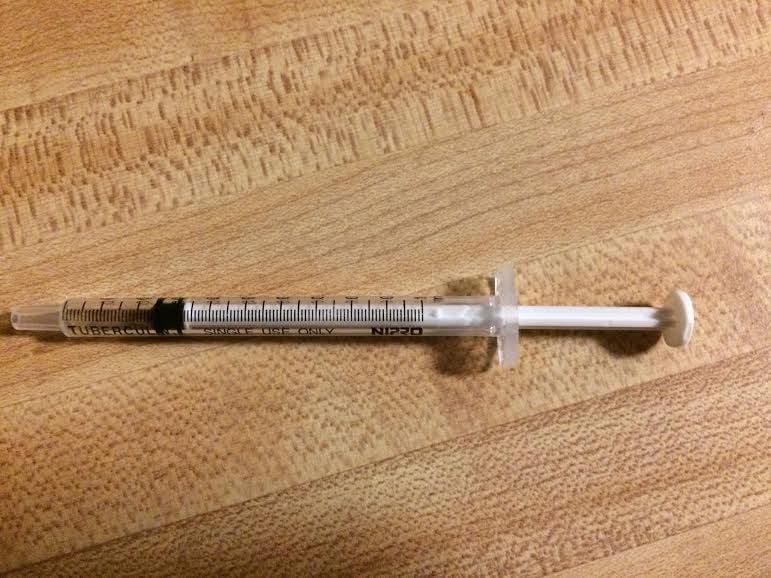

UPDATED at 4 p.m. GLEN BURNIE, MD — A child came home with an empty syringe mixed in with the Halloween candy, according to a report received by Anne Arundel County Police. Officers were called to a home on Gordon Drive in Glen Burnie about 7:30 p.m. Monday to investigate the report of tampered Halloween candy.
The girl returned home from trick or treating, and the parents found a needle-less syringe mixed in with her bag of candy. It is uncertain where the syringe came from or who was responsible for giving the child the syringe, police said Monday night.
Police say it's important that parents insist that treats be brought home for inspection before anything is eaten.
Find out what's happening in Odenton-Severnfor free with the latest updates from Patch.
Robin Mallory told the Capital-Gazette she has no idea how the syringe ended up in her 7-year-old daughter's Halloween candy, collected around their neighborhood with mom along on the route. The mother threw out all the treats collected and took her devastated daughter to the drug store to buy as much candy as she wanted.
“It could have been a sick prank, it could have been an accident – though I’m not really sure how you could accidentally put a syringe in a child’s candy bag," Mallory told the newspaper.
Find out what's happening in Odenton-Severnfor free with the latest updates from Patch.
The Consumer Product Safety Commission warns children “not to eat any treats before an adult has carefully examined them for evidence of tampering.”
Last year, there were two reports of sewing needles being found in Maryland candy on Halloween.
A mother in Huntingtown reportedly found metal sewing needles when inspecting Halloween candy before allowing her child to eat it. Maryland State Police visited the Patuxent View neighborhood to look for any other tainted candies and to make residents aware of the reported tampering. No other tainted candies or reports of tampering turned up.
And a night earlier, a Wicomico County teenager found a sewing needle in a Twizzler Halloween candy, according to Salisbury Police.
There were no signs of tampering visible to the packaging in either case, police said. There were no injuries reported.
It seems like every Halloween a story gets around about candy laced with some sort of harmful substance along with a message urging parents to be vigilant lest their children fall prey to an evil scheme.
Digging Into Folklore of Candy Tampering
The grand total of incidents in which a child was killed or seriously injured by contaminated candy handed out by a stranger during trick-or-treating: a big, fat zero.
“It’s a great thing to worry about, because it happens one day a year,” Joel Best, a sociology and criminal justice professor at the University of Delaware, told Patch last year. “People are imagining this terrible person, who lives down the block, is so crazy that he poisons little children at random. But he’s so tightly wrapped that he only does it one day a year.”
Only there’s no record this person exists.
The Centers for Disease Control and Prevention does not keep statistics on Halloween candy poisonings, a spokesperson told Patch.
Best isn’t alone in his findings. MedFriendly.com listed several illnesses that initially caused Halloween hysteria, but none of those cases were caused by tampered candy obtained via trick-or-treating.
Two Halloween candy deaths are frequently cited. Strangers, though, were not involved.
The first case, in 1970, involved a 5-year-old boy in Detroit who was thought to have died from heroin hidden in his candy. The boy had actually mistakenly found the heroin in a relative’s home. In an attempted cover-up, the family put heroin in the rest of his candy to make it look like an attack.
Four years later, an 8-year-old boy in Texas died from a cyanide-laced Pixie Stix. An investigation revealed that the boy’s dad had intentionally poisoned the candy to claim a $20,000 life insurance payout. The dad was found guilty and later executed.
Otherwise, in three other deaths, the culprit was thought to be Halloween candy but ended up being only coincidental.
There have been two high-profile cases of attempted candy shenanigans by strangers.
A Fremont, California, dentist in 1959 handed out candy-coated laxatives to 16 kids. None were hospitalized, but six got nausea and diarrhea.
In 1964, a Long Island woman handed out arsenic pellets used to treat ants to kids who she thought were too old to be trick-or-treating. No one was injured, but she was still arrested. She told police it was just a joke.
Parents Urged to Be Vigilant
The Consumer Product Safety Commission warns children “not to eat any treats before an adult has carefully examined them for evidence of tampering.”
The evidence and history show that unless you’re trying to poison your kid or have some spare heroin lying around, you’ve got nothing to worry about.
“One of the things this has taught me is humility,” Best said. “You realize that announcing that you have research really doesn’t make much difference. The contemporary legends are harder to kill than werewolves.”
A State Farm study found that on Oct. 31 kids have the highest chance of being hit by a car compared to any other day.
— This story contains reporting by Patch Editor Marc Torrence
»Patch file photo, syringe photo from Anne Arundel County Police
Get more local news delivered straight to your inbox. Sign up for free Patch newsletters and alerts.