Politics & Government
OPINION: Defining Poor Little Rich Girl's Historical Significance
Clearly defined criteria are used by public agencies to assess and determine the possibility that an old structure might also have broader historical significance. The same can apply in Perry Hall.

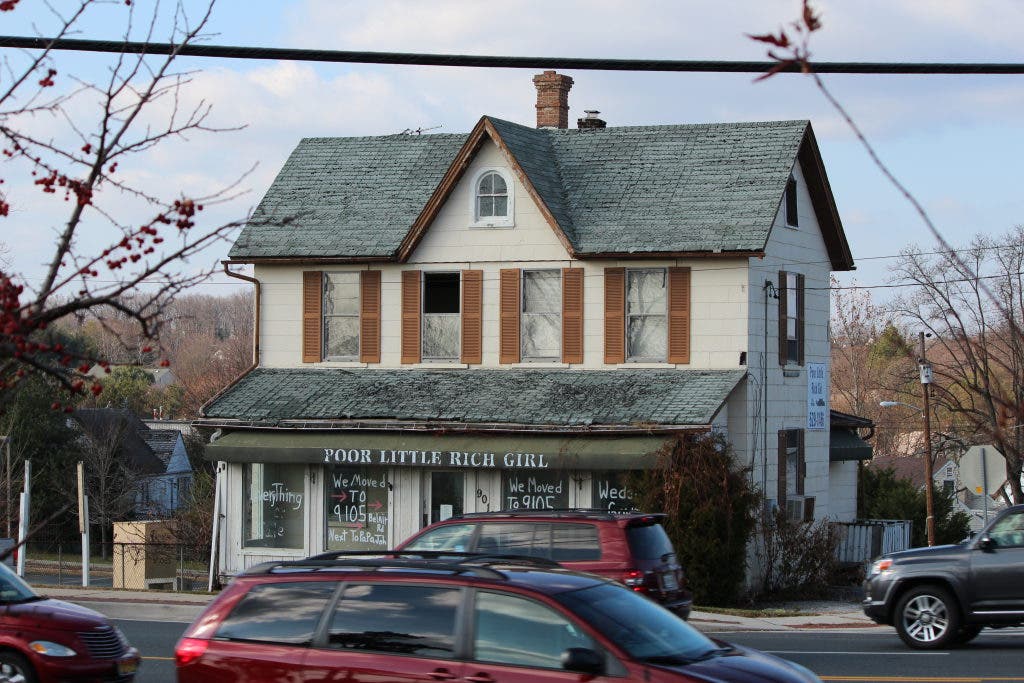
Given the recent public dialog regarding the future of the structure that used to house the Poor Little Rich Girl bridal shop in Perry Hall, I thought it might be helpful for readers to learn a little about how historical significance is actually defined.
While its demolition has been postponed, at least temporarily, even activists are skeptical that the former shop can be saved. It's the question of should it be saved that drags on.
As it happens, there is a very specific process—used by the U.S. Department of the Interior, National Park Service—to assess the relative significance of older structures. A clear understanding of this methodology might make it easier for folks to understand the context of recent events associated with the structure in question.
Find out what's happening in Perry Hallfor free with the latest updates from Patch.
Our nation has had laws for some time to ensure that properties of regional or national significance receive the attention and the protection they deserve. The Historic Sites Act of 1935 authorized the Secretary of the Interior to identify properties of national significance in United States history and archeology. The National Historic Preservation Act of 1966 expanded this recognition to properties of local and state significance in American history, architecture, archeology, engineering, and culture.
The National Register of Historic Places is our official listing of these recognized properties, and is maintained by the National Park Service. The National Register documents the appearance and importance of sites, buildings, and structures that are significant in our collective history. These properties, when looked at as a whole, represent the major patterns of America's shared local, state, and national experience.
Find out what's happening in Perry Hallfor free with the latest updates from Patch.
The National Park Service utilizes the National Register Criteria for Evaluation in order to guide the selection of properties included in the inventory. These criteria are standards by which every property that is nominated to the National Register must be judged. In order to be categorized as historically significant, and be added to the National Register, buildings must possess "integrity of location, design, setting, materials, workmanship, feeling, and association," and must be:
- "associated with events that have made a significant contribution to the broad patterns of our history; or
- associated with the lives of significant persons in or past; or
- embody the distinctive characteristics of a type, period, or method of construction, or that represent the work of a master, or that possess high artistic values, or that represent a significant and distinguishable entity whose components may lack individual distinction; or
- have yielded or may be likely to yield, information important in history or prehistory."
The initial "integrity" qualifications have special significance in evaluating potential National Register additions. According to the National Park Service, "integrity is the ability of a property to convey its significance." To retain historic integrity a property will necessarily possess several, and typically a large majority, of the seven elements. The retention of specific aspects of integrity is absolutely vital for a property to convey its significance to the public at-large.
The physical location of a historic property, complemented by its present-day setting, is particularly important in recapturing the sense of historic events and persons. Were one to evaluate the property located at 9010 Belair Road, challenges associated with these two measures of historical significance should be readily apparent.
As a student of history myself, I would love to be able to preserve each and every aspect of our past history. However, I realize that priorities must be identified, and to save every old structure would simply be unrealistic. That is why we have the National Register process—to help identify those aspects of our shared history that are most significant, so that we can focus our energies on these most precious of our cultural resources. In this age of limited private and public resources, we must use clearly defined methods to set our course for the future even as we seek to be mindful of the past.