Arts & Entertainment
Author Tells 'Priceless' Stories
Towson University grad, former FBI agent, drops by alma mater to promote book
There is an art to being an art thief. And it's not in the stealing. It's in the selling, said former FBI agent Robert K. Wittman during a recent lecture at Towson University.
There is also an art to catching an art thief, and in that realm, Wittman is as priceless as the pieces he has recovered over the past two decades.
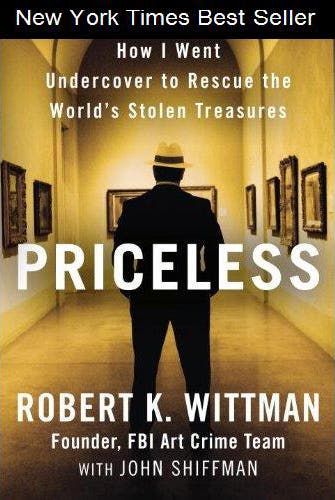
In a crowded lecture hall at Towson University on Thursday, Wittman spoke about his investigative craft to a crowd of students, professors and visitors about his book "Priceless—How I Went Undercover to Rescue the World's Stolen Treasures."
Find out what's happening in Towsonfor free with the latest updates from Patch.
The audience was filled with art history majors and art lovers—and fans of fascinating tales about the type of daring heists that Wittman has spent a career solving as founder of the FBI's Art Crime Team.
Many, including myself, arrived envisioning art thieves as the dashing, daring and debonair burglars portrayed by Hollywood. Think: "The Thomas Crown Affair," "To Catch a Thief," James Bond.
Find out what's happening in Towsonfor free with the latest updates from Patch.
As a true life stolen-treasure hunter—and a local boy who graduated from Towson in 1988—Wittman has recovered more than $225 million worth of art during 20 years with an FBI team that specializes in art, antiques and gem and jewelry identification.
He has heard all about the perceived glamour. But he knows better.
With a click from his podium, the images of actors Pierce Brosnan, Sean Connery, and other movie burglars flash onto the hall's large screen. With another click, Wittman juxtaposes the fantasy with actual mugshots of art thieves he has arrested. They are a jowly, pasty, and sour-looking lot. The audience laughs.
"Sorry ladies, not quite the same," Wittman said.
As the head of Robert Wittman Inc., the author now travels the world teaching police and museums how to investigate and prevent thefts and how to recover stolen items.
His targets may lack star quality, but Wittman himself is quite the performer. Affable and relaxed, Wittman held the audience's attention by alternating between suspenseful descriptions of actual busts, complete with grainy hidden video footage, and joking with the crowd.
He poked fun at the crooks ("Italian Mafia" is now politically incorrect—"Mediterranean Mafia" is preferred), his former FBI colleagues (the chicken is considered the mascot of undercover agents), and even at himself (he graduated from Towson with only a 2.15 GPA, and that's how he ended up in the FBI).
Part seasoned cop, part cool professor, Wittman could have held my attention for hours.
In the short time he had to speak, Wittman recapped just a few of the thefts and sting operations he led. With code names like "Operation Bullwinkle" and stolen pieces valued at $37 million, screenwriters couldn't come up with better plot lines. In his hidden camera footage Wittman brokers a deal for a stolen Rembrandt in a cramped European hotel room with dangerous men—yet he appears as cool as 007.
And while he acknowledged that in each case he has experienced moments of "sheer terror" he seemed unruffled when he bluntly spoke about the business of stealing art.
"They're not stupid, they are very good criminals, but they're not good businessmen. Because the real art of an art heist is not the stealing, it's the selling," he said. "You can steal it but what are you going to do with it once you have it?"
"People ask me all the time, 'What's a stolen Rembrandt worth?' And I always say five to 10 in prison," Wittman said.
I imagined Sean Connery delivering the line.
Movie star comparisons aside, Wittman did have a deeper message. He implored the future museum curators attending his speech to be the first line of defense against theft. Most heists are preventable considering that 90 percent are inside jobs, Wittman said.
As Wittman points out, museums and galleries are no strangers to the economic woes of the time: "Security is not the money maker … so it's the first thing to get cut."
But it's not all about money.
To Wittman, the real travesty is the theft of culture, the theft of knowledge. He said all people have a right to be proud of their culture, and their ancestors, and they should be able to enjoy pieces of art.
So when someone walks off with a painting or artifact they are not only stealing from an institution, they are stealing from the public, he said.
"Once we lose something … it's gone, we'll never get that back. We've lost a piece of our history," he said.
But, sadly, art theft is still a booming business. Recent heists in Paris and Egypt have devastated museums.
Maybe Hollywood will take notice and portray Robert Wittman on the big screen as the dashing, daring and debonair hero he is in real life.
Until then, I guess you'll just have to read his book.
Copies of Robert Wittman's book, Priceless: How I Went Undercover to Rescue the World's Stolen Treasures, can be purchased from his website robertwittmaninc.com.