By Cody Boteler on March 4, 2021
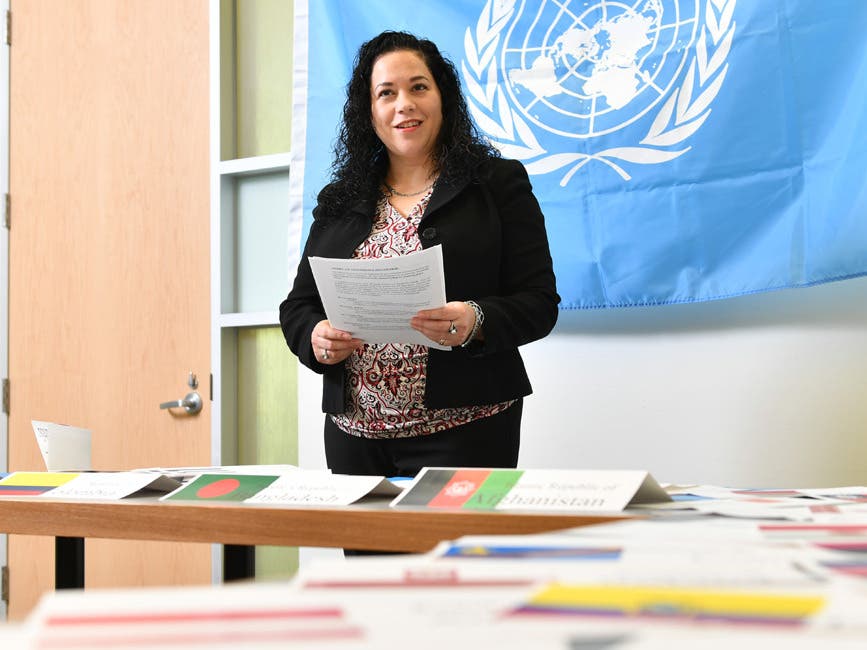
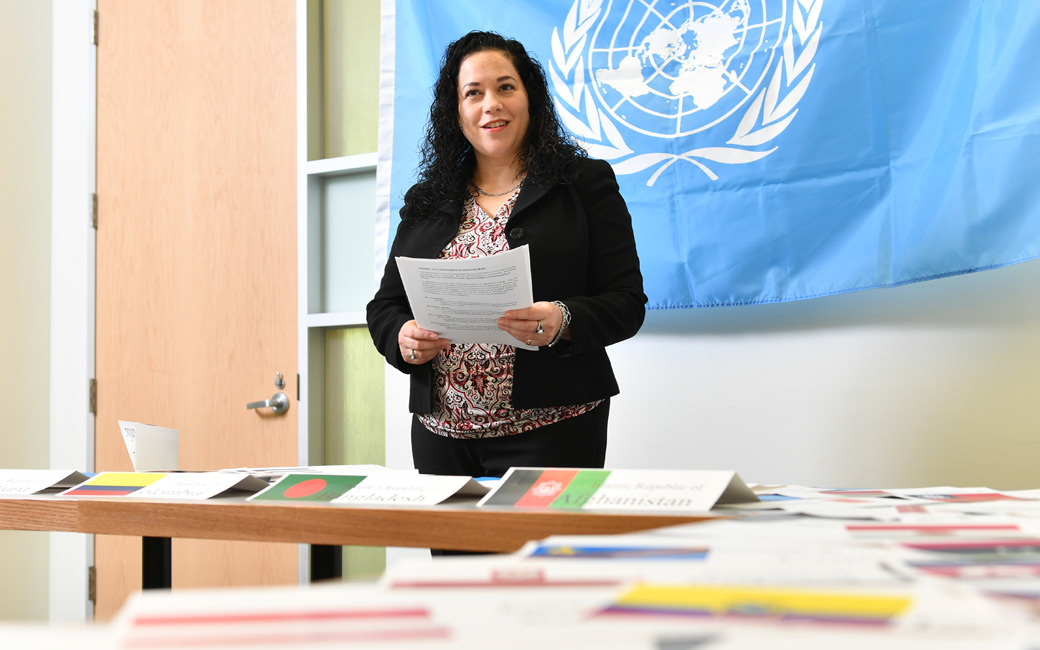 TU's Alison McCartney started the Model U.N. Conference in 2002. (File photo by Kanji
Takeno.)
Find out what's happening in Towsonfor free with the latest updates from Patch.
For nearly two decades, the Model United Nations Conference at Towson University has brought hundreds of
Baltimore County Public School (BCPS) students together to discuss global issues,
problem-solve and participate in engaging political simulations.
Normally a weekend of in-person discussions with volunteers carrying messages between
high school “delegates,” the event this year will be entirely online because of the
COVID-19 pandemic.
Find out what's happening in Towsonfor free with the latest updates from Patch.
Between March 5–6, hundreds of BCPS students will, with guidance from TU student and alumni volunteers,
split into pods of 25–35 and discuss global issues, focused this year on inequality.
Alison McCartney, a professor in the Department of Political Science and faculty director of the Honors
College, started TU’s Model U.N. in 2002. She says the conference helps prepare students
for college, so it was an easy call to continue this year, even if it had to move
online.
“It’s mostly sophomores participating. That’s a crucial year for catching kids and
giving them direction for college,” McCartney says.
Maddie Meyer, a junior Honors College student majoring in international studies with minors in German and political science,
helped shift the conference online and instruct student volunteers.
Last year, Meyer took a course in civic engagement with McCartney. Part of that course
is working with BCPS students to prepare them for the Model U.N. Conference in March.
“It’s so rewarding to put in the work of helping the students grow, helping them develop
their research and communication skills and then seeing it put into action in the
conference,” she says.
The keynote speaker is Tom Dowling ‘06, an economist at the International Monetary
Fund who has worked on projects and programs in the United States, Canada, Barbados
and Denmark, among others. He was one of the first students to help with the conference
when he was an undergraduate, McCartney says.
Moving online opens new opportunities for volunteers, too. More than two dozen alumni
are helping with the conference—some from as far away as China, the United Kingdom
and Malaysia—who could not be involved if the event occurred in-person.
One of the alumni volunteers is Sarah Rowan ’19. She says she first participated in
the conference as a class requirement and ended up hooked.
“It’s become a routine for me: It’s going to happen every year, and I expect to do
it every year,” Rowan says. “It keeps me connected with the university and with all
my friends in the political science program.”
Another addition to the online model will be career interest breakout sessions. After
a quick awards ceremony on the second day, BCPS students will go into breakout rooms,
led by the alumni volunteers, to learn more about potential career fields.
Hundreds of BCPS students have chosen to enroll at TU after participating in the Model
U.N. Conference, McCartney says. The participants are exposed to global topics they
might not encounter in a classroom and gain valuable experience along the way.
“The students learn lots of teamwork skills. They work on developing their interpersonal
skills. They learn how to debate civilly, listen to different points of view and work
with others in a constructive way to reach their goals,” McCartney says.
Jonathan Peang, a teacher at Milford Mill High School who has been bringing students
to the conference for four years, says it helps his students build community and realize
the concepts they learn in class are applicable to the real world.
He says Model U.N. does a good job in supplying situations for students to work one
relational skills and communication skills, in addition to discussing global issues.
“I see them get excited about the topics, thinking about those ideas and getting deeper
into the knowledge. It shows me that they’re maturing as students,” Peang says.
This press release was produced by Towson University. The views expressed here are the author’s own.