Schools
TU Graphic Design Students Answer U.N.’s Call To Creatives
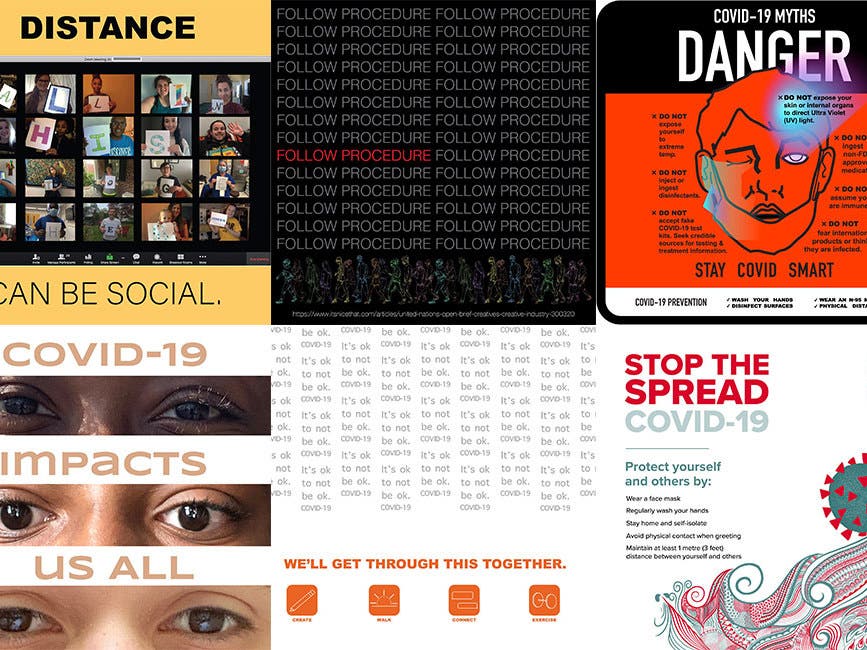
Towson University students design social media messages to help stop the spread of COVID-19.
By Rebecca Kirkman
June 23, 2020
Find out what's happening in Towsonfor free with the latest updates from Patch.
When Laura Hatcher, graphic designer and adjunct professor in the Department of Art + Design, Art History, Art Education, heard about the United Nations’ first creative brief, she brought it to her Graphic
Design 3 students.
On March 30, the U.N. asked creatives to design messaging around stopping the spread of COVID-19, focusing on key messages like proper hygiene,
physical distancing and myth busting.
Find out what's happening in Towsonfor free with the latest updates from Patch.
The opportunity naturally built on one of the course’s assigned readings, “How Good
is Good” by Stefan Sagmeister, in which the designer reflects upon his experiences
after September 11, 2001.
“We discussed the role of a creative professional during a crisis,” Hatcher says.
“I told them about this call to creatives, and they were totally on board.”
Unlike many graphic design projects, which ask students to create work for imaginary
clients or situations, this opportunity wasn’t just an exercise.
“It was tough, and it was emotional,” Hatcher adds. “Some of them had lost family
members already to the pandemic. There were tears. It was very heavy, but what was
so great was to see how the students were supporting each other. And then to get the
feedback from them that it felt so good to be able to do something to help.”
She also shared the Viral Art Project, a call to designers to create public service announcement (PSA) posters that spread
awareness about COVID-19, hosted by Washington, D.C.-based creative agencies and organizations.
Hatcher and her students approached their projects by first identifying and researching
their target audience: the students’ own social networks. They looked at the messages
they were and weren’t seeing in their networks and then compared those to the facts
and public health messaging surrounding COVID-19.
“We also talked about how they could each use their specific skills, the thing they’re
really good at, to make the most impact,” Hatcher says. “Are they really good with
illustration? Are they good with humor? Are they great with photography? And translate
that to make the most impactful graphic they could.”
The class shared concepts and mockups with each other in small groups and through
a Slack channel. They shared the final product on their personal social media pages.
Hatcher says students learned about the amount of misinformation available, especially
on social media, and their responsibility as visual communicators.
“It was a really good experience for them, and I was really proud of how they worked
through all of it,” Hatcher says.
They also learned there’s no one way to approach a problem. “We all had the same challenge,
but there are a million different creative solutions, and they all have different
benefits to them.”
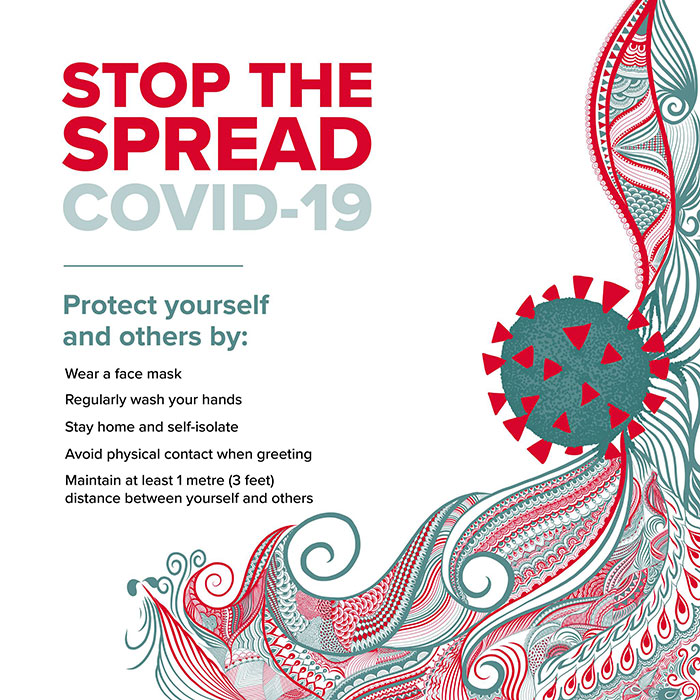
Deepika Chauhan
“In my poster, I am portraying how coronavirus can be spread by even a small droplet
and what steps we can take to protect ourselves and others. To convey this message,
I combined hand-drawn patterns with bold typography calling viewers to take action.
Together we can stop the pandemic by following guidelines for the coronavirus set
by the CDC.”
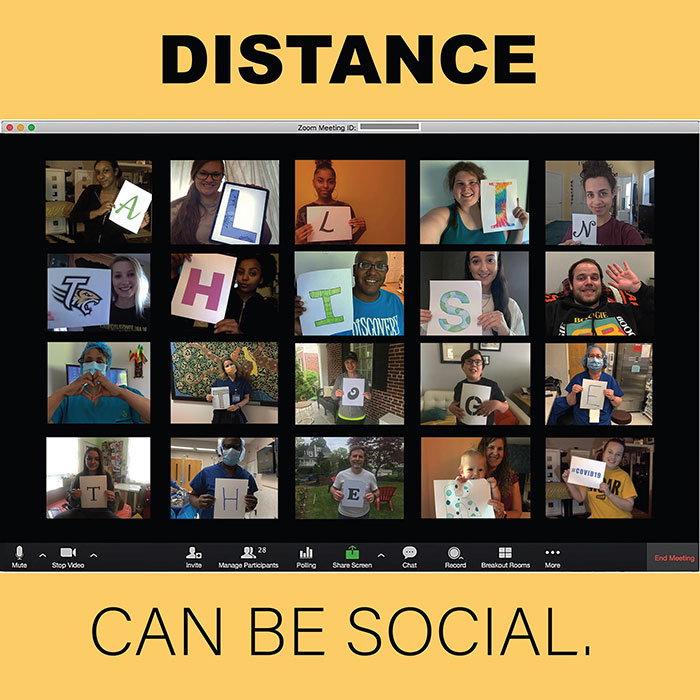
Kelsey Fitzpatrick
“This project helped me grapple with the emotional complexities of our lives in social
isolation. I created this graphic to show that we are not alone. Social distancing
can be hard, but with love from friends and family, we can make a difference. Through
making a Zoom meeting call spelling out “ALL IN THIS TOGETHER,” we are spreading the
awareness of the ones who are mentally struggling through this outbreak. We are calling
on one another to help us grow together and stop the spread.”
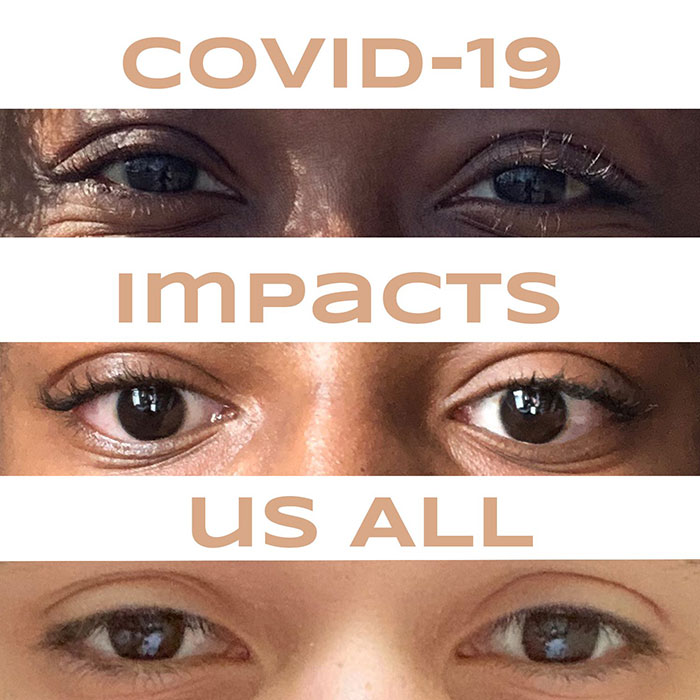
Jalyn Tolliver
“In my poster I am portraying the severity of COVID-19 on all of us. My main mission
is to debunk the myth that different races or ethnicities are immune to COVID-19.
During this pandemic we should all stay informed with the latest credible updates
on the virus and try our best to do our part in getting through this hard time.”
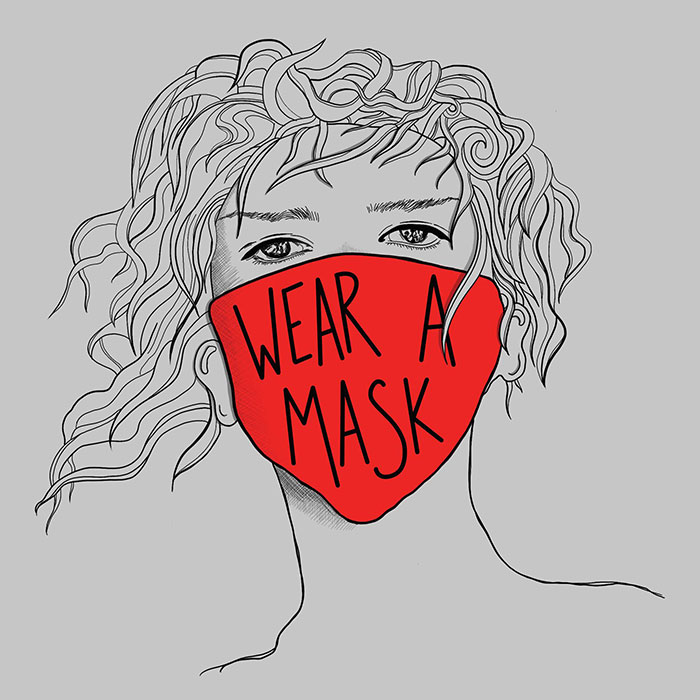
Rachel Bunger
“To bring further awareness of the precautions we should take during this pandemic,
I have highlighted one of the precautions we should all practice—wearing a mask. Wearing
a face covering not only protects you but others as well.”
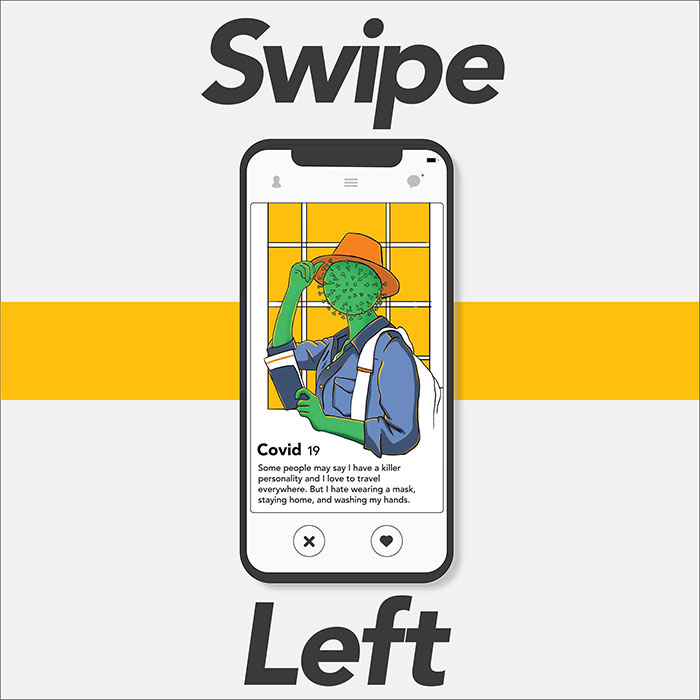
Shreyesh Shrestha
“During my research for the COVID-19 pandemic, I wanted to focus on the age group
of 18 to 25. I found that most of my friends and their friends were using dating apps
because of social isolation. So this sparked an idea, where the dating app took over
the world of our generation. I decided to put the symptoms and the thing people don’t
do in the bio. The main goal is to tell people to not go out and swipe left for COVID-19.”
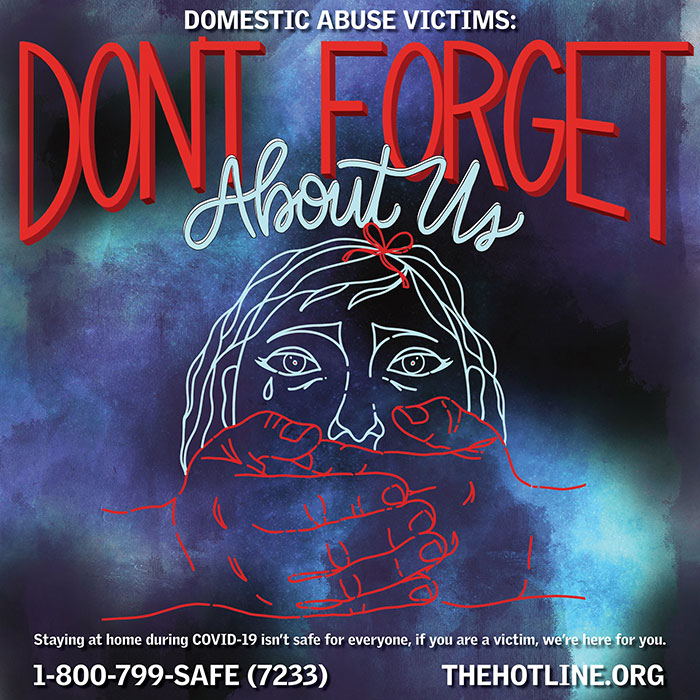
Delaney Wiggins
“I recently had a very close friend of mine suffer from domestic abuse during quarantine.
I didn’t know how scary it was for her to be trapped in a small apartment with her
abuser, all I knew was that I needed to get her out. It’s important to spread awareness
about the severity of domestic abuse during a time like this and not let it get pushed
under the rug. If you know anyone who may be struggling, be the light for them.”
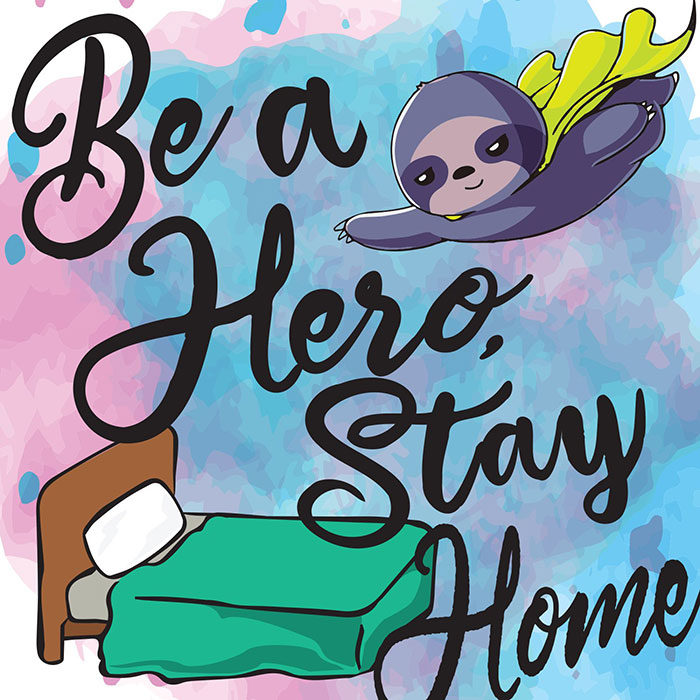
Bridget Devoy
“Often you are shamed for wanting to be lazy and stay home to relax; for once that’s
what it takes to be the hero. Staying home helps prevent you from getting sick as
well as protects others from having it spread.”
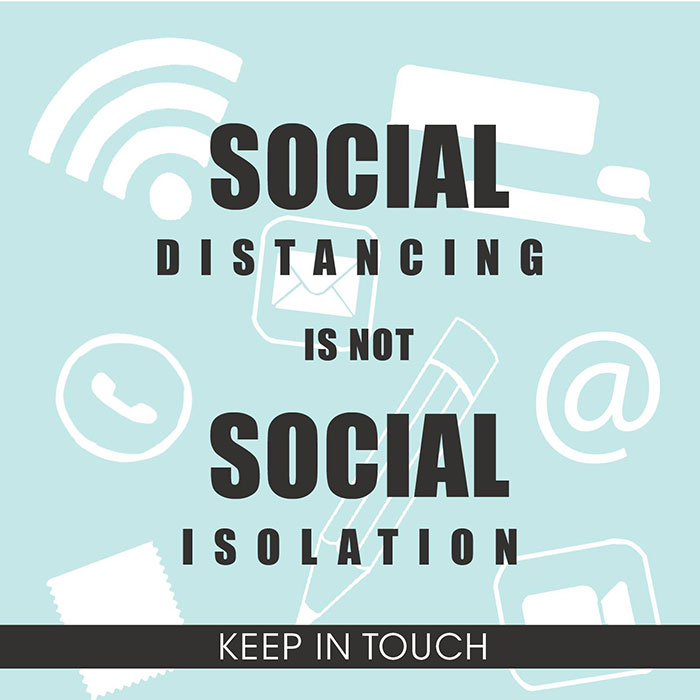
Hayley Koteff
“After doing research on my audience—teens and young adults—I found one of the biggest
issues is the difference between social distancing and social isolation. Social distancing
is not the same thing as social isolation, though to many people, it may feel like
the same. These graphics were made to remind the viewer the difference and the many
ways you can still stay in contact with friends and family while social distancing.”
This press release was produced by Towson University. The views expressed here are the author’s own.