Schools
School Administrators Present Plan to Curb Students' At-Risk Behavior
In response to this past summer's fatal drug overdose of one local teenager and a serious accident involving two others, a good portion of last week's school committee meeting was dedicated to understanding the resources available for stuggling students
Anyone who pays attention to the news realizes that high school students are at an elevated risk of suicide, drug and alcohol abuse, and injuries due to car accidents.
For four years, Principal Dr. Alixe Callen’s fervent wish that her students would stay safe was, for the most part, granted.
But Callen, who has worked in other school systems where tragedies have occurred and who witnessed former students act as pall bearers for a classmate, was saddened once again when Acton lost a member of the Class of 2011 and two local students were hospitalized after a serious car accident.
Find out what's happening in Actonfor free with the latest updates from Patch.
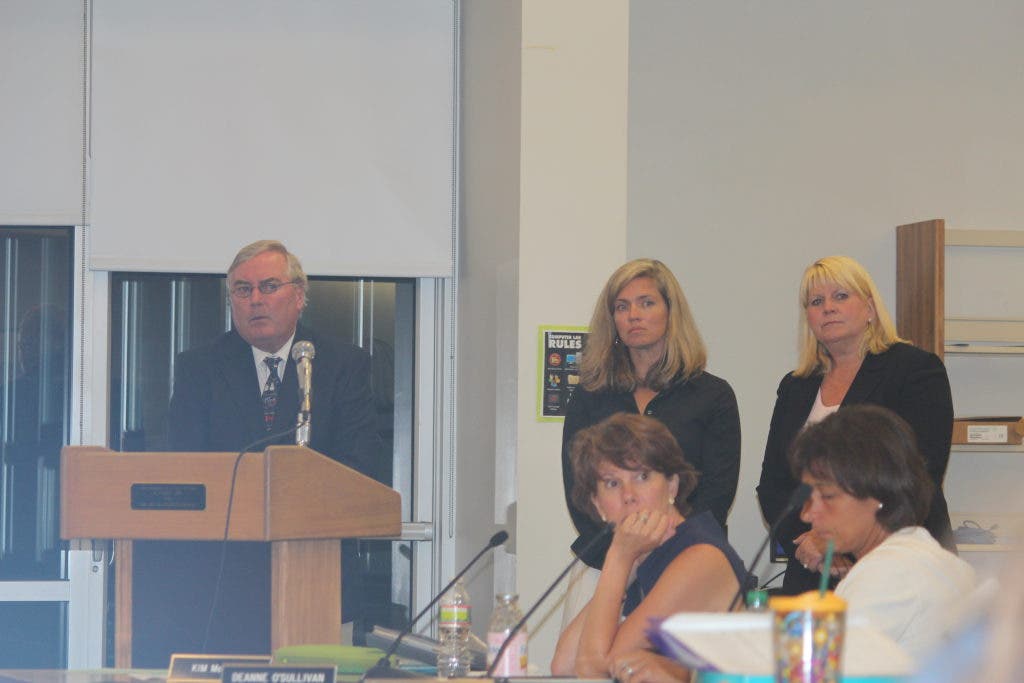
Last week, Callen joined Superintendent of Schools Dr. Steve Mills, Director of Pupil Services Liza Huber, and local Youth Officer Keith Campbell as the group presented the community’s approach to at-risk young people.
In addition to members of the school committee, about two dozen parents and one ABRHS student attended the meeting, which was held in the RJ Grey library the evening of Sept. 6.
“This issue has bubbled up,” Mills said of alcohol and drug abuse and its accompanying effects. “People are asking what we’re doing about it.”
Find out what's happening in Actonfor free with the latest updates from Patch.
Citing the “horrible tragedies” of this past summer, Mills added: “No one is immune from this problem. Anyone who thinks he is is fooling himself.”
Mills explained that, “after much discussion, controversy and sometimes disagreement,” the school system’s Long-Range Strategic Planning Committee has determined that students’ safety and emotional well-being is “the fundamental number one concern.”
“Even ahead of academics,” Mills emphasized.
It was explained that all ABRHS students receive instruction through the school system’s Health Education curriculum, which is based on scientific research about what has the most positive impact on young people.
Not all students who attend the mandatory classes remain safe from harm, of course.
“There will always be a subset of students who need more intervention to meet their needs,” said Huber, who pointed out that some young people have “underlying psychological factors. Some are at more risk than others.”
The counseling staff at the high school, which includes 12 counselors, four psychologists and a .2 FTE drug and alcohol counselor, said Mills, are licensed mental health professionals..
“They spend the majority of their time using their clinical skills,” Mills said.
Mills talked about the fine line between substance-related disciplinary measures and the provision of services.
“We regularly suspend kids. We expel kids,” Mills said. We don’t advertise it. We don’t call the media. We do get significant parent ‘push back’ when we take action.”
Mills said offenders’ parents often “threaten litigation.”
Referring to Campbell’s role, which includes weekly meetings with high school administrators and counselors to share information about students’ involvement in criminal or at-risk behavior, Mills said: “Keith is a valuable part of this puzzle.”
“The problem that we’re seeing is growing,” said Campbell, who estimated that “six or seven” police reports involving juveniles are filed in an average week.
Although Callen acknowledged that students have been caught under the influence of substances during the school day and at school-sponsored extracurricular activities, Campbell said: “The vast majority is happening at home on the weekends.”
Campbell’s goal is simple: Intervene earlier. Ideally, he’d like parents to come to him.
Regarding ABRHS counselors and administrators, Campbell said: “We’re asking a tremendous amount of the school. I put a lot on their plates.”
Callen has spent a great deal of time and energy studying the facts around kids’ experimentation with substances and possible solutions.
“Between 10th and 11th grade, once kids start driving, there is a sharp increase in risky behaviors,” Callen explained.
There were 35 suspensions for drug use and eight for alcohol use this past school year.
Heeding students’ assessment that our community doesn't have enough of a substance-free teen social scene, and wanting to offer alternatives to “playing X-box in the basement or looking for parties on Facebook,” Callen has successfully introduced initiatives such as “Saturday Night Activities.”
“We need another story line,” she said.
Callen, unlike other principals who support uniform consequences for non-drinking and drinking partygoers, feels that “choosing not to drink needs to be recognized.”
To that end, Campbell has breathalyzers available to help determine which students are under the influence. Teens found to be in the presence of offenders but are not taking part in underage drinking are not subject to disciplinary measures, which can include suspension from school, sports team benching and loss of other privileges.
Looking ahead, Callen outlined several potential additions to the list of services and interventions available to Acton and Boxborough youth.
These include teacher training around signs to look for in student behavior, the addition of a grade 11 health and physical education class, video monitoring on the school campus, and increased use of breathalyzers.
Having all students, not just athletes and those involved in school organizations, be subject to chemical health contracts is also a possible change.
Speaker Chris Herren has been engaged to address the student body to share his life expreriences.
Pamela Harting-Barrat, chairperson of Acton’s Board of Selectmen, attended the presentation.
“Anything that’s needed will have our full support,” she said.