Health & Fitness
Ideals Past and Present
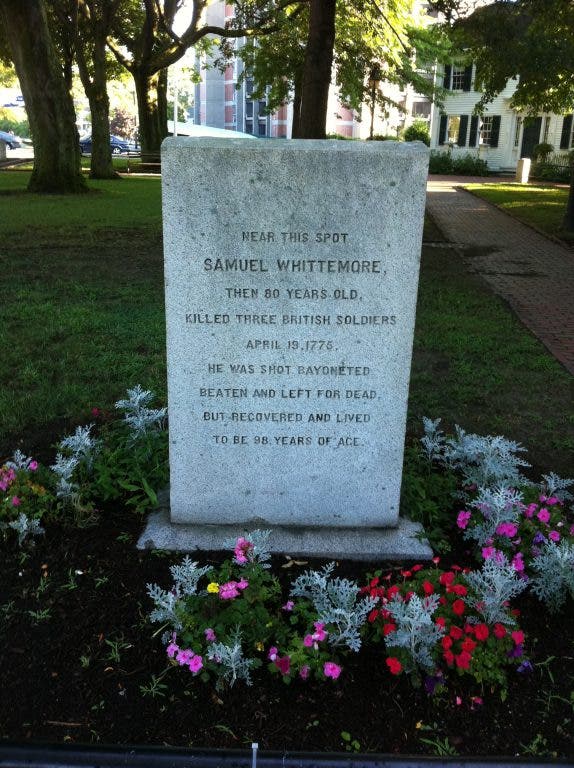
I've walked by the Samuel Whittemore historic marker in the center of town many times and have often wondered about the kind of man he was. What were his ideals?
As I wrote in a previous blog (“”), I’ve been a resident of Arlington for the past 35 years. One of the things that I’ve always appreciated about our town is its history – a history that dates back to the very beginnings of our country.
For me, it’s the type of thing that stirs my soul. I think about the individuals that settled the town, that had a vision for it, and that perhaps paid dearly to see their vision become established.
And yet after all of these years, I had no idea that there was a “” until I saw an article right here on Patch the other day.
Find out what's happening in Arlingtonfor free with the latest updates from Patch.
Now, I certainly knew about most of the sites listed, but I had never seen them set out as a walking tour. It all looked quite interesting.
One of the markers in town that has always struck me as significant is the one recalling Samuel Whittemore who on April 19, 1775 single-handedly killed 3 British soldiers, was shot, beaten, bayoneted 13 times, and left for dead. The remarkable thing was not only his courageous act, but that he was 80 years old at the time, recovered, and survived for another 18 years!
Find out what's happening in Arlingtonfor free with the latest updates from Patch.
I’ve often wondered what kind of a man he was. Brave – for sure! But to have survived at such an advanced age such a ferocious response from the retreating British seems to me to have involved something beyond the tenuous assumptions of good luck, heredity, or will power.
I wonder if that something had more to do with his thinking – a thinking that perhaps was imbued with ideals. Ideals that included a concept of country, of home, of freedom – of liberty.
And to me, ideals of that sort have a strong spiritual foundation to them. They rest on bedrock that withstands the storms, the assaults, the sieges of life.
Of course, I have no idea what Samuel’s thinking was. None of us do.
But this I do know. As I’ve been able to raise my own thinking to a more ideal and spiritually-based level, I’ve experienced the positive fruits that naturally come from doing so. It’s enabled me to overcome some fearful experiences – severe illnesses, grief, poverty. It’s enabled me to live a more productive and healthier life. A life that is less self-centered and more spiritually focused on helping others.
What’s been your experience?