Politics & Government
Mental Health Bill A 'Personal Priority' For Friedman
Arlington State Sen. Friedman served as one of the chief architects of the Mental Health ABC Act, which the Senate will debate Thursday.


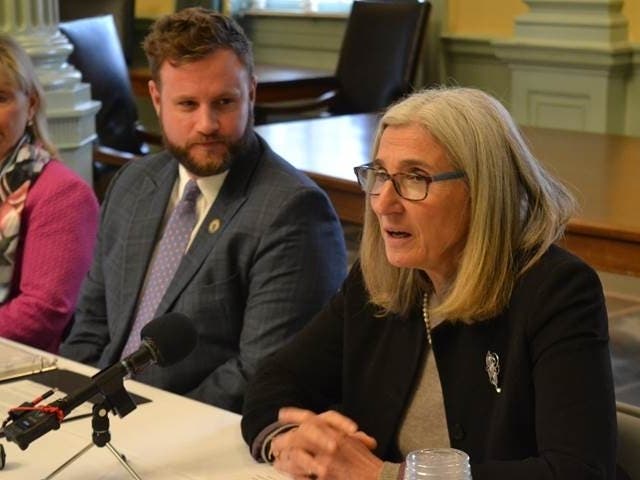
ARLINGTON, MA — The state senate unveiled An Act Addressing Barriers to Care for Mental Health Feb. 6. The legislation, which removes barriers to timely quality care, provides the state with more effective tools to enforce existing mental health parity laws and invests in the mental and behavioral health workforce, is a "personal priority" for Arlington State Sen. Cindy Friedman, who served as one of the chief architects of the bill.
"For far too long, mental health has been a forgotten component of our healthcare system despite our statutory parity mandate that calls for equitable coverage between medical and surgical treatment and mental health treatment," Friedman, co-chair of the Joint Committee on Health Care Financing, said in a statement. "This bill serves as a first step forward in addressing the persisting inequities in our delivery of mental health services that keep patients from accessing the care they need, and will provide a framework for the state to better enforce our mental health parity laws. I want to thank Senate President Spilka, Chair Rodrigues, and Senator Cyr for their thoughtful collaboration on this initiative and shared commitment to reforming our mental health care system so it is accessible, affordable, and equitable for all."
The Mental Health ABC Act provides the state with better tools to implement and enforce mental health parity laws, which require that insurance coverage for mental health benefits be equal to coverage for physical health benefits. Mental health parity has been codified in federal and state law for decades, but enforcement of the law has posed a challenge. As a result, patients can be denied coverage for mental health treatment that is every bit as critical to managing their health as treatment for conditions such as diabetes or heart disease.
Find out what's happening in Arlingtonfor free with the latest updates from Patch.
The legislation includes quicker evaluation and resolution of parity complaints, greater reporting and oversight of insurance carriers' processes and policies related to mental health care coverage, and penalties and alternative remedies for when an insurance company does not comply with the law.
Every day, adults and children arrive in emergency departments in the throes of acute mental health crises requiring immediate treatment in an appropriate setting. Many patients experience barriers, and delays, in treatment – creating a dysfunctional system that allows insurance companies to have more leverage in determining a patient’s course of treatment than health care providers. As such, the bill mandates coverage and eliminates prior authorization for mental health acute treatment for adults and children experiencing acute mental health crises, effectively placing treatment decisions in the hands of the treating clinician in consultation with the patient rather than an insurance company.
Find out what's happening in Arlingtonfor free with the latest updates from Patch.
In an effort to address the mental health workforce crisis that often limits patient access to care, the bill creates a pilot program through the Department of Higher Education aimed at creating a workforce pipeline to encourage and support individuals from diverse backgrounds to work toward careers in mental health. In addition, the bill creates an interim licensure program for Licensed Mental Health Counselors so that they can be reimbursed by insurance for their services and be eligible for state and federal grant and loan forgiveness programs, increasing the number of licensed providers able to serve patients.
The bill also calls for an academic study conducted by the Office of Health Equity to review the availability of culturally competent mental health care providers within networks of both public and private health care payers, as well as to identify potential barriers to care for underserved cultural, ethnic and linguistic populations and the LGBTQ community. The bill further directs an interagency health equity team under the Office of Health Equity to improve access to, and the quality of, culturally competent mental health services.
The bill creates a Psychiatric Mental Health Nurse Practitioner Fellowship Pilot Program in community health centers to offer additional support and training to psychiatric nurse practitioners who agree to work in community settings with underserved populations. The program will be designed to encourage these professionals to continue working in a community setting where mental health providers are sorely needed.
Currently, mental health and primary care providers are reimbursed at different rates for the same service. The bill seeks to level the playing field for reimbursement to mental health providers by requiring an equitable rate floor for evaluation and management services that is consistent with primary care.
The Mental Health ABC Act takes meaningful steps to improve access to care by prohibiting insurers from denying coverage for mental health services and primary care services solely because they were delivered on the same day in the same facility. This will remove a significant financial barrier to the integration of primary care and mental health.
Additionally, the bill requires emergency departments to have the capacity to evaluate and stabilize a person admitted with a mental health presentation at all times, and to refer them to appropriate treatment or inpatient admission. In addition, the bill directs the Department of Public Health (DPH) to issue regulations for an expedited process for individuals under 22 years old.
This bill authorizes the DPH, the Department of Mental Health (DMH), and the Department of Elementary and Secondary Education (DESE) to collaborate on authorizing three pilots for tele-behavioral health services in public high schools in the Commonwealth. This pilot is based on an existing and successful model between a hospital and several school districts in western Massachusetts.
Finally, the bill directs the DMH to consider factors that may present barriers to care – such as travel distance and access to transportation – when contracting for services in geographically isolated and rural communities.
The Senate will debate the Mental Health ABC Act Thursday, Feb. 13. To track the progress of the bill, S.2519, visithttps://malegislature.gov/Bills/191/S2519.
Get more local news delivered straight to your inbox. Sign up for free Patch newsletters and alerts.