Community Corner
North End Was Flooded With Molasses 100 Years Ago
100 years ago 21 people, including children, were killed in a wave of molasses after the tower holding it collapsed in the North End.


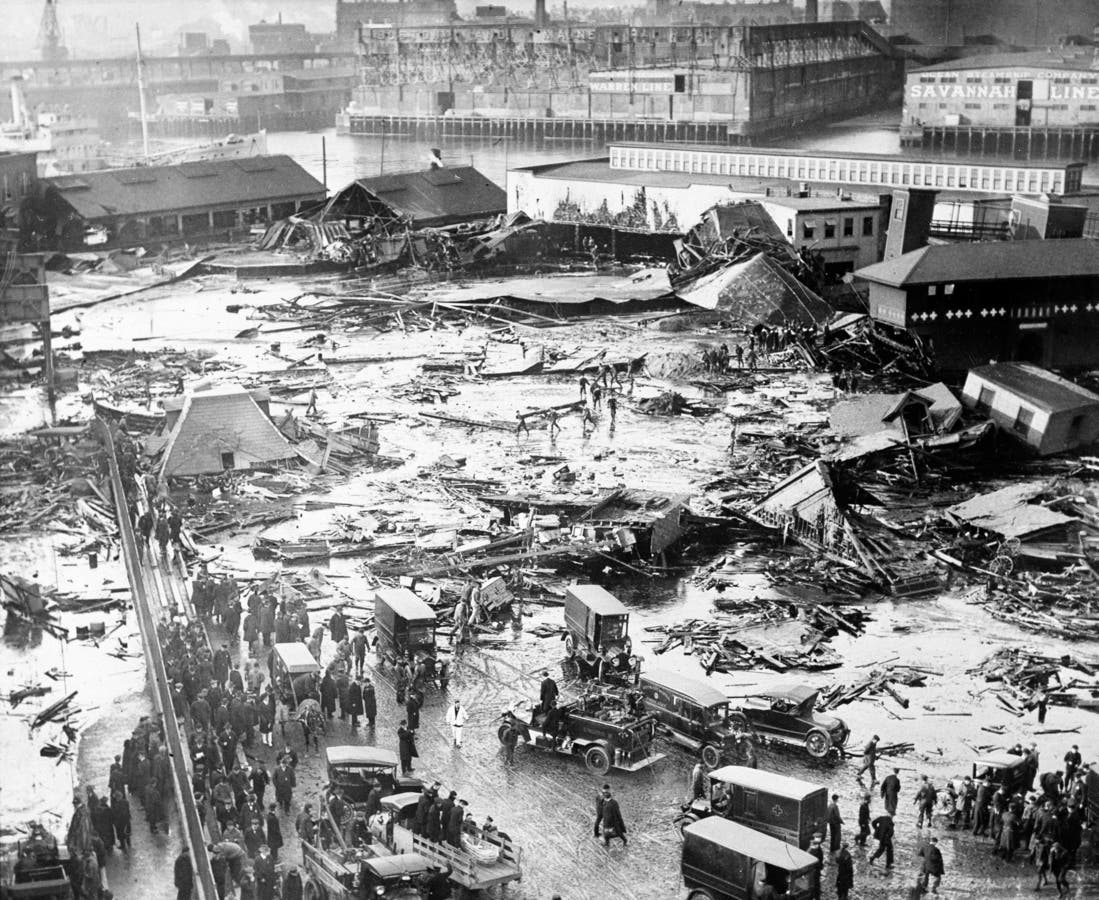
BOSTON — The front page of all the Boston newspapers was covered in molasses 100 years ago Jan. 15, following one of the biggest tragedies the city had seen. A flood of molasses killed 21, injured some 150 others but also prompted oversight laws and regulations in Boston and across the country, when it comes to construction.
A tank set up in the North End was used to store molasses until it could be moved to a distillery where it was expected to become rum in the last days before Prohibition. The same day Congress ratified the Prohibition amendment disaster struck.
In the middle of the afternoon on Jan. 15, 1919, the storage tank with more than 2.3 million gallons of molasses inside bust open, sending a tsunami of thick dark brown through the cobblestone streets of the North End, one of the busiest commercial areas in the city.
Find out what's happening in Bostonfor free with the latest updates from Patch.
The initial wave was at least 25-feet high and powering through everything in its path at about 35 m.p.h., killing 21 people and injuring 150 others.
"Molasses, waist deep, covered the street and swirled and bubbled about the wreckage ... Here and there struggled a form – whether it was animal or human being was impossible to tell," the Boston Post reported at the time. "Only an upheaval, a thrashing about in the sticky mass, showed where any life was ... Horses died like so many flies on sticky fly-paper. The more they struggled, the deeper in the mess they were ensnared. Human beings – men and women – suffered likewise."
Find out what's happening in Bostonfor free with the latest updates from Patch.
It wasn't until 2015 that researchers determined it was design flaws that contributed to the tank's collapse and a year later scientists explored the physics behind the flood. The short answer? It had to do with how cold it was that day.
Today, it might seem that all that's left of the flood are rumors that you can still catch a whiff of the sweet smell on hot summer days and a plaque marking the spot:
On January 15, 1919, a molasses tank at 529 Commercial Street exploded under pressure, killing 21 people. A 40-foot wave of molasses buckled the elevated railroad tracks, crushed buildings and inundated the neighborhood. Structural defects in the tank combined with unseasonably warm temperatures contributed to the disaster.
Never miss another local news story: Get free local news alerts right to your inbox.
PHOTO CAPTION: The ruins of tanks containing 2 1/2 million gallons of molasses lie in a heap after an eruption that hurled trucks against buildings and crumpled houses in the North End of Boston, Mass., Jan. 15, 1919. The disaster took 21 lives. The damage ran into the millions. An investigation started the following day, ended six years later. (AP Photo)
Get more local news delivered straight to your inbox. Sign up for free Patch newsletters and alerts.