Arts & Entertainment
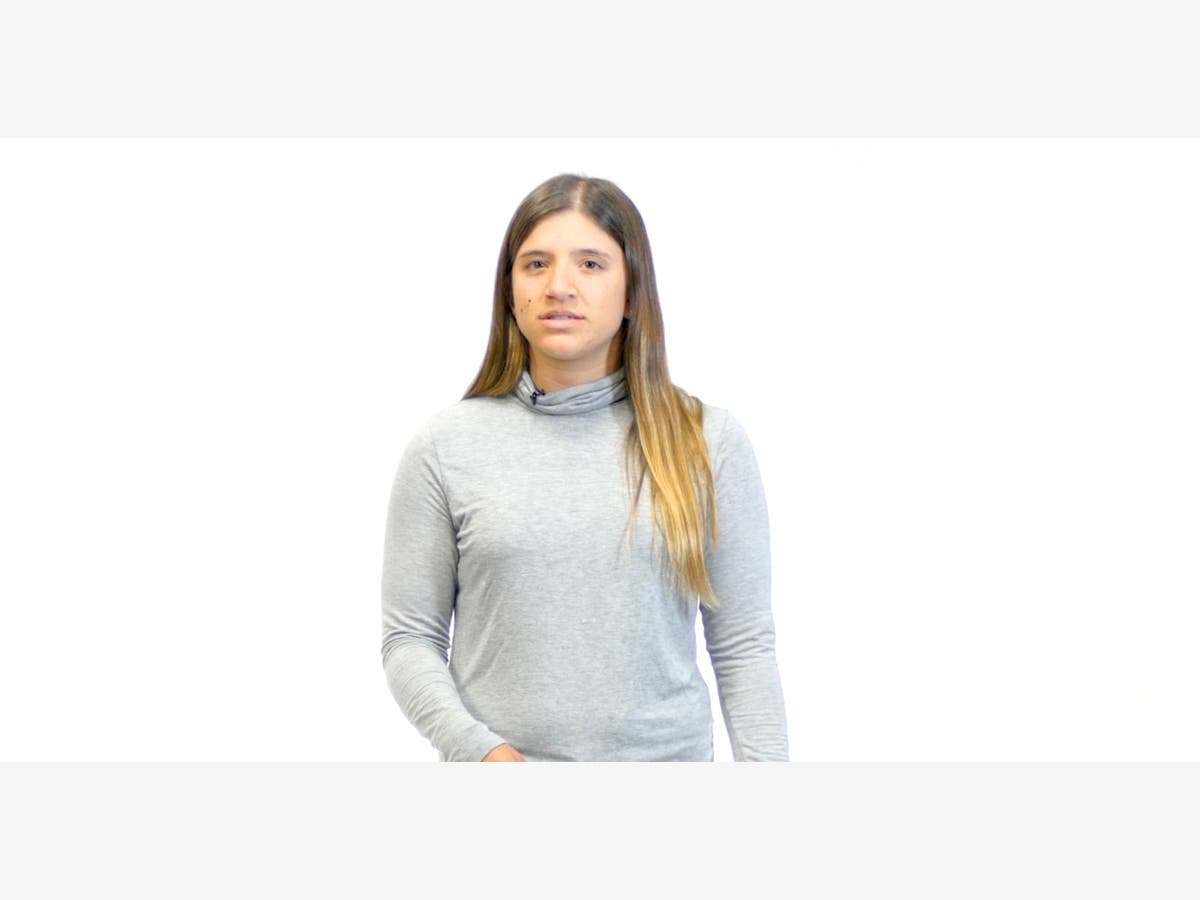
Arrival VR: Camila Shares Her Immigration Story
Watch the newest interview from Arrival VR, a project highlighting immigration stories from around Boston/Brookline.
Brookline Interactive Group (BIG) and its project, the Public VR Lab, are proud to present the latest interview from Arrival VR. This co-created immersive storytelling project is the first national virtual reality (VR) filmmaking collaborative project curating immigration stories of Americans from pre-1620 through 2018 and incorporating them into a visual XR/VR timeline. The Brookline Community Foundation has awarded a generous grant to BIG to support their efforts to record immigration stories from the Brookline community to contribute to this project.
Members of the public are invited to participate in this project and share their family's immigration stories at BIG's studio in Brookline. We'll be holding the next interviews on January 22. To learn more, please visit http://immigrationvr.com.
-----------
Find out what's happening in Brooklinefor free with the latest updates from Patch.
Can you start by introducing yourself, and telling us where you migrated from?
Find out what's happening in Brooklinefor free with the latest updates from Patch.
“My name is Camila Beiner. We moved from Venezuela in 2004 when I was five years old.”
What was your family’s reason for migrating, or their hope for a new life when you moved here?
“Well, the reason we moved from Venezuela was because I was born in 1998 and that was the rise of Hugo Chávez, and that just led to a lot of political instability and a lot of corruption. And when I was five we actually got robbed in my house. Like, three gunmen came in, they took my dad. He was outside biking and then they just took him. So we were all kind of inside and they robbed us, and so my parents just decided to move here, I guess for a better future.”
Who did you move to the U.S. with, and who who did you leave behind? Did anyone come after you?
“We left my grandparents behind and all my mom's family behind, really - and my dad's family. He has two siblings and my mom has five siblings. One of them had already moved to Mexico, but like especially... We left my grandparents. We were the first grandchildren, so they were really sad because it was like three of us moving. So we left them all behind and we just moved, like the six of us. Oh, actually, the five of us because my little sister was born here in Miami."
As time has passed, how does your experience of living in the U.S. compare with your expectations prior to moving here?
“So I think when we first moved, my parents expected to just be here like a couple years... Just so my mom could finish her PhD for educational purposes, so my dad could get a new experience, get a new job, and also for a better future for us. We didn't really expect what was really going to happen in Venezuela. No one thought it was going to become as, I guess, corrupted as it is now. And that led to a lot of years of build-up and we actually came at the right time because after that, people struggled to come here.
“So I feel like their hope was to stay here a couple years, get us a better education, get my mom a better education, my dad a better job, and then move back. Just to avoid everything that was happening. And we had just gone through a traumatic event, especially when we were younger. So I think that was the hope, and it did end up working out really well. My mom got her PhD, my dad became a real estate broker before he was a real estate agent. Me and my sister are both in Boston University, and so I think it did end up working out for them just because what they wanted was more freedom, more education, and we ended up with all of that.”
What were some of the more difficult parts of coming to a new country? Was it a difficult transition?
“For me, the hardest part was... I was five, so I was kind of like in that weird stage. You know, you're in kindergarten and you're like, ‘I don't know how to write in Spanish, I don't even know how to speak it well.’ So you're just kind of figuring yourself out, and then I got moved here and just like, now you need to speak a new language, learn two different ways to write - not only in English, but now in Spanish… And then get put into a school where everyone was talking to you in English. So for me, that took like six years. No joke, I was put in tutoring. And so I think that was the hardest part for me.
“Growing up, my grandparents, all they wanted was for their children to be together and for us to go to their house during the weekends like we did when we were little - that was their dream. But it all got torn apart because of Hugo Chávez. Like, all their kids left Venezuela. And
so for us… Being here alone, being in Miami alone, we had our family friends, but it's not the same."
What do you wish more people understood about immigrants and migrants?
“Well, I think… I wish more people knew about immigrants, especially now, is just [that] people are leaving their country not because they want to. People are just assuming like, oh, all
these immigrants are coming and they just want our jobs and they just like want the life we have. No, they just want to escape their life. Like at least in Venezuela, people don't have food, babies don't have diapers, you go to the store and there's nothing. Hyperinflation is so bad that you can’t buy anything. So it's just like, people are escaping in order to have a better life and coming to the U.S. is a better life, but it's still not easy. Like, there’s still going to be so much obstacles.”
------
About Arrival VR
Led by Brookline Interactive Group, and its project the Public VR Lab, Arrival VR is a nationwide collaborative curating immigration stories of Americans from pre-1620 through 2018 in a visual XR timeline. The project has fifteen partners across the United States, and will be shared online, in virtual reality, at film festivals and at arts and cultural organizations nationwide with a curriculum for engaging community dialogue about immigration. The project ponders a shared experience and visual timeline of the commonalities and complexities of American immigration throughout history using XR as a platform for a field-building strategy for emerging media.
About the Public VR Lab
The Public VR Lab is growing a field for Community XR that promotes accessibility, digital inclusion, and diversity. The Lab is disrupting traditional media communications in community-based civic media, journalism and arts, cultural and educational organizations by providing XR Toolkits, equipment, training, cohorts, artists residencies, fellowships and content in the public interest. The Lab is a project of Brookline Interactive Group, a next generation public access community media arts center. www.publicvrlab.com