Neighbor News
Criminal Justice Panel Reveals Startling Realities
The Massachusetts chapter of the National Association of Social Workers hosted a panel discussion on criminal injustice.

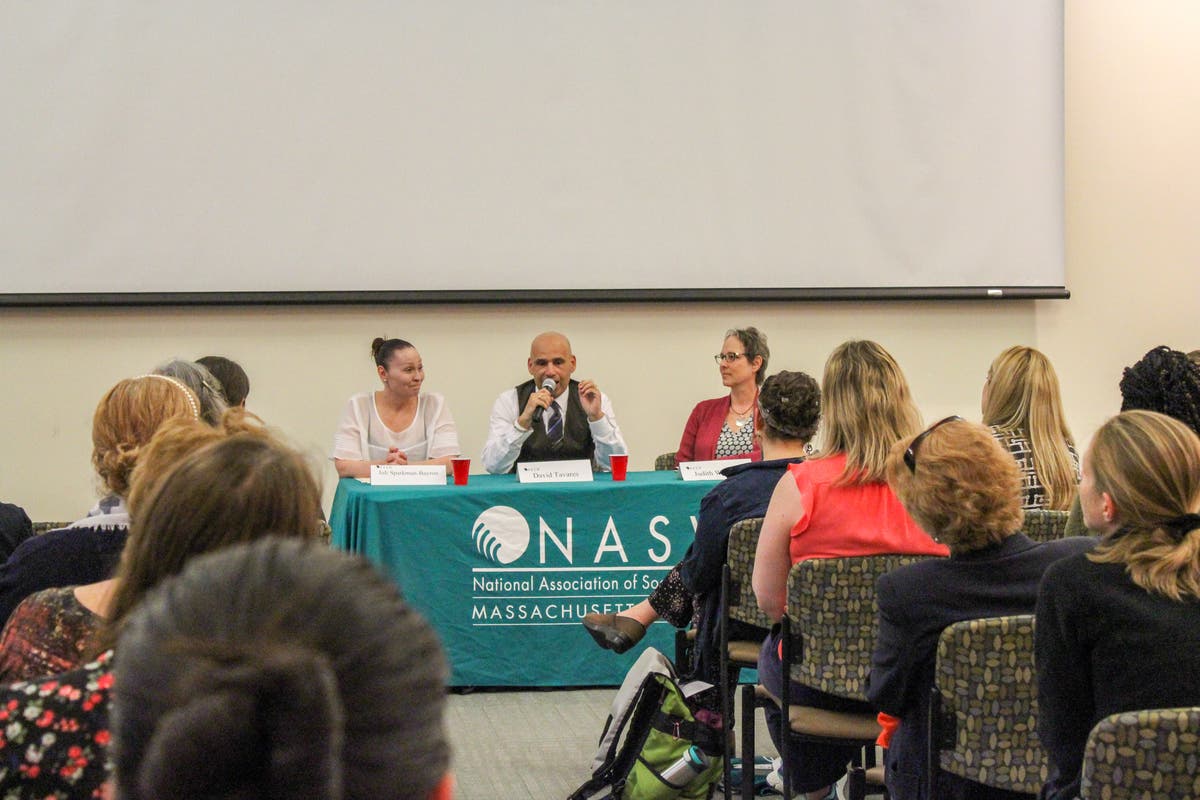
Earlier this month, the Massachusetts chapter of the National Association of Social Workers (NASW) hosted their fourth annual forum on racism in the criminal justice system. In addition to a screening of the eye-opening documentary “13th,” a panel of two incarceration survivors and one social worker spoke about the problematic system.
On the panel, David Tavares, director of housing at the YMCA of Greater Boston, Judith Willison, assistant professor at the School of Social Work at Bridgewater State University, and Joli Sparkman-Bayron, re-entry coordinator at Bethany House Ministries, spoke about their experience in and working with victims of the criminal justice system.
Tavares and Sparkman-Bayron had both been incarcerated and revealed the trials inmates face before and after release. Sparkman-Bayron explained how those who can’t afford bail are detained in jail. She said administration pressures arrested individuals to plead guilty and settle for a lesser sentence, whether or not they committed the crime. Those who don’t settle must wait in jail for a trial, sometimes that takes years. “Sitting in that little, cold cell, I had no idea when I was going to get out, who was going to help me, or what was going on,” said Sparkman-Bayron.
Find out what's happening in Brooklinefor free with the latest updates from Patch.
After incarceration, those charged with a felony lose their voting privileges permanently and are unable to apply for a passport. “It didn’t matter that I had done everything I possibly could to turn my life around,” said Tavares. “I learned long ago that life isn’t a journey we travel on a linear path.” According to Willison, six million people in the United States can’t vote because they were formerly incarcerated. Many of these voters might have advocated for criminal justice reform, and so by depriving them of their voting rights, the system slows progress.
The panel echoed the thesis of “13th,” which illustrates how the criminal justice system is structured to keep high numbers of people incarcerated because those detainees generate revenue. Not only does it keep the prison suppliers in business, but also many inmates provide free labor for major corporations under the guise of rehabilitation.
Find out what's happening in Brooklinefor free with the latest updates from Patch.
Tavares said true rehabilitation would break the prison cycle, and so it’s avoided. “Ninety-six percent of the people in the master’s degree program I was in never returned to prison. No wonder they got rid of it,” he said.
Find out online how to get involved with NASW’s criminal just work and future events.
BrooklineHub.com is a 501C3 non-profit dedicated to reporting and commenting on life, culture and community in Brookline. As part of our mission, we advocate for non-profits vital in making this a better place to live, and by sponsoring and supporting events that promote community-building. We hold the belief that as a community, we should foster the well-being of all, remaining mindful of our young people, seniors, and underprivileged.