Arts & Entertainment
Q&A With Author Hallie Ephron: Mystery, Haunting Images And A Meat Grinder
Hallie hails from the famous Ephron family, who are compared sometimes to the Bronte sisters... She told Patch why that doesn't exactly work


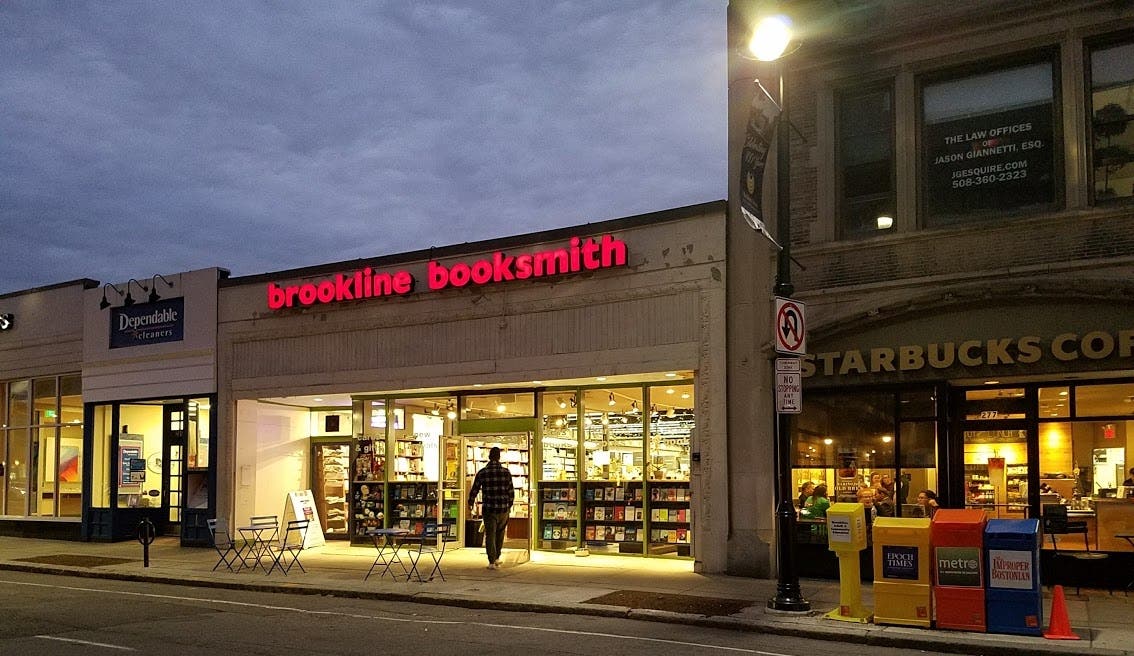

BROOKLINE, MA —Brookline Booksmith is at it again, they're hosting esteemed author Hallie Ephron as she launches her latest book “You’ll Never Know Dear.” The book is a bit of a cross over between suspense and women’s fiction, and it’s getting good reviews already. Ephron has teamed up with investigative reporter Hank Phillippi Ryan to chat about the book June 6 - and there will be refreshments. Who doesn't love a good book and a snack?
Hallie is of the famous Ephron family, compared sometimes to the Bronte sisters, although as Hallie points out there were only three of those sisters and two died young, so she’s not sure which one she’s supposed to be. She took a few moments to chat with the Brookline Patch over the phone on a rainy day this week from her home in Milton.
(Note: the interview has been edited )
You were a teacher before you became a writer, but did you always write? When did you start writing?
Find out what's happening in Brooklinefor free with the latest updates from Patch.
I didn’t. I always wrote, but I never wrote fiction. [After teaching] I worked for a long time in high tech where I was writing training materials and marketing materials and then had my own marketing business. But I didn’t write fiction or really essay or memoir until I was probably in my 40s.
What prompted the fiction writing?
I think getting old enough to feel like I didn’t get compared to my sisters. The bar is really high when your sisters are Nora and Amy and Delia.
Find out what's happening in Brooklinefor free with the latest updates from Patch.
I’m not a natural writer, I don’t keep a diary, I’m not just one of those people who just writes to write. So I had to make myself. But knowing I had the same genes as my family. I just figured I had to go through the motions and maybe things would work out.
The real trigger was I got a call from freelance writer wanting to write about me because I was the only sister who didn’t write. That pissed me off. I thought if anyone is going to be writing about me not writing, it should be me.
So I started writing about not writing. That equated to a whole series of personal essays that went nowhere. There were all sorts of structural issues, I had to learn what is a storyline… what’s forward momentum.. All that stuff I had to learn. I thought ‘oh this will be easy,’ but it took me 10 years to actually get published.
How did you learn?
I took classes. There was a wonderful teacher at a Radcliffe Seminar, Arthur Edelstein I took it for about three semesters. And I joined a writing group and listened to people who told me what was wrong with my writing.
I think that’s the big thing that separates a successful author from non: I listened to criticism. I heard and was open to it. I didn't always follow all the advice but I listened. It took a long time and lot of rejection.
Why suspense novels?
Well I started by writing mystery novels. I wrote five with a partner for St. Martin’s about a forensic neuropsychiatrist that was a series. Then I decided I wanted to write slightly bigger stories about more personal things. So that’s suspense. And all over my novels are really about family relationships who can you trust they’re a little creepy but not icky. And they keep you turning the pages but because you want to know what’s going to happen to the characters not because you want to know if the building is going to blow up. They’re driven more by emotions.
Where do you get your ideas?
Everywhere. The new book, the idea for “You’ll Never Know Dear” is from a friend, who was telling me about moving her mother , who was elderly and living in the family home in North Carolina and she went to move her into assisted living and her mother was a doll maker and the house was full of dolls and when she looked under the beds she pulled out all these boxes of doll parts.
ug.
I know, creepy, right? Eyeballs, heads, legs...
And it really haunted me, that image. Her mother made porcelain dolls so they were carefully made and every doll unique. The book is about a little girl disappears with a handmade porcelain doll, and 40 yrs the doll comes back. And the sister who was supposed to watch her thinks they might finally figure out what happens.
I knew that doll parts would be important to the book, but didn’t know how.
What kind of writing process do you have?
It’s fairly chaotic. I usually gets inspired by something; in this case by doll parts. I knew it would be set in the South and that there would be a doll maker and three generations of women. But I didn’t know what happened to the little girl who vanished. I didn’t know who did it or why. So for me - there’s that quote jump and the net will appear - I kind of set up the platform and hope that in the process of writing I’ll figure out the story.
What’s the most difficult part about writing?
Writing. Writing is hard. Writing is really hard.
So do you have little tricks to keep yourself at the desk?
My cell phone has a timer on it – I guess everyone’s does – so I'll disconnect from the Internet and set it even to just 30 minutes to just stay on task. If I can do an hour a day of rally on task that will generate a rough draft in six months. It takes me two years to finish writing a book.
I’m not one of those people who says ‘I love to write,’ I don’t. I say it’s like pushing wood through a meat grinder.
And yet you keep doing it?
I do because of the pleasure on the other end. How much fun is it to read what you wrote. Even when it’s not good. I love revising.
You grew up in a family that valued books and writing and reading, how does that play into your writing career?
I think every day, I grew up in a house full of books and the written word, my mother would recite poetry after dinner at the dinner table. I got to know a lot of poems by heart. And just the sound of the written word is something that I experienced as a child. I read a lot of poetry, we started reading early and read a lot and I think that really imprints itself on you. It’s something which is both a gift and a barrier because when you start writing. If you’re a good reader you know how bad your work is and it makes it hard to keep going in the early stages. Getting from your first first draft to better writing is really a big step. I can completely understand why a lot of people just give up. Because your work stinks. My best advise to writers is hold your nose and write. You can fix it. If you keep holding yourself to that standard you’re never going to get anywhere.
Why launch at the Brookline Booksmith?
I always do the Brookline Booksmith because they have created community. They sell a lot of books they’re a wonderful Independent bookstore. they’re the No.1 place in the Boston area for wanting your book to be featured and sold. But it’s mostly them having created a community of readers.
I have to ask, your family, especially Nora has spent a lot of time in the public eye,and all of your sisters have strong writing careers, how do you feel about the public eye? How does it sit with you?
(Laughs) Oh honey, I’m not in the public eye. I would love to be in the public eye. Nora was and she protected her self. She was in the public eye to the extent that it served her career and goals. She was not a publicity whore at all. I would love to be in the public eye. What a great problem to have.
Read more about Hallie Ephron's book launch: June 6 at the Brookline Booksmith.
"You'll Never Know Dear," is published by William Morrow. Image screen shot from the Library youtube video. Booksmith by Jenna Fisher/ Book cover image courtesy of William Morrow.
Get more local news delivered straight to your inbox. Sign up for free Patch newsletters and alerts.