Schools
Longtime PACE Program Strives to Boost Elementary Experience for Students
The program has been apart of Canton's public school system for more than three decades, and allows students the chance to balance classroom work and other responsibilities.

Canton's Program for Academic and Creative Enrichment, also known as the PACE Program, is offered to Canton Public School students who are gifted and talented in Grades 3-5.
Students who are in the PACE Program, which has been apart of Canton for more than 30 years, must balance their classroom work and the program responsibilities.
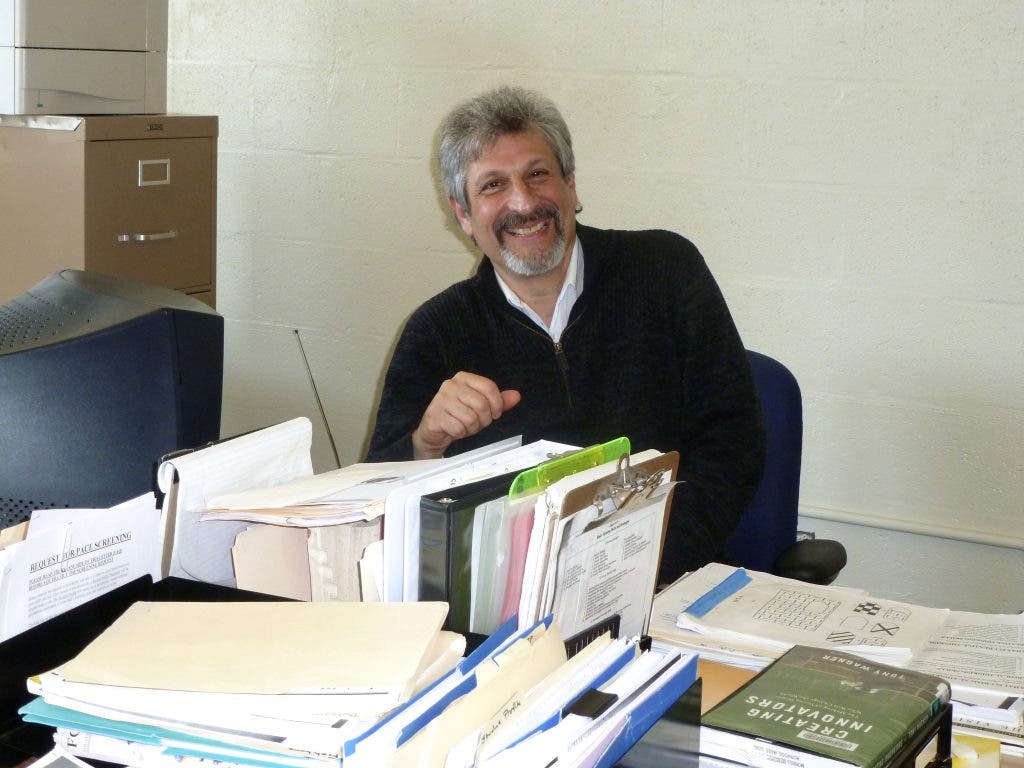
Dr. Robert Gruberman, PhD, took over the program in 2002, has taught everything from elementary to college classes, has done work in curriculum and in administration, and says he's always been fascinated with both the process of conceptualization and the development of higher-order thinking.
Find out what's happening in Cantonfor free with the latest updates from Patch.
Canton Patch sat down with Gruberman to learn more about what the program has to offer our students.
Patch: What is PACE?
Find out what's happening in Cantonfor free with the latest updates from Patch.
Gruberman: PACE (Program for Academic and Creative Enrichment) is the gifted/talented program for Grades 3-5. The program has been a part of the Canton Public Schools for more than 30 years (which is a real credit to Canton as many school districts have disregarded or abandoned this population). The program employs a range of strategies and methods to develop student reasoning, creativity, concept development, and problem solving, while targeting individual gifts and talents.
Patch: How does PACE differ from traditional instruction?
Gruberman: As the program is developed specifically to meet the unique learning needs of these students, we work to continually update and modify the program to reflect the most current research in the field, while factoring in national standards and best practices. These children perceive, process, and produce differently than their peers and require a different approach in order to elicit and maximize both latent and developing abilities. Our focus is on the development and application of reasoning, higher-order thinking, and creative abilities. To accomplish this we craft a specialized curriculum and instructional model focused around themes, concepts, issues, ideas, and principles, employ a multidisciplinary and multiple modality approach, and teach thinking skills as self-governing and self-monitoring processes, which helps children create, modify, and examine their own learning strategies.
Patch: Who is eligible to participate in PACE?
Gruberman: All students in Grades 3-5 are eligible to apply for the program. Usually only third graders, recent fourth and fifth grade transfers to Canton, and students who have never applied are screened. Once students enter the PACE Program, they have the option of staying through Grade 5. Students are brought into the program based on demonstrated need as determined by a broad range of assessments, student profiles (anecdotal evidence from parents) and teacher observations.
Patch: Is this program appropriate for all children?
Gruberman: Parents must weigh several factors in considering whether or not to apply to the program. PACE is neither an academic challenge nor a remedial program. Rather, it is a highly specialized curricular/instructional model designed to address the unique learning needs of identified students. Students move through increasingly complex, sophisticated, and challenging activities, often covering a range of subjects and learning strategies in each class. Students must be able to work with a diverse group of learners in new and unusual situations, often involving unstructured problems and scenarios. Additionally, students must maintain a strong academic and behavioral record in their home classrooms in order to participate in the program. Students must be able to balance both classroom and program responsibilities.
Patch: What is the screening process for PACE?
Gruberman: In the spring, Canton parents are sent a notice informing them of the upcoming screening sessions and offering them the option of nominating their children. Upon receipt of the nominations, students undergo a two-part screening that seeks to identify traits, skills, knowledge, ability, and potential commensurate with, or indicative of gifted learners.
Patch: How large are PACE classes and how often do they met?
Gruberman: Generally, classes contain between five to nine students. Occasionally, space or time limitations require that we hold a large group class (i.e., the entire grade level at one building). Classes meet once per week for up to ninety minutes.
Patch: What are some typical activities or lessons in PACE class?
Gruberman: Atypical would probably be more accurate. Each class is slightly different and is modified to meet the different learning needs of that particular group. That being said, there are a number of lessons or subjects covered during the school year. Some examples: Toys of the Future, Life and Mind of a Genius, The Classroom of 2225, Black Holes/Worm Holes, Einstein Space-Time, Frank Lloyd Wright and Wrong, What is Smart? Trial of Prometheus, Brain Games, Impossible Math, Saving the World, Fibonacci Forum, Challenge Math and Solving Alternate Timelines.
Patch: How are students assessed in PACE?
Gruberman: PACE students are evaluated according to highly specific, non-academic criteria. The highly differentiated curriculum, methods of instruction, and the specific goals of the program focus on critical and creative thinking skills, forms of reasoning and problem-solving rather than conventional measures such as content mastery or procedural consistency. Students are therefore evaluated in the following categories on a rating scale from 1-7 (high-low):
- Demonstrated Creative/Productive Thinking
- General Intellectual Ability
- Rapid Understanding of the Abstract
- Ability in Spatial Thinking
Additional measure are factored into evaluations, including student journals, portfolios, student projects, weekly assignments, and observation of classroom teachers.
Patch: What does the future hold for the Canton PACE Program?
Gruberman: Several years ago, I submitted a proposal that the current PACE program be modified and expanded. Specifically, I wanted to shift the program from a full service model, working only with identified students, to a resource/collaboration model that would preserve the integrity of the PACE program while simultaneously allowing me to go into classrooms and work with a broader range of students and faculty. One of the primary tenets of gifted education is a focus on higher-order thinking and forms of reasoning, methods that are equally applicable, indeed essential for all students.
Working with Jen Henderson, the Director of Curriculum, Instruction and Technology, a plan was formulated to begin working with teacher teams across the town to help develop these skills in their classrooms. Subsequently, arrangements were made for me coordinate with grade-level teams at each of the elementary schools. Over the past four years I have had the opportunity to work in a number of third, fourth, and fifth grade classes using G/T techniques and methods to help develop math, science, ELA, and social studies concepts and understanding. One of the great benefits of this initiative has been the chance for me to work more closely with my colleagues, sharing ideas, strategies, and modifications.
I’m extremely fortunate to work with very talented and knowledgeable teachers and the opportunity to observe, learn from, and incorporate their strategies and approaches has expanded my own repertoire and understanding of instruction. Additionally, this process permits me to work with a broader range of students as well as work with PACE students in different settings and contexts.
For more information on the PACE program contact Gruberman at grubermanr@cantonma.org or 781-821-5060, ext. 1520.
Get more local news delivered straight to your inbox. Sign up for free Patch newsletters and alerts.