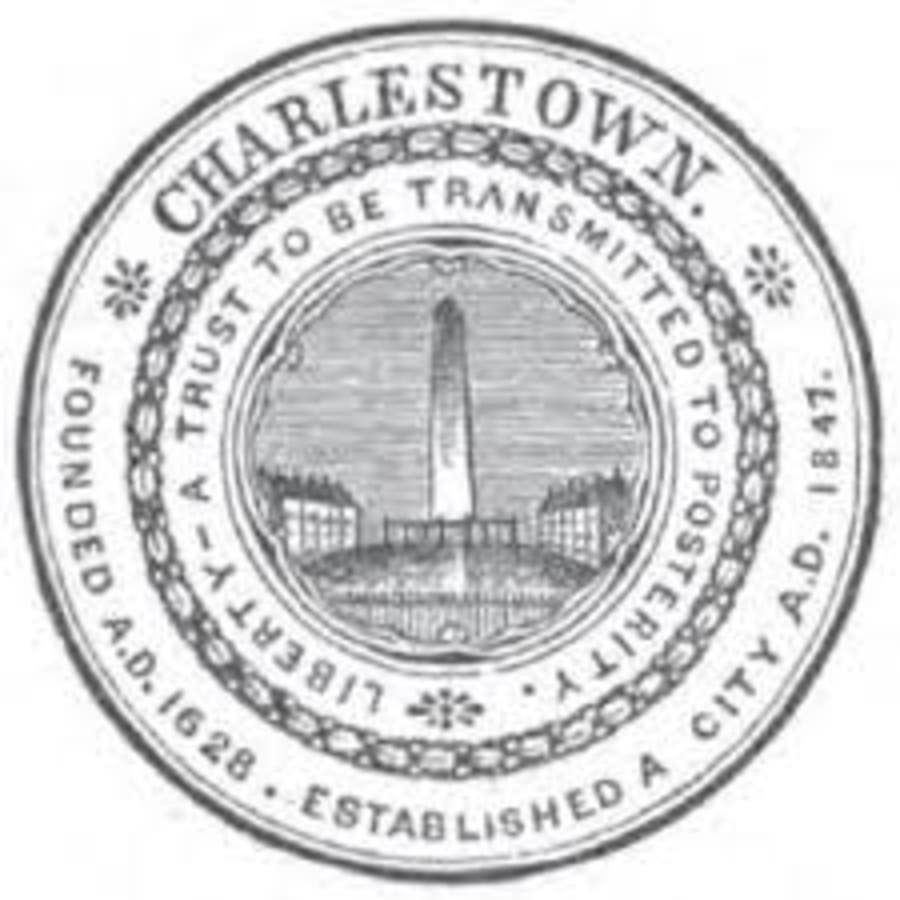
As Charlestown approaches its 400th birthday, it might be worthwhile to reflect on its past as it plans for its future.
Eighteenth century British historian John Oldmixon called Charlestown the Mother of Boston. She, that is Charlestown, in a way did give birth to Boston. She was settled first. It was lack of water that led settlers off the peninsula to Shawmut (Boston). Except for Salem, Charlestown is the oldest settlement of Massachusetts Colony and was considered its capital.
At the time of the Battle of Bunker Hill there were between two and three thousand inhabitants and about 400 structures. When battle was imminent, women and children fled the town. The men remained to fight. Many died and the town was burnt to the ground. That’s why, unlike Salem, for example, there are no seventeenth century structures here.
Find out what's happening in Charlestownfor free with the latest updates from Patch.
Charlestown became part of Boston in 1874. In the early 1900’s the elevated railway went up along Main Street, carrying passengers from Medford and Somerville to downtown. I often wondered what it was like for people living along Main Street, to have to endure the noise, clatter and dirt from the elevated. To lose the sunlight. While the railway offered faster ways to access downtown, the effect on Main Street and surrounding streets was disastrous. Businesses closed, houses were boarded up. By the 1950s Charlestown’s population had dropped 40 percent. In addition to laying down of elevated train tracks across Main Street, Charlestown endured other damaging government planning. There was the 1942 razing of a neighborhood to build the Bunker Hill Housing Development. In the 1950‘s dozens of homes were bulldozed to build the Tobin Bridge. The town, in essence, became a sitting duck for the newly-formed Boston Redevelopment Authority’s heralded Urban Renewal. The West End had been razed as part of the BRA’s revitalizing slum clearance initiative. Within several weeks time, with little advanced notice, the BRA displaced 7,000 West End residents. Charlestown was next. In April 1960, the head of the BRA described Charlestown as a ‘slum, as bad as any I have ever seen.’
To mobilize Charlestown, and protect it, a group of residents formed the Federation of Charlestown Organizations. Robert L. Lee of Winthrop Street served as the federation's president, overseeing the activities of more than 50 local organizations, including the Boys Club, Charlestown Historical Society and the Daughters of Isabella. Sounding like a great orator, Lee told federation members they were engaged in a battle, not unlike the Battle of Bunker Hill. Lee passionately called for a ‘resurrection’ in Charlestown.
Find out what's happening in Charlestownfor free with the latest updates from Patch.
Joining the older, more established groups in the federation was a new organization that called itself SHOC, which stood for Self Help Organization of Charlestown. SHOC's members were homeowners, parents of children who attended local schools, factory workers and professionals. Led by its president, Leo Baldwin, SHOC went on high alert. One SHOC member drove his station wagon through the town, shouting through a bullhorn, for residents to pay attention to what had happened in the West End.
In his book ‘Planning the City upon a Hill,’ Lawrence W. Kennedy noted that 90 percent of Charlestown residences were earmarked for rehabilitation, which, in broad definition could mean anything from forced remodeling to forced surrender of property under eminent domain.
For six weeks SHOC members traveled every morning, five days a week, to Boston City Hall to attend Redevelopment Hearings on Charlestown, sponsored by Boston City Council and the BRA. SHOC members took their places in the gallery to listen before taking their place at the microphone to protest urban renewal in Charlestown.
My mother was one of SHOC's members. She, a stay-at-home mother of seven once reminisced: ‘I don't even know how we got the car fare to go there every day but we knew we had to. All the mothers knew that. We had to be there.’ These residents brought the needed attention to Charlestown's plight, provided the necessary resistance and, in light of the West End debacle, with BRA public relations in tatters, coerced BRA officials to revise Charlestown plans.
A BRA local office within Charlestown's boundaries was established. A series of meetings began. Revisions included the promise that no more that 11 percent of the homes would be taken. The BRA began a massive long-range $64 million renewal project, emphasizing remodeling of existing homes and low-cost loans available to homeowners. These actions toward a true redevelopment, along with the razing of the elevated train in 1976, began the preservation of the Charlestown neighborhood.
What, then, does Charlestown’s former history have to do with now? Charlestown presently has the greatest population density of any of Boston’s neighborhoods, yet building continues, creating worse pollution and traffic jams that have to be experienced to fathom. Studies show the pernicious long-term effect of overbuilding on health and welfare.
As a woman mentioned at a meeting last week, except for its initial settlement in 1628-1629, Charlestown has never had a Master Plan. Couldn’t the city once again engage with the residents to hear their concerns? Early Charlestown literature speaks of the beauty here. In 'Travels in New England and New York', Timothy Dwight wrote of Charlestown: The peninsula presents a site for one of the most beautiful towns in the world. One of the most beautiful towns in the world. That is the legacy of Charlestown. This is our legacy. This is our responsibility.
Sections related to BRA and urban renewal are from 'Struggling to Keep their Homes: Charlestown and the BRA', by the writer. Originally published in Charlestown Bridge, Nov. 9, 2005.