

The World Came to Boston
FIFA and Sail Boston 2026 Bring the World to Boston
By Iolanda Volpe
Find out what's happening in Charlestownfor free with the latest updates from Patch.
The morning after France beat Morocco, I was in a North End grocery store when an employee arriving for his shift was met with hugs and backslaps from his coworkers. One of them glanced at the customers in line and explained: "He's from Morocco. They lost."
Everyone nodded. A man ahead of me finished paying at the register, and turning to another employee, said quietly: "Be nice to him today."
Find out what's happening in Charlestownfor free with the latest updates from Patch.
The interactions lasted around 15 seconds. From what I could tell, no one in the store was French or Moroccan, other than the one employee. For a moment, a World Cup loss that did not include the USA became something to identify with. The moment felt personal, local, and above all, empathetic. A soccer game, a win, and a loss prompted people to eschew language and cultural barriers. And strangers connected through simple humanity.
Many locals experienced similar connections with visitors this summer. Without traveling beyond their city or neighborhood bars, Bostonians embarked on experiences usually associated with traveling to other countries.
Soccer teams from across the ocean came ready to compete: England, France, Ghana, Haiti, Iraq, Morocco, Norway, Scotland, and Senegal played at Boston Stadium, aka Gilette Stadium, in Foxboro. Large groups of fans came to cheer them on. Bostonians who did not buy a ticket still found themselves swept up in the passion and camaraderie that the World Cup generated. The city designated watch sites featuring jumbotrons, many outdoors; the fans’roars at near-misses and goals could be heard from a distance. Passersby stopped and took photos and videos to share on social media.
The Scottish supporters became a local legend known as"The Tartan Army”. Donning their kilts, they turned historic streets into stadiums and monuments into “cone heads". Bars and restaurants welcomed the business boost as locals joined the enthusiastic fans in raising glasses to teams they knew little or nothing about.
Within days, Scottish fans bonded with Bostonians. Their cheerfulness and passion for their team were contagious. To commemorate this international friendship, city leaders and Mayor Michelle Wu declared Glasgow, Scotland, Boston’s new sister city.
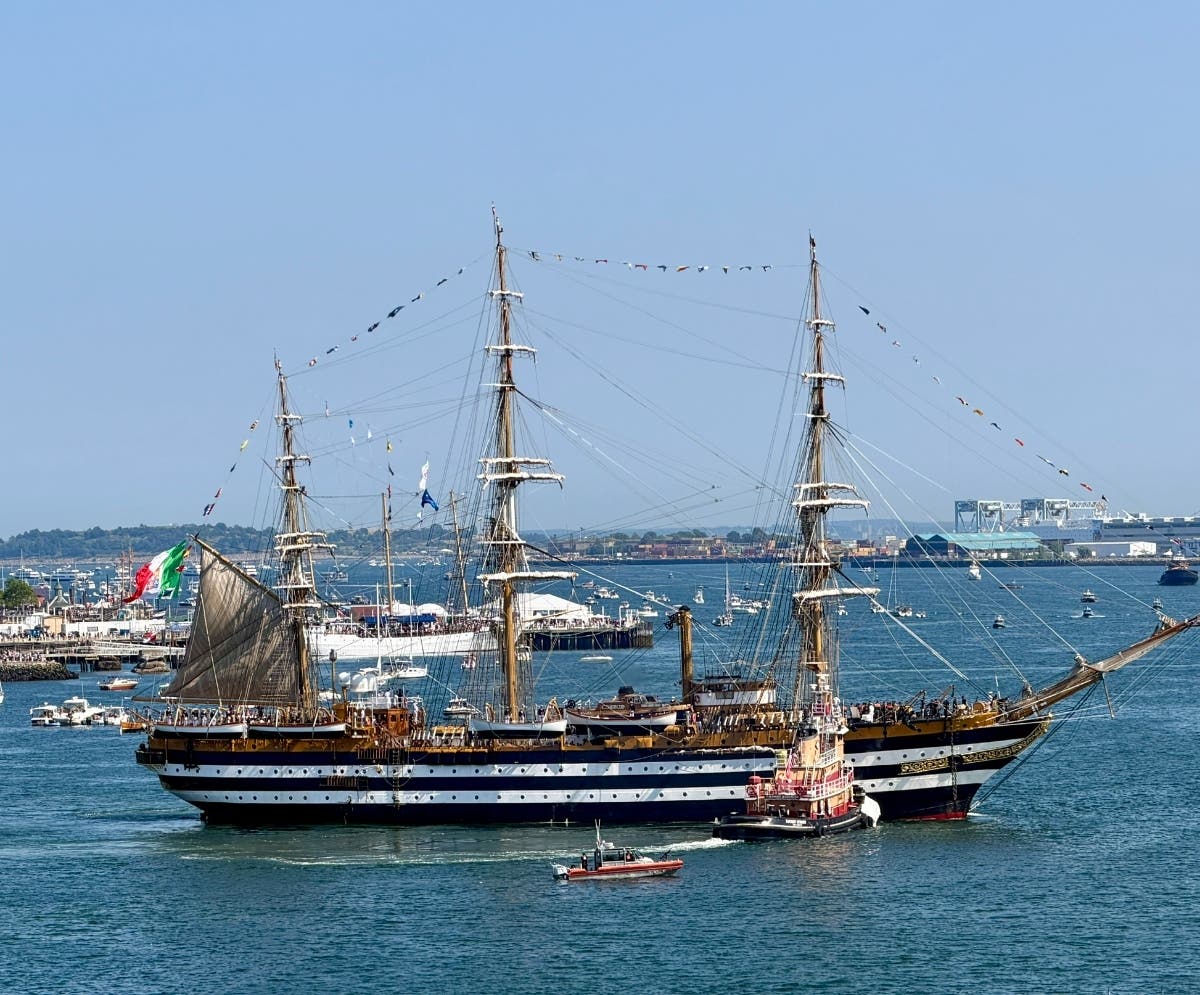
As the FIFA World Cup matches continued, around sixty tall ships and military vessels from over twenty countries paraded in the harbor for the nation's 250th birthday. The spectacular tall ships docked along the waterfront. At night, the majestic masts held lights in the colors of their national flag. Framing the city skyline, they illuminated the waterfront, turning it into a glowing map of the world. Quietly, the tall ships commanded the attention of modern buildings and the white steeple of the Old North Church.
Different languages could be heard in the streets, and a festive atmosphere was everywhere. The World Cup and Sail Boston 2026 transformed the city— it became similar to popular global tourist attractions. No expensive air flights, no jet lag, no passport needed for Bostonians— others traveled a long way to be here.
Many believe that the most salient benefit of international travel is learning about people and their cultures. Others may agree with this quote attributed to Mark Twain: "Travel is fatal to prejudice, bigotry, and narrow-mindedness.”
I don’t know how this summer’s events and global interactions impacted the Bostonians’worldview.
I don't know if the children who watched sailors climb rigging on tall ships were inspired to someday travel to faraway places, or if they will remember that many countries came to celebrate our nation’s 250th birthday.
Did the World Cup instill a passion for soccer (le foot, calcio, fúltbol) in the U.S.? Will the cheering and sing-alongs shared with the Tartan Army become a distant memory without lasting connections? Time will tell.
For now, what is certain is that in the summer of 2026, Bostonians felt a close bond with the world beyond their city and country. They rejoiced at wins and were disappointed at missed goals with the fans of teams they don’t follow. They found a common ground and celebrated a shared humanity with strangers.
It’s certain that in one ordinary grocery store moment, something extraordinary happened. Grown men who had never met were empathetic and vulnerable across cultural and linguistic divides. And that is something. Especially today, when embracing new connections across borders and differences is desired by many, but often seems unattainable.
That connection felt in the grocery store was real; as real as the fans’ raw emotions captured in close-ups during the broadcasts of the matches. It will stay with those who felt it long after the last ship sails away, the last fan leaves, and the last traffic cone is removed from Boston monuments.