Neighbor News
Falmouth: MassCEC 2016 Community Wind Turbine Manual
Section 3.1 Detailed Acoustic Study Requirements. Note MassDEP has launched a process to revise its wind turbine noise policy.
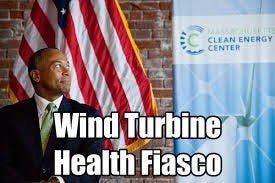
Former Governor Deval Laurdine Patrick pictured above aka sally.reynolds@state.ma.us served as the 71st governor of Massachusetts from 2007 to 2015. The former governor may have used the email address to avoid Freedom of Information Request over commercial wind turbines
MASSACHUSETTS CLEAN ENERGY CENTER NOVEMBER 2016 WIND TURBINE MANUAL
Commonwealth Wind
Find out what's happening in Falmouthfor free with the latest updates from Patch.
MassCEC's Commonwealth Wind (CommWind) Program assists appropriately-sited wind energy development in Massachusetts that can help achieve the Commonwealth's goals for a clean environment and a robust economy. Grant funding and technical assistance is available for residential, commercial, industrial and public facilities, and is based on the size and other characteristics of the wind project. Detailed information regarding the Commonwealth Wind Program is available in the Commonwealth Wind Program Manual

.MassCEC's Acoustic Study Methodology for Wind Turbine Projects, found in the Commonwealth Wind Program Manual, establishes a standardized methodology for concluding acoustic studies for projects that receive or request technical or financial support from MassCEC.MassCEC's Contractor Database provides a list of companies that provide various services related to wind development. Companies are listed upon request; they are not vetted or endorsed by MassCEC.
Find out what's happening in Falmouthfor free with the latest updates from Patch.
COMMONWEALTH WIND
Program Manual Community and Commercial Wind Projects Posted:
November, 2016
5.1 PROJECT REVIEW CRITERIA: APPROPRIATE SITING
To be eligible for funding, projects must meet or be expected to meet all of the following minimum project criteria:
Sufficient Safety Setbacks – Project sited far enough from residences, buildings and public ways to ensure a high margin of safety.
Technical Viability – Project equipment is certified and able to be transported to the site and interconnected to the grid.
Economic Viability – Project is expected to result in a positive cash flow.
Minimal Acoustic Impacts – Acoustic levels are expected to comply with MassDEP’s noise regulations (NOTE 1) based on rigorous analysis with conservative assumptions and a margin of error.
Minimal Shadow Flicker Impacts – Shadow flicker impacts are expected to be minimal or can be mitigated.
Minimal Environmental Impacts – Project will not significantly impact wildlife or protected land.
Compliance with Regulations – Project complies with all local, state and federal regulations.
General Community Support – Applicant has conducted significant outreach to engage community stakeholders throughout the feasibility study and development process. Both onsite and offsite stakeholders are aware of exp
Note 1
Reference above Section 3.1 Detailed Acoustic Study Requirements.
Note that MassDEP has launched a process to revise its noise policy, at least as the policy relates to wind turbines.
Commonwealth Wind Program Manual for Community and Commercial Wind Projects
Page 11 and 12 of 32 above click link to read entire manual
http://files.masscec.com/get-clean-energy/govt-np/wind/CommWindProgramManual2016.pdf
Massachusetts Clean Energy Center Board of Directors
http://www.masscec.com/masscec...
Massachusetts Clean Energy Center Board of Directors :
- Secretary Matthew Beaton, Massachusetts Executive Office of Energy & Environmental Affairs
- Martin Aikens, Business Agent, International Brotherhood of Electrical Workers, Local 103
- Secretary Jay Ash, Massachusetts Executive Office of Housing and Economic Development
- President Anthony Benoit, Benjamin Franklin Institute of Technology
- President John B. Cook, Springfield Technical Community College
- Tom Galvin, Director, RESHydro
- Bob Haber, Chief Investment Officer, Proficio Capital Partners
- Commissioner Judith Judson, Massachusetts Department of Energy Resources
- Secretary Kristen Lepore, Massachusetts Executive Office for Administration and Finance
- President Marty Meehan, University of Massachusetts
- Deborah Mutschler, Executive Director, Massachusetts Workforce Alliance
- Secretary Ron Walker, Massachusetts Executive Office of Labor and Workforce Development