Neighbor News
Falmouth Wind Turbines Monuments To Culture of Corruption
Falmouth: Second To Beacon Hill 3 Speakers of The House In A Row - Now Possibly the State Senate President Involved In Corrupt Activities
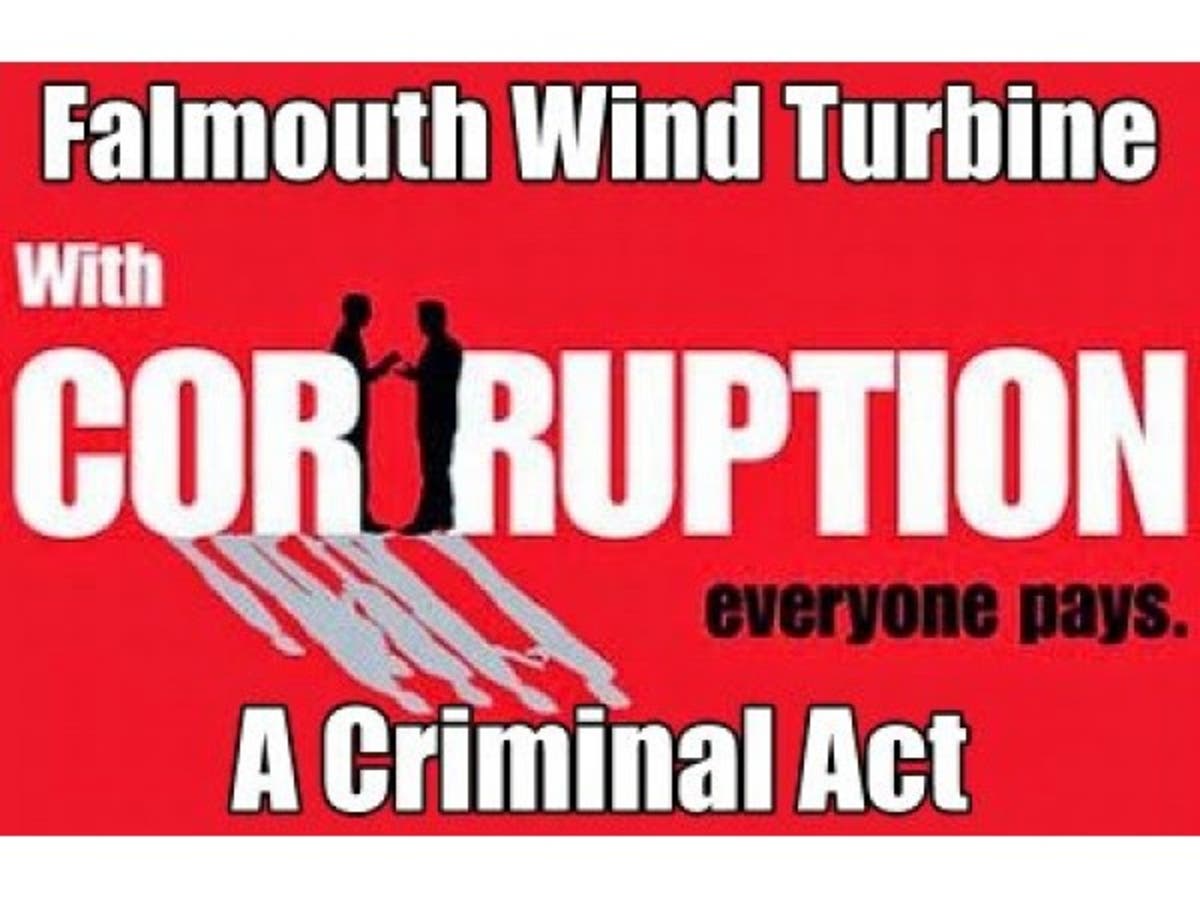
Up to 67 residents of Falmouth complained to the Board of Health saying the sounds coming from large, town-owned wind turbines are making them sick. The residents say that the nearly 400-foot 110-decibel wind turbines have severely impacted their quality of life.They talk about noise and health issues, but the types of sound aren't the only thing generating discontent. There also are complaints about a phenomenon called "shadow flicker" explained as the sun passing through the blades during the day into the homes.
The turbines are not silent they are described as torture from lack of sleep, additional claims of health impacts are headaches, ringing in the ears, and depression. The Massachusetts Clean Energy Center formerly the Massachusetts Technology Collaborative was aware of two distinct types of noise from the wind turbines Regulatory measured in decibels and human annoyance or what is called low-frequency infrasound today. The United States Department of Energy knew of wind turbine infrasound in 1987.
Today there is plenty of data that resolved the issues.The Town of Falmouth Zoning Board a semi-judicial board under Massachusetts General Laws determined the wind turbines are a nuisance. The Massachusetts Superior Court in June of 2017 agreed with the zoning board the turbines are a nuisance and shut them down.
Find out what's happening in Falmouthfor free with the latest updates from Patch.
The residents around the wind turbines took part in one year of 26 meetings called the WTOP-CBI. The purpose of the Falmouth Wind Turbine Option Analysis Process was to engage in an open, honest, transparent, and collaborative exploration of the range of options for the long-term future of the two wind turbines.
The Town of Falmouth withheld a letter from the manufacturer of the wind turbines that showed the turbines should never have been built. The town has a long history of hiding wind turbine documents and pulling the rug out from under the neighbors even during negotiations.
Find out what's happening in Falmouthfor free with the latest updates from Patch.
The latest is a statement by Select Board Chair Susan Moran in July of 2017: “It's time to put the matter behind us and move forward,”
Today five months later the Falmouth Select Board has not appointed a committee to take down the chest pounding 110 decibel wind turbines.
The Town of Falmouth in the past was found guilty by the courts of violating its own Special Permit process 240-166.
The Falmouth town regulations require taking down the wind turbines after they cease operation. The town regulations include the Town of Falmouth.
Article XXXIV:Wind Energy Systems
5) https://ecode360.com/9076029
Abandonment or decommissioning.
(a) Removal requirements: Any WES which has reached the end of its useful life or has been abandoned shall be removed. For a scheduled decommissioning, the owner shall notify the SPGA by certified mail of the proposed date of discontinued operations and plans for removal. The owner shall physically remove the WES no more than 150 days after the date of discontinued operations. Decommissioning shall consist of:
[1] Physical removal of all wind turbines, structures, equipment, security barriers and transmission lines from the site.
[2] Disposal of all solid and hazardous waste in accordance with local and state regulations.
[3] Stabilization or revegetation of the site as necessary to minimize erosion. The SPGA may allow the owner to leave below-grade foundations in place in order to minimize disruption.
[4] Abandonment: Absent notice of a proposed date of decommissioning, the WES shall be considered abandoned when the facility fails to operate for more than 12 consecutive months.
[5] Prior to declaring the WES to be abandoned, the SPGA shall notify the owner by certified mail that corrective action must be taken. The owner shall have 30 days to respond and provide a schedule for corrective action.
(6) Financial surety: The SPGA shall require the applicant for any LWES to provide surety, either as a bond or escrow account, to cover the cost of removal in the event the Town must remove the WES together with a right-of-entry onto the property in the event of default. The applicant shall submit a fully inclusive estimate of the costs associated with removal, prepared by a qualified engineer. The amount shall be adjusted for inflation.
(7) Public inquiries/complaints: The applicant shall identify a responsible person and contact phone number in the event of public inquiries or complaints, for as long as the WES is in place. Complaints that cannot be resolved by the parties shall be forwarded to the Building Commissioner, with a copy to the SPGA, by the responsible person identified above.
Wind Turbine Noise - YouTube
Wind Turbine Noise Is Described As Torture From Lack of Sleep