Neighbor News
Whale Deaths: Breaking A Few Eggs To Make An Omelette
Ocean Wind Turbine Sonic Mapping of Ocean Floor, Construction, EMF Electric Cables, Infrasound - NOAA Continues Unknown Cause Whale Deaths
Whale Deaths: Breaking A Few Eggs To Make An Omelette
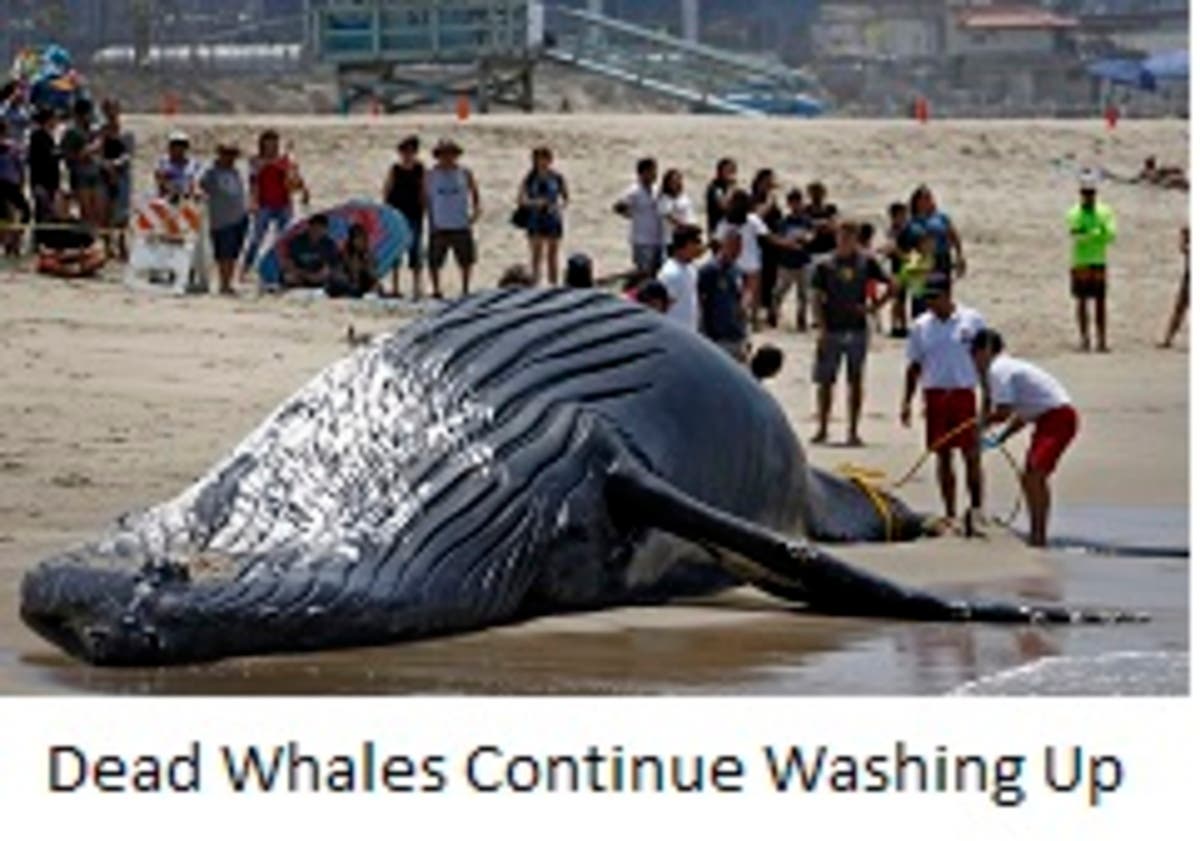
In April of 2017, NOAA Fisheries declared the recent deaths of 41 humpback whales from 2016 through Maine to North Carolina to be an unusual mortality event, triggering a focused, expert investigation into the cause.Since the announcement by NOAA to investigate the whale deaths all types of the species continue to wash up on shore.
The National Oceanic and Atmospheric Administration, NOAA is an American scientific agency within the US Department of Commerce that focuses on the conditions of the oceans and the atmosphere.
Find out what's happening in Falmouthfor free with the latest updates from Patch.
Many people remember back in Barnstable, Massachusetts in 2009 local residents asked about the two types of noise from land based wind turbines, regulatory and human annoyance or today what is known as low-frequency infrasound. The response from a state official was you have to break a few eggs to make an omelet.
Today the Massachusetts courts are in the process of shutting down the nuisance land based wind turbines causing sleep problems leading to health problems. The culprit is the two distinct types of noise from the wind turbines which include infra sound. The question now is will the same thing happen in the ocean probably yes as sound travels farther underwater.
Find out what's happening in Falmouthfor free with the latest updates from Patch.
Here it is four months later into the whale death investigation that will probably never end. The federal government has leased much of the ocean to companies who have invested millions in the offshore wind turbine projects.
The common denominator in all the whale deaths appears to be the sonic mapping of the ocean floor from North Carolina to Maine, ocean wind turbine construction, electric cables and the turbines frequency noise themselves.
Do you need to be a rocket scientist to figure this out or even a marine scientist?
The federal government has been funding the mapping of the ocean floors along the coast with high-resolution hydrographic sonar. Much of the mapping has been done with the NOAA vessel Nancey Foster
Private ocean wind turbine companies have been conducting their own mapping off the coast to find the best location for underwater electric cables and turbines. Who knows what type of equipment they use or bid the work to a foreign government as is the case in most of the wind turbine construction.
Incidentally, electric cables strung between the wind turbines emit magnetic and electric fields.Effects of EMF, electromagnetic fields from undersea cables add to the equation of noise and frequency.
Also very little concern has been raised regarding seismic surveys used on the ocean floor to measure where to place the wind turbines.
The U.S. Navy and the National Marine Fisheries many years ago released a report acknowledging the role that the Navy's sonar played in the deaths of 17 marine mammals in the Bahamas in 2000. The report was the agency's first official admission that sonar may contribute to whale beachings.
A study concluded the low-frequency sound from the Navy's sonar to damaged the whale's ears, leading them to beach themselves.
The March 2000 stranding of 16 whales and a dolphin on Bahamian beaches was caused "by the unusual combination of several contributory factors acting together."
In 2008 an unusual mass whale stranding, one of the few on record involving beaked whales, drew attacks on the Navy from environmental groups and attracted interest from biologists, including Peter Tyack at Woods Hole Oceanographic Institution (WHOI) in Falmouth, Massachusetts. "Tyack knew it wasn’t the first standing of its kind. Five similar strandings of beaked whales had coincided with naval exercises near Greece and the Canary Islands."
The range of frequencies that whales use is from 30 Hertz (Hz) to about 8,000 Hz, (8 kHZ). The whales use these frequencies to transmit up to 200 miles to identify pods and travel.
In 2015 facing several lawsuits, the US Navy has finally agreed to limit its use of sonar devices that harm dolphins and whales, especially in areas off the coast of Hawaii and Southern California.
The investigation continues into the whale deaths ....not even the news media can figure this out ?
History does repeat itself .........