Politics & Government
Supreme Court Rules in Favor of Gay Marriage
U.S. Supreme Court decided one of the most contentious civil rights issues of modern times in consolidated cases from four states.


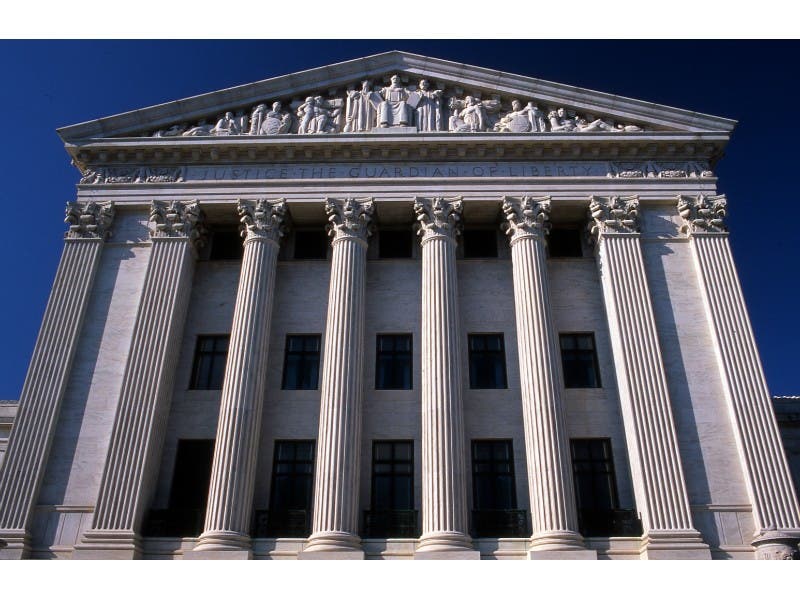
The U.S. Supreme Court issued a watershed ruling Friday in favor of gay marriage, resolving the legal issues surrounding one of the most contentious civil rights issues of modern times and ending a decades-long battle for marriage equality fought in state legislatures, courts and at the ballot box.
The ruling was 5-4.
The case before the justices – Obergefell v. Hodges, a consolidation of cases in Michigan, Ohio, Kentucky and Tennessee – pitted states’ rights against individuals’ right to marry, and traditional marriage against more modern iterations of the union.
Find out what's happening in Lexingtonfor free with the latest updates from Patch.
Today’s ruling comes during a time of historic support for same-sex-marriage. American’s attitudes have shifted swiftly and dramatically in the last decade, according to public opinion polls. Only 27 percent of Americans thought gay marriage should be legal when the Gallup Poll began posing the question in 1996; last month, support had soared to 60 percent, up from 55 percent just a year ago.
The justices addressed two key questions: whether gay marriage bans – currently in place in 13 states – are constitutional, and whether states can refuse to recognize marriages performed outside their borders.
Find out what's happening in Lexingtonfor free with the latest updates from Patch.
The justices agreed in January to hear the case. A three-judge panel of the 6th U.S. Circuit Court dealt gay marriage advocates their first federal appeals court defeat last fall, upholding the bans in the four states and setting the stage for the Supreme Court showdown.
The cases involved 12 couples and two widowers. They cases are:
Michigan: On March 21, 2014, U.S. District Judge Bernard Friedman ruled against Michigan’s voter-backed ban on same-sex marriage in DeBoer V. Snyder. The case was filed by a lesbian couple who wanted to jointly adopt children, but were prohibited from doing so by the 2004 voter-backed ban on same-sex marriage.
Kentucky: On July 1, 2014, U.S. District Judge John G. Heyburn III ruled in Love v. Beshear against a provision forbidding the commonwealth from performing same-sex marriages. That ruling followed a Feb. 12 ruling in Bourke v. Besher that said the Commonwealth could not refuse to recognize valid same-sex marriages performed in other states.
Ohio: Two Ohio cases were consolidated in the appeal before the 6th Circuit. On Dec. 23, 2013, U.S. District Judge Timothy Black ruled in Obergefell v. Hodges that Ohio’s refusal to recognize a same-sex marriage performed in another jurisdiction was unconstitutional. The case was filed on behalf of Jim Obergefell and John Arthur, who wanted their Maryland marriage to be recognized on Arthur’s death certificate before he died. The court ordered the state to recognize the marriage when Arthur died in October 2013.
Tennessee: On March 14, U.S. District Judge Aleta Trauger ordered Tennessee officials to recognize three same-sex marriages performed in other jurisdictions. The ruling was later stayed by the 6th Circuit.
Get more local news delivered straight to your inbox. Sign up for free Patch newsletters and alerts.