Community Corner
Future of Dangerous Intersection at a Crossroads [Presentation Included]
The DCR offered some potential solutions regarding the troublesome intersection of Fellsway East and Highland Ave. in Malden.


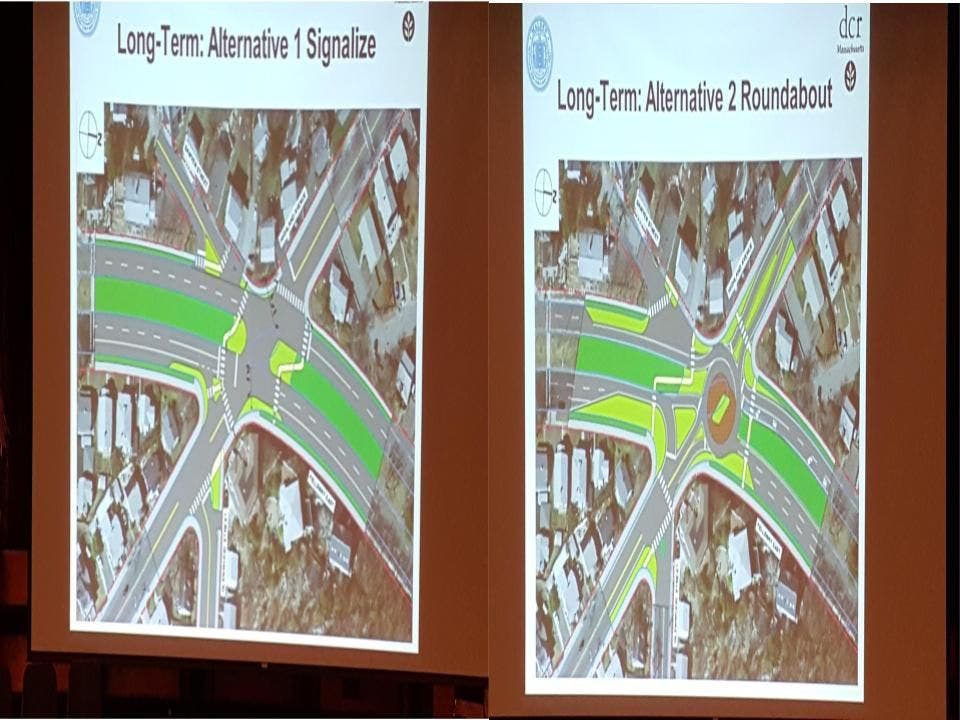
Editor's note: The full DCR presentation and additional turn data has been added at the very bottom of the story.
More than 60 concerned residents of Malden and nearby communities braved the cold to come to the Beebe School Thursday night. They all wanted to know: What does the DCR plan on doing with the dangerously convoluted intersection where Fellsway East and Highland Ave. meet?
The answer is still up in the air, but now there are at least some options, after the DCR revealed the findings of a $30,000 traffic study.
Find out what's happening in Maldenfor free with the latest updates from Patch.
The problem is what looks like a rotary actually favors through traffic. Recent minor efforts in marking who has to yield where has done little to clear the confusion. Take it from a certain Patch editor who braves the intersection several times a week: It's just not right.
Public comments may be submitted to the DCR online here or by writing to the Department of Conservation and Recreation, Office of Public Outreach, 251 Causeway Street, 6th Floor, Boston, MA 02114. The deadline for receipt of comments is Thursday, December 29, 2016.
Find out what's happening in Maldenfor free with the latest updates from Patch.
The dialogue touched on several concerns, with speeding, gridlock, pedestrian safety, and potential bike lane usage chief among them. A Q&A session at the end proved the folks who came out knew what they were talking about - many of them having lived in that area of Malden for decades and familiar with the traffic patterns.
"This intersection has been a problem my entire lifetime," Ward 3 City Councillor John Matheson said to kick off the evening.
State Senator Jason Lewis echoed their concerns, saying an April accident that resulted in a car in the house of Nancy Colonna, in attendance Thursday night, made him realize "we cannot do this anymore."
The traffic study identified several key concerns:
- High number of crashes
- Lack of sufficient traffic control
- Wide pavement areas
- Non-conformance right-of-way rules
- Outdated, conflicting, and missing signs
- Long pedestrian crossing
- High vehicle approach speeds
- High weekday morning peak hour volume
- Long queues and delays
DCR Chief of Planning and Engineering Norman Orrall spoke most of the evening and revealed two short-term and two long-term potential solutions.
The long-term solutions boiled down to traffic signals or a modern roundabout, seen in the images below.
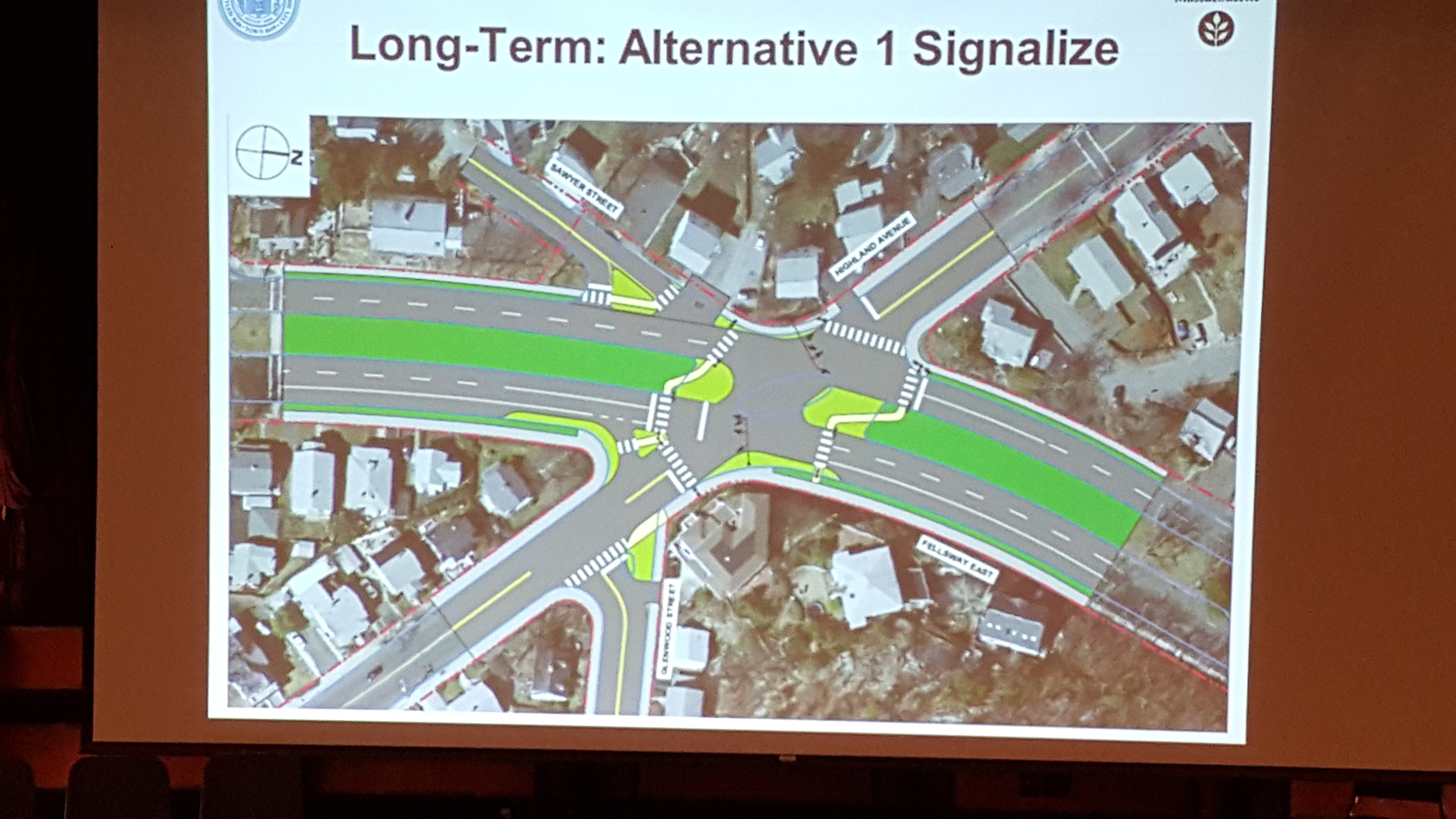
The signal alternative gets rid of the awkward island in the middle, puts traffic lights where signaled in the photo above, extends the medians (the light green above), and makes for shorter pedestrian walkways. The lights would give preference to Fells traffic unless Highland Ave. traffic approached. Orrall called it "more of a normalized intersection." There would be two lanes so that idling traffic would not back up too much during a red light; one resident brought up an air quality concern with a number of cars sitting still for too long.
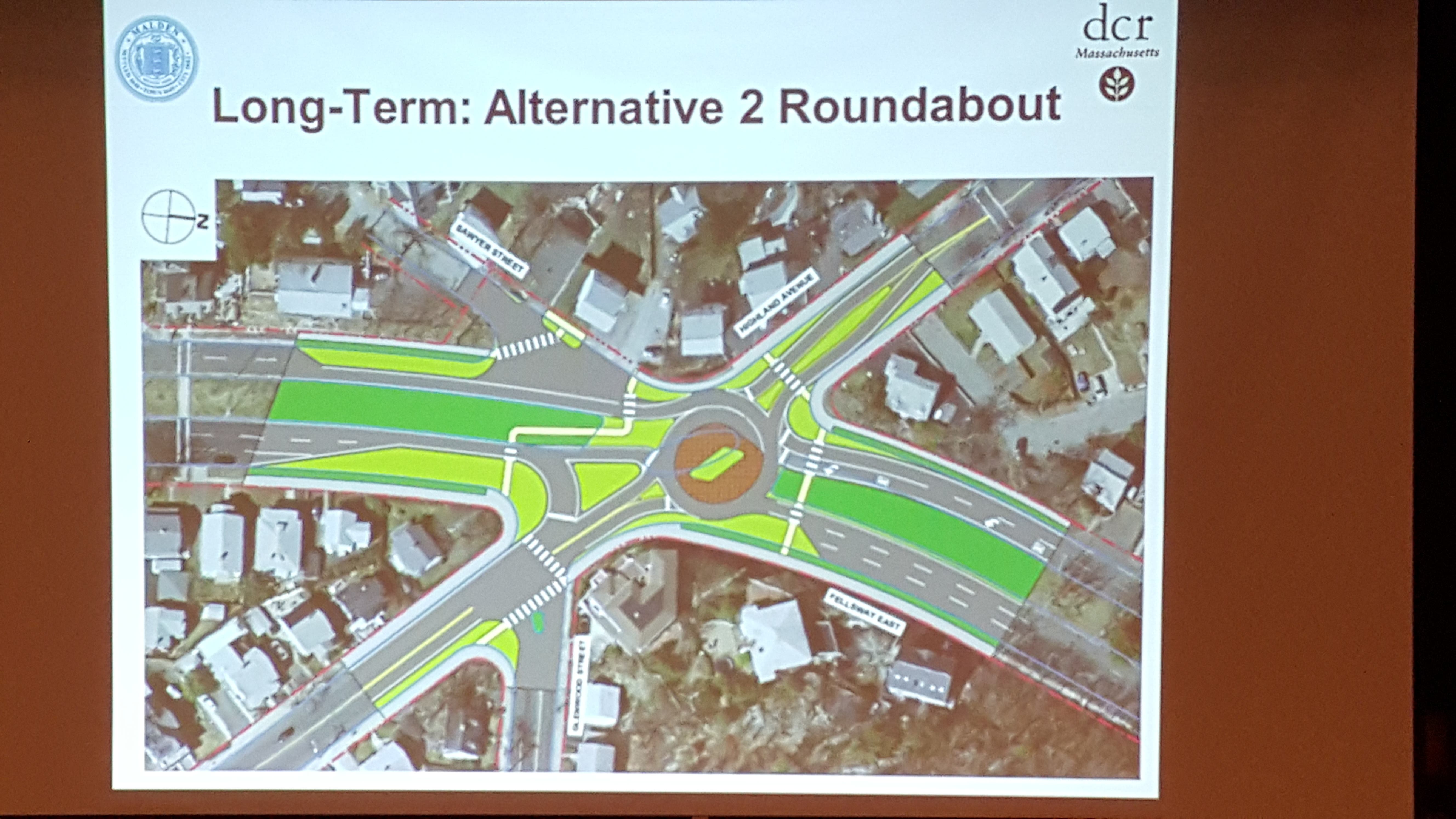
The roundabout alternative narrows traffic down to one lane and would add substantial green space, even further shortening pedestrian crosswalks in most cases. The middle would also be worked around to make it more geometric. The one lane is doable because traffic would always be moving, Orrall said. Those in the crowd who favored the roundabout did so in part because it slows traffic down for that stretch of road - going down to one lane reduces cars speeding past one another - though others said it does little to keep cars from speeding in and out of the immediate area.
"I think we probably all know speed is a problem out here," Orrall said.
Some video of the meeting, courtesy of Malden News Network
Traffic congestion was another discussion point. Some residents said even as it stands now they have trouble getting out of their driveway because of gridlock.
The signal alternative is preliminarily estimated to cost $650,000-$1 million, while the roundabout option is preliminarily estimated to cost $350,000-$500,000. Their is no timeframe for when either option could be implemented until funding is determined, Orrall said.
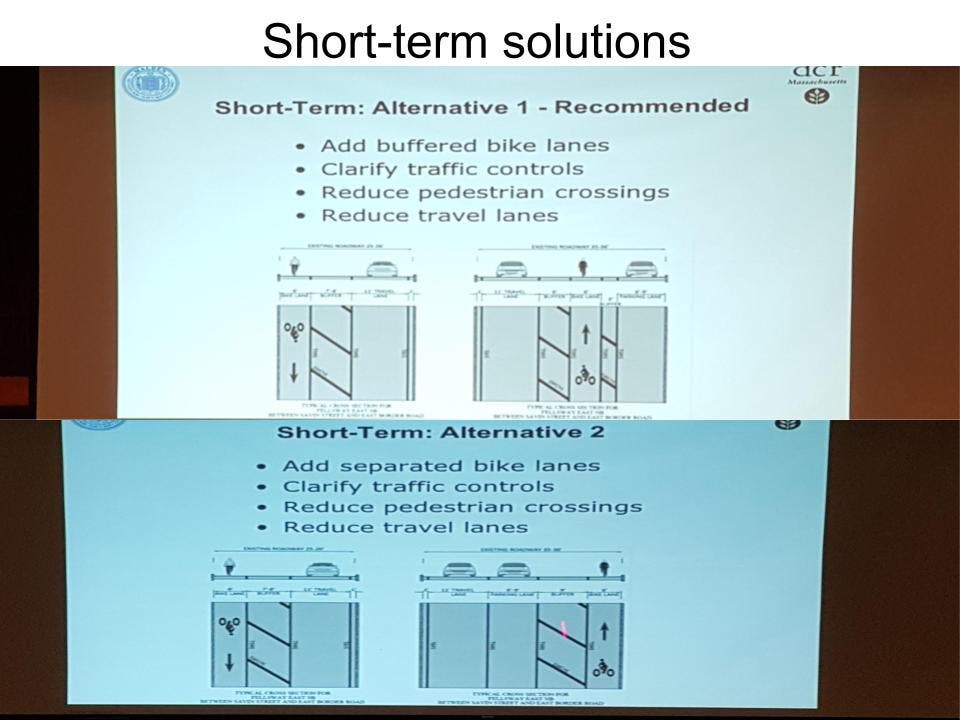
There was much less disparity between the short-term solutions - both would clarify traffic controls, reduce pedestrian crossings so they would have less road to cross, and reduce travel to just one lane from Savin Street to East Border Road with the use of pavement markings.
How the leftover pavement would be used is the difference.
Both options call for parking and bike lanes - Short-Term Alternative No. 1 would add buffered bike lanes while Alternative No. 2 would add separated bike lanes. The difference, illustrated below, is that separated bike lanes are next to the sidewalk, inside of a lane that has cars parking further out on the pavement; the buffered bike lanes are a buffer between traffic and parked cars up agains the curb. The second alternative is the one the DCR recommends; it is estimated to cost $50,000-$100,000 and would be done this upcoming spring, Orrall said.
Some in the crowd saw the bike lanes as a waste for an area with what they perceive to be minimal bicycle traffic. Others believe cyclists don't use the area because it isn't safe, and that added bike lanes will bring with it bike traffic.
"You never see bicycles on that road," said one Malden resident of 25 years, who added narrowing to one lane will further hurt traffic.
"One reason bicyclists aren't on the road is because it's dangerous," said a 15-year Malden resident.
One man who rides his bike in the area did not want a bike lane, thinking the problem was that people unfamiliar with the area don't know what they are driving through.
"Either rip it up and call it an intersection or call it a rotary and make it a rotary and be done with it," he said to a murmur of approval.
John McSweeney, a longtime resident of the Fells, thought one lane was a great idea on both sides, but wanted to see more Massachusetts State Police presence on the Fells to discourage offenders.
One cyclist in attendance, Ward 4 City Councillor Ryan O'Malley, thought the roundabout was the way to go for more pragmatic reasons.
"The roundabout is half the cost, so it's twice as likely to get done," said O'Malley.
Additionally, the study revealed peak travel times, average speeds, and crash data.
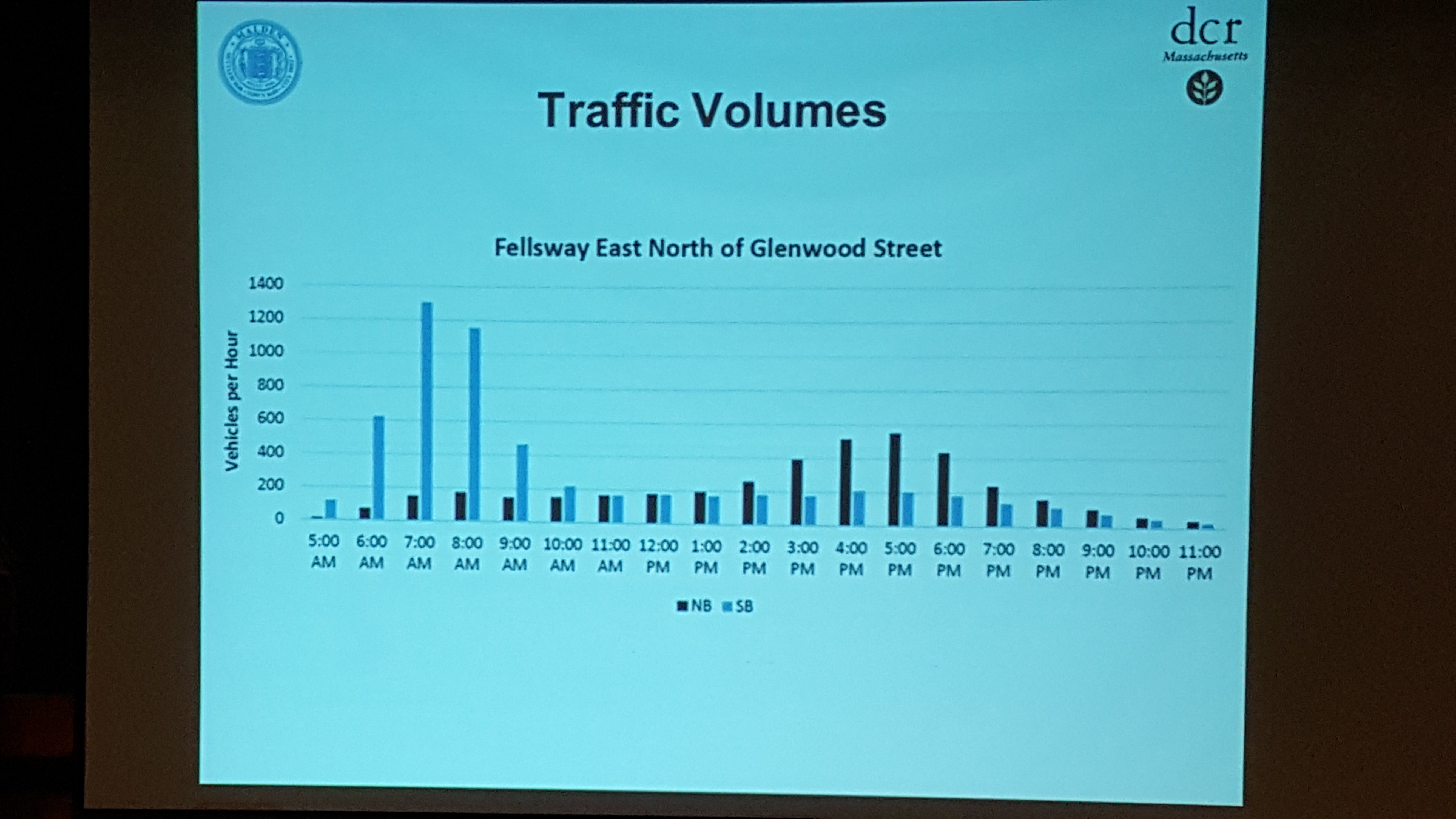
The traffic southbound here peaks during the morning commute to approximately 1,300 vehicles per hour. Northbound peaks during the commute home at under 600 vehicles per hour.
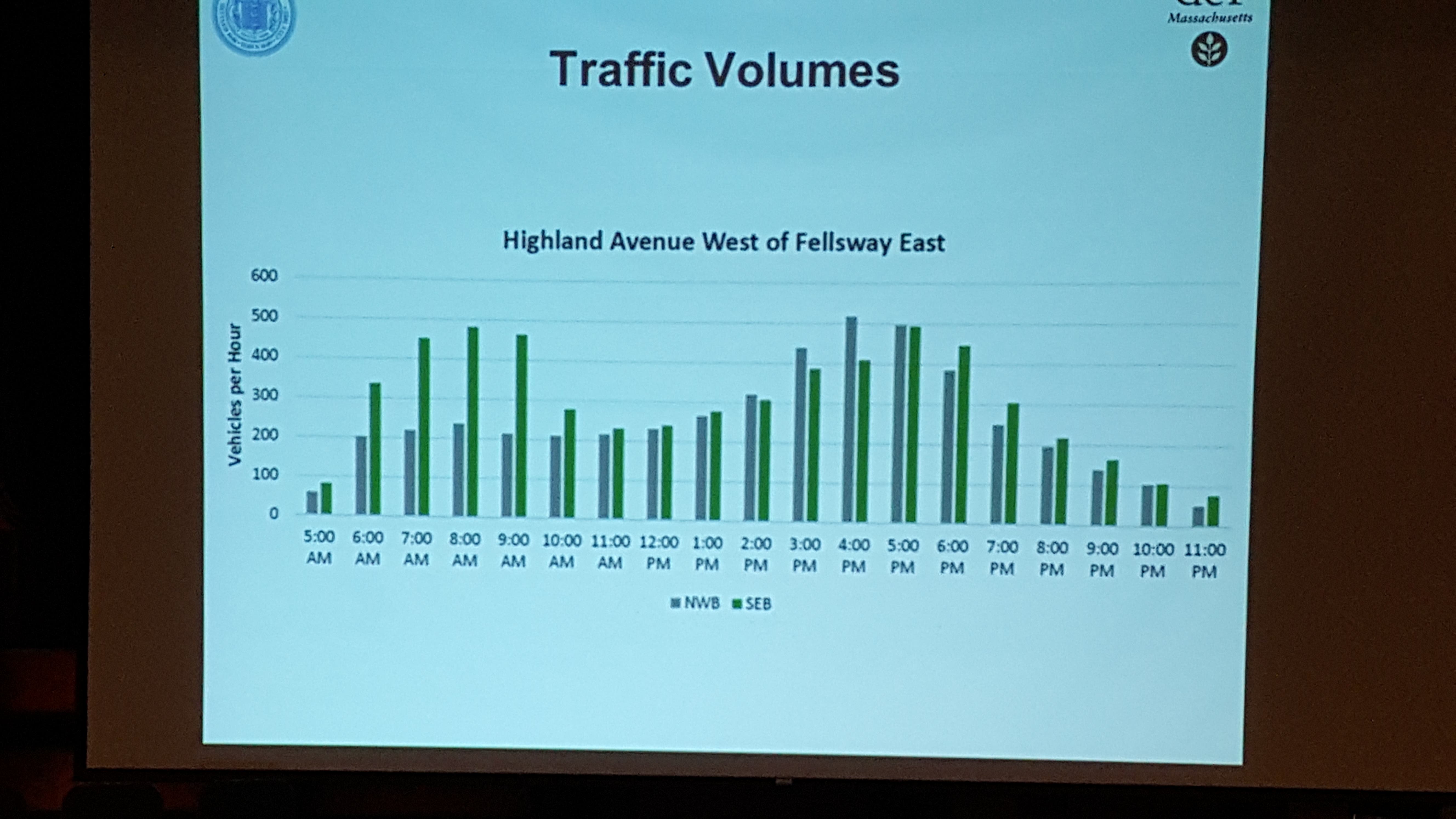
The traffic here peaks southeast bound in the morning and early evening at approximately 500 vehicles per hour. The northwest bound traffic peaks in the same range during the early evening commute.
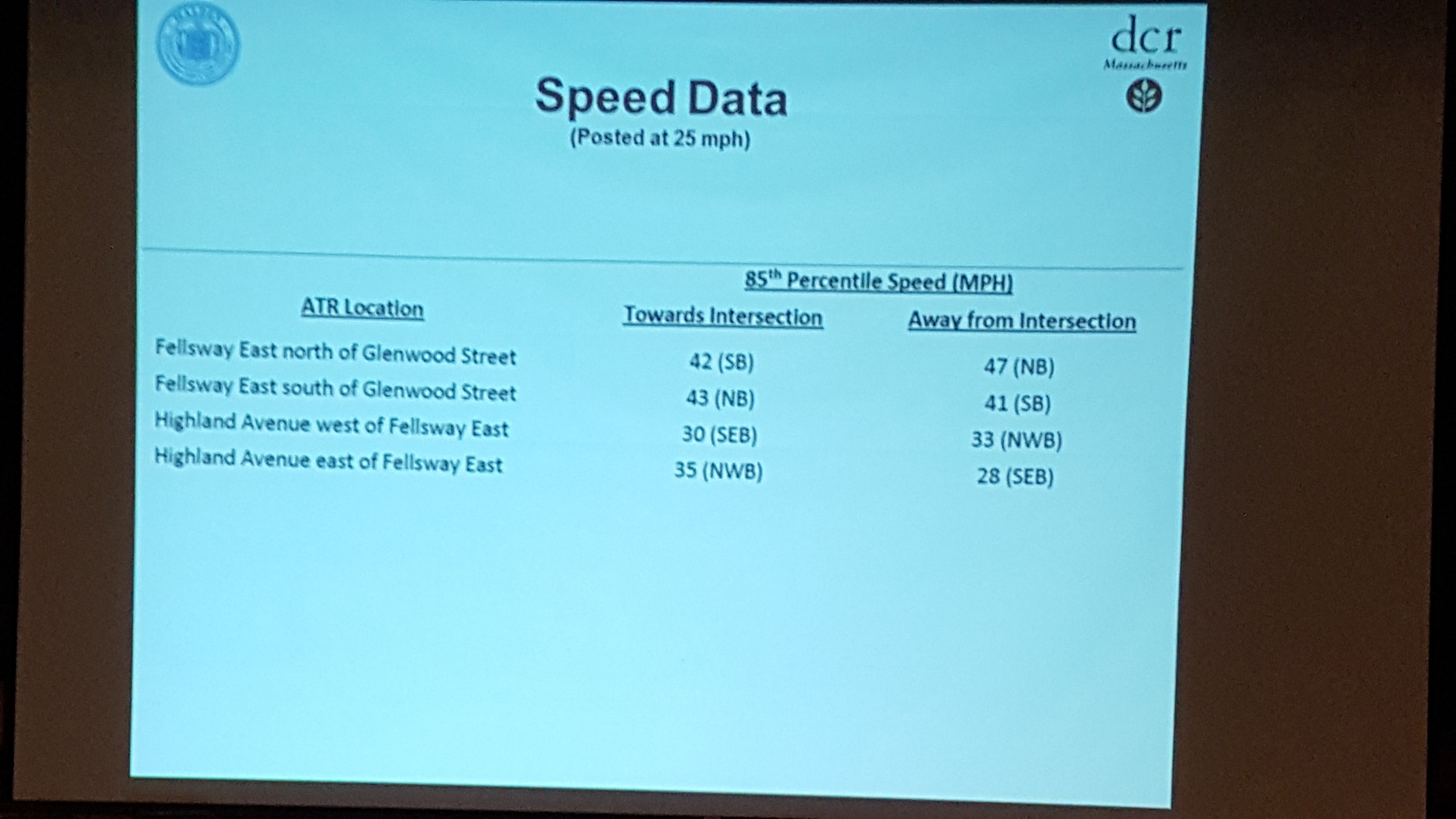
Here you see the average speed, all well above the posted limit of 25 miles per hour northbound. The southbound speed limit is posted at 30 mph. This was a very prominent concern for those in attendance.
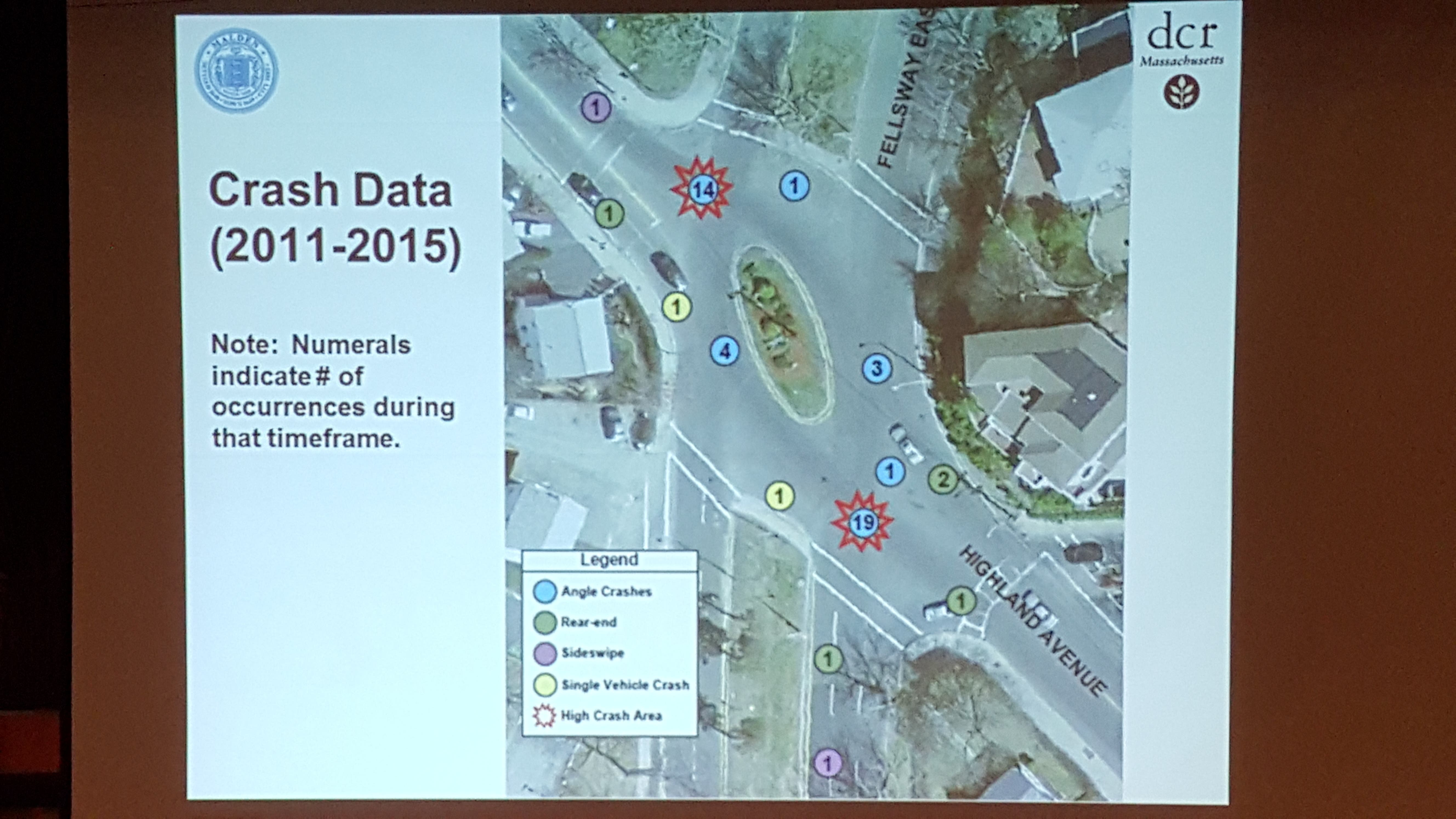
This is where the crashes were reported to have happened and what kind of crashes they were, according to data available to the DCR.
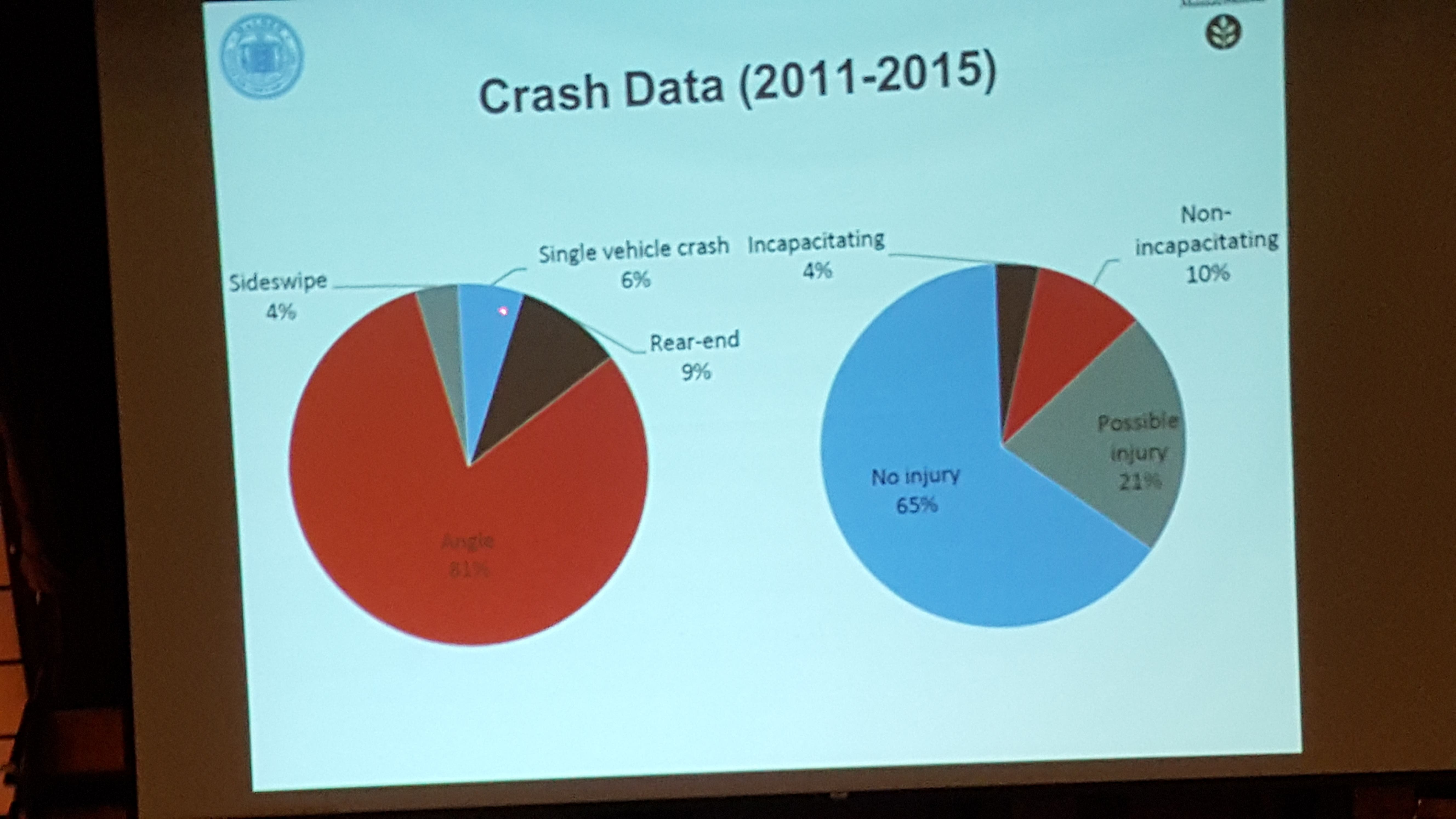
Additional crash data from the DCR.
Malden Presentation by Mike Carraggi on Scribd
Turnng Counts by Mike Carraggi on Scribd
Get more local news delivered straight to your inbox. Sign up for free Patch newsletters and alerts.