Community Corner
What have other towns done with closed State Hospitals? UPDATES from MSHMPC...
Gil Rodgers, MSHMPC member and Ros Smythe, Resource Committee member, visited former state hospitals - here is how they transformed them!


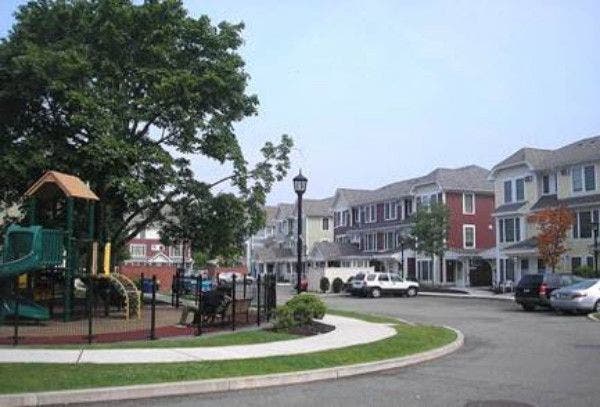


The following is an email update from the MSHMPC Communications Committee. Images courtesy of Gil Rodgers and Ros Smythe - 1. Boston State Hospital, 2. Danvers State Hospital, 3. Foxborough State Hospital, 4. Metropolitan State Hospital, 5. Northampton State Hospital.
Update - Medfield State Hospital Master Plan Committee
To learn about the redevelopment of other former state hospitals in Massachusetts, Gil Rodgers, a member of the Medfield State Hospital Master Planning Committee, and Ros Smythe, a member of the Resource
Committee, visited the following former state hospitals: Boston State (Dorchester/ Mattapan); Danvers; Foxborough; Metropolitan (Waltham/Lexington); Northampton; and Tewksbury.
Learnings From Other MA State Hospitals
Find out what's happening in Medfieldfor free with the latest updates from Patch.
These properties were all situated on large, extremely scenic tracts of land and all former hospitals (except Tewksbury, that’s still in operation) stopped patient care in the past 30 years. Just like Medfield State Hospital, each property was transferred to The Massachusetts Division of Capital Asset Management and Maintenance (DCAMM) upon closure, which managed the disposition of these sites.
The redevelopment process for each of these properties was complicated but ultimately fell into two general categories: heavy housing development and mixed use which included a residential and commercial/retail component. The following is a brief discussion of what was learned from these visits and interviews and the important takeaways.
Find out what's happening in Medfieldfor free with the latest updates from Patch.
Heavy Housing Development
Portions of Metropolitan and Danvers were sold to developers such as Avalon Bay Communities, a national residential apartment developer. Danvers now hosts a 497 unit rental complex on 77 acres and an over-55
year old residential townhome development. Approximately 23 acres of the Metropolitan site now has a 387 unit rental complex. Both sites have at least 15% of the apartments set aside for affordable housing. The
dense layout of the complexes obscure the scenic views for apartment dwellers. The surrounding undeveloped countryside did not appear well maintained, did not have any paths readily apparent, and did not seem to cater to any visible passive recreation
Mixed Use
Boston State, Foxborough and Northampton were developed with a master plan that reflected extensive community input from citizens. Although tailored to meet the needs of these distinct communities, each property has a mixed use development with a residential and a commercial/retail component. As can be seen in the attached photos, paths, playgrounds and playing fields give a community feel to these former hospital sites and encourage passive recreation. People were seen walking, kids were playing at playgrounds, and the atmosphere had a more open, welcoming feel. The redevelopment that included community input resulted in
residences that were integrated into the surrounding countryside.
In discussions with senior government officials, planners, and developers directly involved with the redevelopment of Boston State, Foxborough and Northampton, many instructive pieces of advice were
repeated which are applicable to Medfield State Hospital. Here is a quick summary of some of their recommendations, observations and comments:
- A thoughtful Master Plan must include input from town residents on a continuing basis.
- The Master Plan needs to address multiple needs of the community.
- Design guidelines for new construction are important.
- Remember that any developer needs to be able to make a profit. Have enough flexibility to accommodate the developer’s reasonable needs.
- Keep as many mature plantings as possible.
- Single family homes appear to have a more significant effect on the school population than apartments and condos.
- Consider the property within the larger context of the Town and surrounding land.
- Well planned affordable housing is virtually indistinguishable from market-priced housing.
- Decide which buildings are to be saved as soon as possible, and demolish early-on the ones that are beyond renovation.
- Develop a plan that does not overburden school and municipal services.
- Apply for as many grants as possible.
- The process is arduous, time consuming and at times contentious. But the end result is worth the effort.