Community Corner
'When the Colonel Sneezed, the Town of Medfield Caught a Cold'
Colonel Edwin Vinald Mitchell was considered the Czar of Medfield because of influence across town as the owner of the hat factory. He was also considered the town philanthropist.
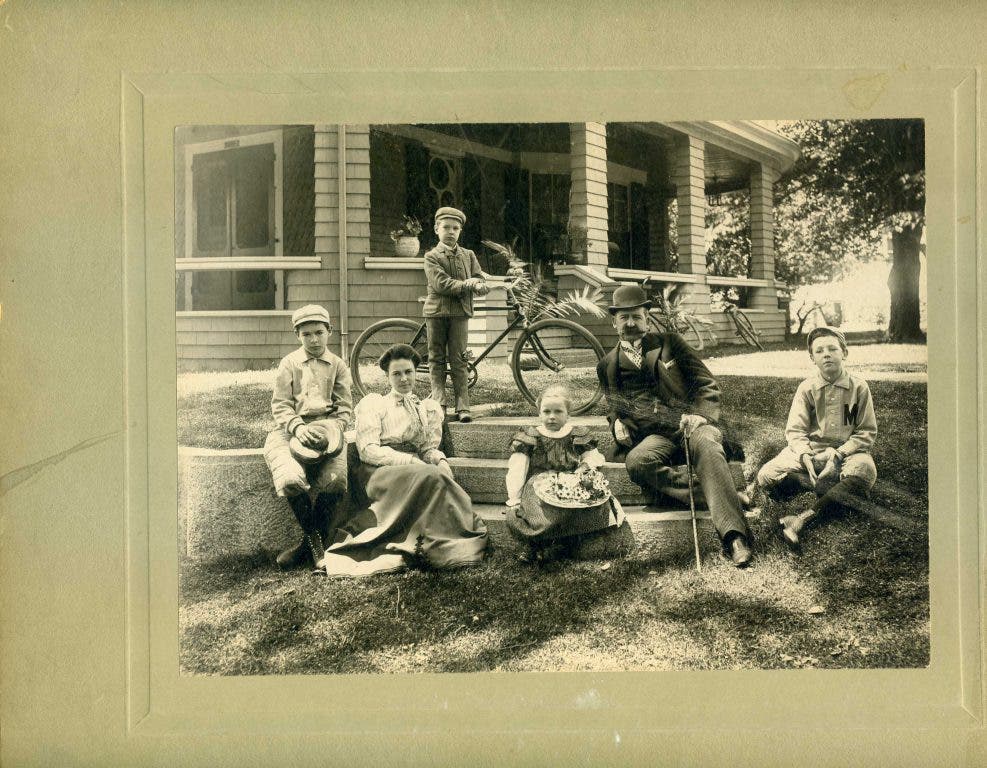


Medfield had never seen anyone like him before and will probably never see anyone quite like him again.
He was the closest thing Medfield has ever had to a Czar. As owner of the hat factory, the number one employer in the town and the second largest hat factory in the United States, all social, economic and political life in Medfield revolved around him. If you did not work in his hat factory, then your business was probably tied into it in some way – the hat factory was located where the Montrose School is located today on North Street.
He also owned the Elm Tree Inn on North Street, a poultry farm on Dale Street, a lumber business, a grist mill, acres of real estate and numerous boarding houses for his workers. His birthday was even a local holiday with all hat factory workers given the day off with free passes to the Brocton Fair to celebrate.His name was Edwin Vinald Mitchell and he was uniquely Medfield.
Find out what's happening in Medfieldfor free with the latest updates from Patch.
Today only Mitchell Street, Mitchell Court and Vinald Road still hold on to his name, giving us a reminder of the power of Col. Mitchell that reined here from the end of the 1880’s to his death in 1917. He served as colonel and aide-de-camp on Governor Bracket’s staff and was a member of the Governor’s Council from 1892-1894. He received the title “Colonel” from service in these state offices.
Mitchell arrived in Medfield penniless from Westboro, where he had learned the manufacturing end of the hat trade and in a Horatio Alger type of story, soon became the most powerful person in town. Mitchell’s start was helped by the fact that he married Blanche Curtis, whose father was part owner of the hat factory.
Find out what's happening in Medfieldfor free with the latest updates from Patch.
He was then appointed plant manager and upon the death of Daniel D. Curtis, joined in partnership with the New York’s sales connection of brothers-in-law Haskell Searle and Granville Dailey. Mitchell fit well into the mold of the new industrialists who were making their marks across the American landscape. Like many American industrialists, Mitchell dictated terms to his workers, who were often fired and generally forced to leave town if they went against his wishes.
Industrialists like Mitchell used their power and unity to support political candidates, usually Republicans, whom they believed best fit their needs and wishes. In Medfield, support for the Republican candidates meant the hat factory support as well. During the election of William McKinley in 1896, the McKinley banner was raised over the hat factory, and a torchlight parade for McKinley featured floats by the hat factory and a fireworks display from Mitchell’s mansion – site of today’s post office.
One of the most controversial events in Medfield history took place in the form of a political showdown between the Colonel and Rev. Nathan Dyer, the minister of the Second Congregational Church – today the UCC Church. In a David versus Goliath type of battle, the so-called plucky pastor challenged Mitchell’s political control.
Rev. Dyer, who was one of the local leaders of the temperance movement, led a crusade against liquor being illegally sold in town, as Medfield at the time, was a “dry” town. One of the places raided was the Elm Tree Inn – located at the site of the Montrose School parking lot on North Street, which was owned by Col. Mitchell. A warrant was issued against the landlord and he was fined.
Col. Mitchell objected to the word “nuisance” on the warrant and vowed to fight in court. “I am not going to have my hotel smirched by the word nuisance,” declared Mitchell. The wording was changed and the fine paid.
In the following weeks members of the church who worked in the hat factory, including choir members were told not to sing or attend Rev. Dyer’s church. Over 20 workers were fired. An example of this can be seen in the following letter sent to a previous employee of the hat factory by Col. Mitchell.
Medfield, Oct. 30, 1894
Miss Alfreda Harriman
Prospect Ferry Maine: Your letter of the 29th received.
The minister of the Second Congregational Church, having antagonized me and my interests for reasons best known to himself, I am obligated to determine that no person shall be employed in this factory who renders this minister any support whatever so long as he remains in Medfield.
I have been pleased with your work in seasons past, and regret that circumstances compel me to fill your place. You must understand that I am opposed to the man, not to the church.
E.V. Mitchell
About Rev. Dyer, Mitchell is reported saying, “I will spend all my money to get him out of town, and I have got a good deal of it. To which Rev. Dyer reportedly replied, “I will preach two years for nothing before I will be run out of town without a justice cause. Mitchell offered the church, $500 if they would let Rev. Dyer go and hire a new minister. The congregation, however, gave Rev. Dyer a strong show of support. But the fact remained that during the next three years of Rev. Dyer’s ministry, many Congregational factory workers stayed away from the church and from Rev. Dyer.
Colonel Mitchell retired from active work in 1910 when his two sons took over its administration. Mitchell died at the age of sixty-six and is buried in the tallest monument in Vine Lake Cemetery.