Neighbor News
All Persons Trails
...Mass Audubon Society's All Persons Trails.. by Debbi Collar... photo credit - Mass Audubon & Debbi Collar
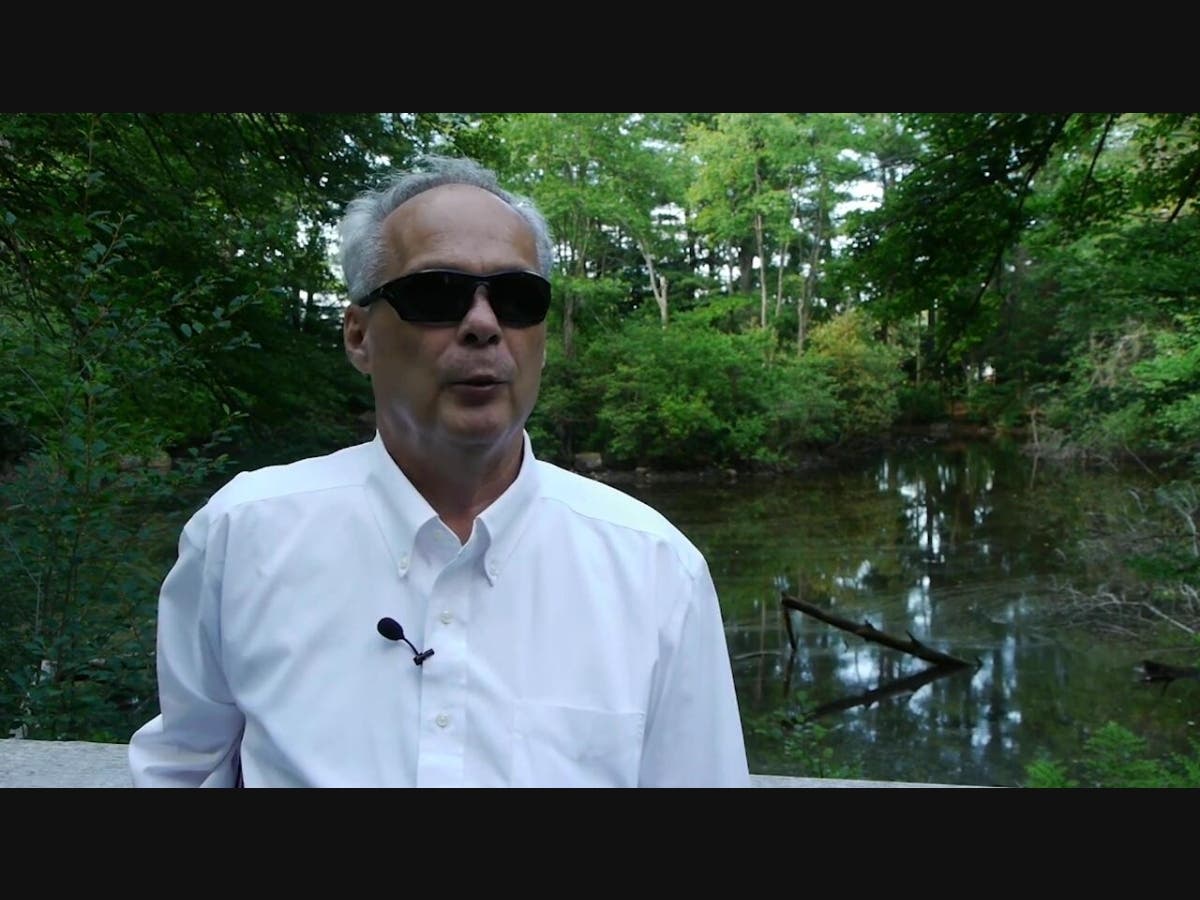
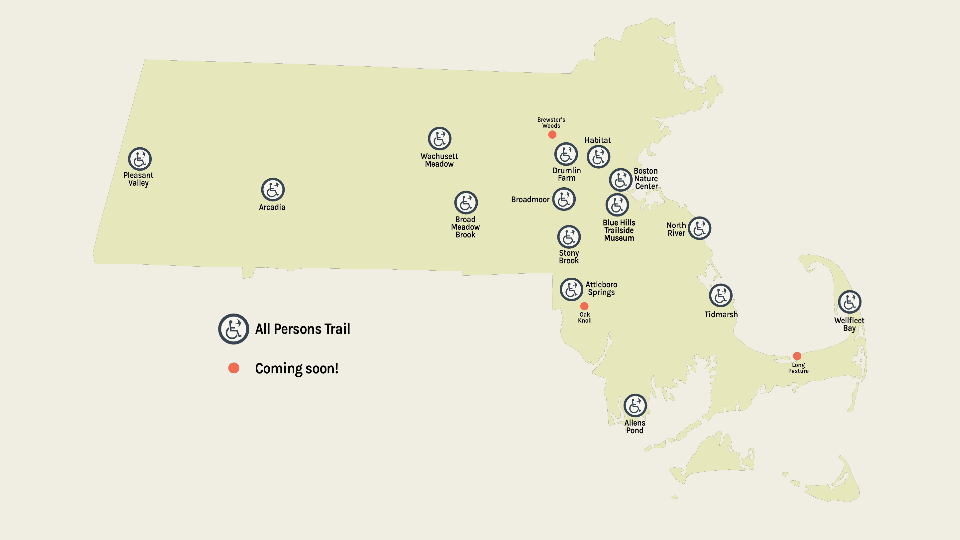
photo credit - Mass Audubon
Giving all persons the ability to enjoy nature is one of the goals of the Massachusetts Audubon Society. Recently, the organization has completed the construction of 14 of its "All Persons Access Trails" in Massachusetts. According to Lucy Gertz, Director of Adult Education and Accessible Programs for Mass Audubon, the gaol is to provide well planned and well marked trails giving the opportunity to those of varying abilities to get out and enjoy nature and its sights, sounds, smells, tastes and touch.
The building and planning and the permits needed to create these trails is not an easy task and takes a team effort. It begins, with an idea and then Lucy Gertz explains, she has "the job of taking into account the signage placed at various locations, which include braille and audio. Other members of the Mass Audubon team also take part in the planning stages and need to make decisions on hiring those who will be constructing each phase of the All Persons Trails and getting permits.
Find out what's happening in Melrosefor free with the latest updates from Patch.
Once the group meeting, planning and permits are in place, work begins on the grading of the trails, putting rope guides in place, making sure the braille signage is correct as well as large print signage and audio recordings of what is in the area of each portion of the trail.
There are sensory gardens located in some trails and hikers walking through them may also taste what has been planted. Professionals who construct the trails, consultants and volunteers work together.
Find out what's happening in Melrosefor free with the latest updates from Patch.
Following the near completion of the trail, those persons who are not sighted or those who are in wheelchairs or have other mobility issues test the trails for accessibility. Together the group will meet with Mass Audubon officials communicating their sense of potential areas where there may be hazards for those who are blind or where there is rough terrain for those with mobility issues.
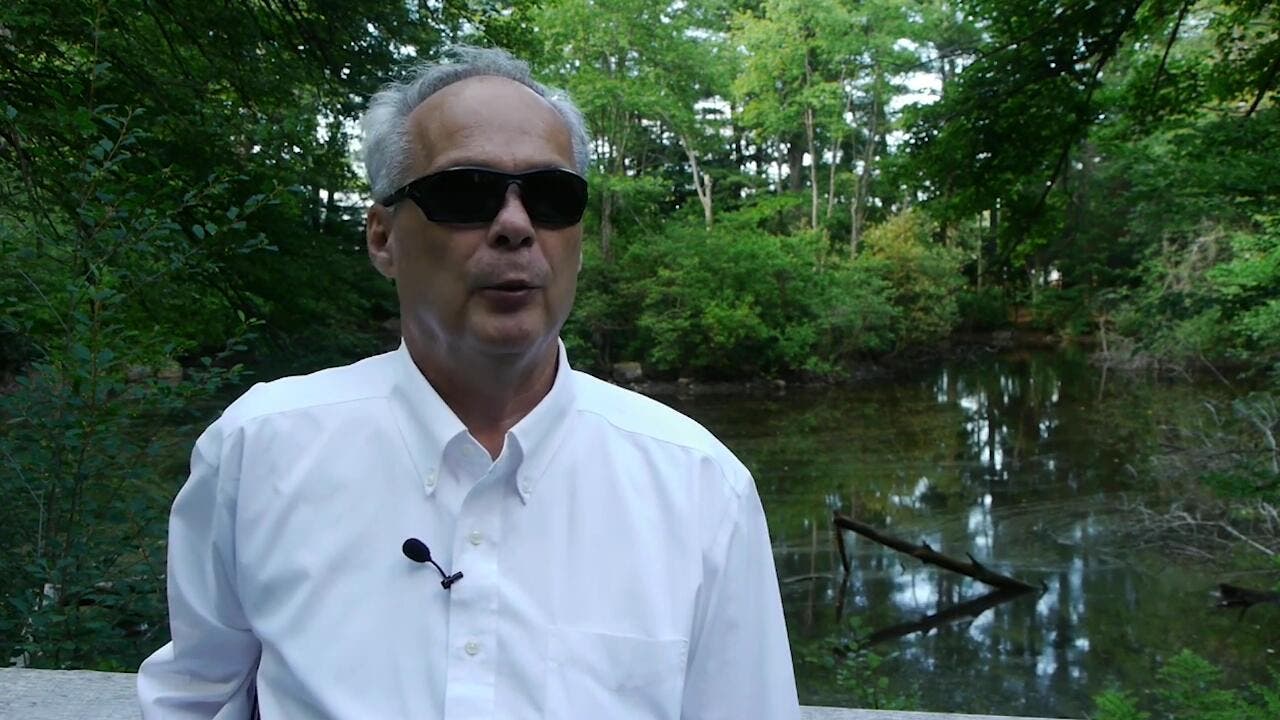
Jerry Berrier on one of the All Persons Trails (photo credit - Mass Audubon)
Consultant for the All Persons TraiLs, Jerry Berrier, has been blind since birth and explains, in his situation,"Navigating with a cane is a very labor intensive activity. You have to be listening, you have to be using all of your senses as much as possible to stay on the path and there are lots of hazards to be concerned about."
As to the All Persons Trails that provide beaded ropes, he says, "when I'm being guided by a rope, it's the next best thing to being guided by another person and yet, I can do it solo." The shape of each bead lets him know whether there is seating ahead or if there is signage in a nearby section of the trail along with audio description as to what is in that particular area of the path he is following.
When he is walking the trails, he also listens to what is around him and tries to identify what it is he us hearing whether a type of bird or type of insect. Berrier says, "I'm interested in sensory rich trails. I'm interested in anything that makes sounds." That also includes the sounds he hears that insects make.
Other consultants within the group also have to consider concerns related to wheelchairs or mobility issues such as whether is the terrain is smooth enough or is there too much of a slope in certain locations and whether persons can walk side by side and is there seating available nearby for persons to rest.
Berrier described each step of the process in a recent interview mentioning, "It all starts with someone's idea of where the trail should be and the trails are usually created where there is already a wheelchair accessible trail." He adds, "We will then have at least a few people with various disabilities come and walk the trail before any of the features have been added."
According to Berrier,"The group then meets to discuss what would make the trail more useful and meaningful to people with various disabilities."
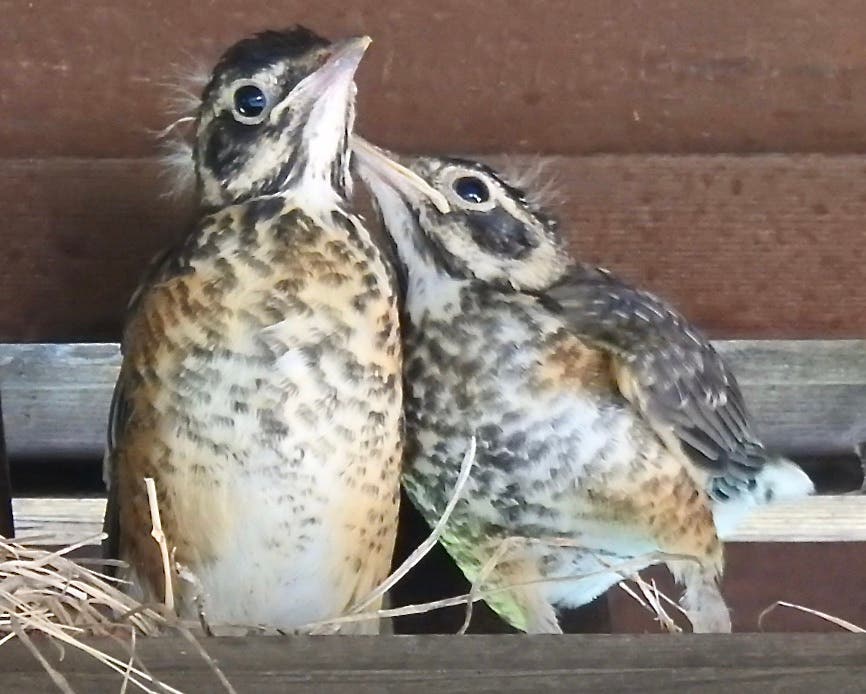
Robins (photo by Debbi Collar)
The issues listed above are just a few that are considered when the trails have reached near completion.
Berrier also checks the braille on signage posted along the Mass Audubon trail for accuracy,."I check the braille signage before they are actually put in place to make sure that I can read them."
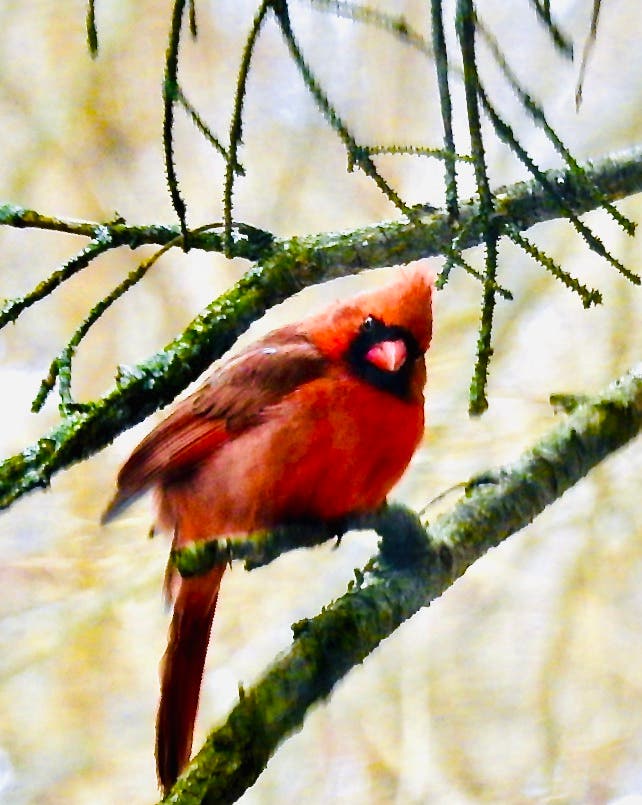
Cardinal -photo by Debbi Collar
TOUCH ,TASTE and SMELL
The sensory garden also allows visitors to feel what is growing in the the sensory gardens. Some trails also have gardens in which nature enthusiasts are allowed a taste of herbs that are also growing in the gardens. Berrier explains another of the features that may be along the trails, "I can think of one trail where we have a little box people can open. Inside is a replica of a little bird and an egg that are life size." Berrier also says he enjoys, "the warmth of the sun and the smells of nature"that surround him on the trails.
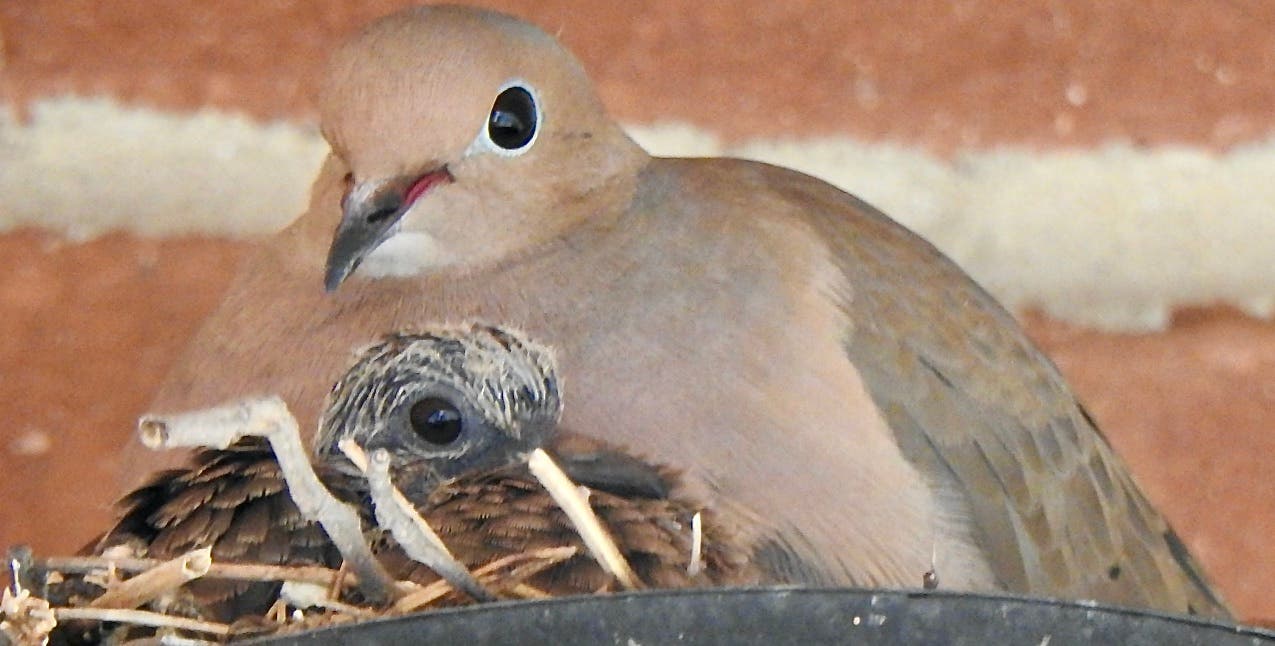
Mourning Doves -photo credit Debbi Collar
He also credits one of his college professors with giving him, "one of the greatest gifts I ever received." While a student attending Indiana University of Pennsylvania in the 1970s , his biology professor made the decision to have Berrier listen to recordings of birds rather than have a blind student participate in the lab portion of the biology course. At the end of the course, the professor told Berrier he would take him for a walk in the woods and his grade would be earned based on his ability to identify the sounds of each bird. Berrier calls it "birding by ear."
Each step beyond that time led to his association with Mass Audubon along with his other employment throughout many years. Gertz provided information regarding Berrier having worked "in the field of assistive technology for over 20 years.He spent six years as assistant manager at the Verizon center for customers with disabilities, followed by seven years as an assistive technology consultant specializing in work with Deaf/blind consumers. Most recently, he ended a nine-year stint at the Perkins School for the Blind in the field of assistive technology.He retired from full-time employment in June of 2021. Jerry is past president of the Bay State Council of the Blind, and current vice president of VIBUG, a long-standing Boston-based group of technology users who are blind. His interests include audio production, accessible web design, and “birding by ear”. He has consulted on numerous accessibility projects with the Massachusetts Audubon Society and continues a long-standing working relationship with that organization."
Check out his website online http://www.birdblind.org and check out the All Persons Trails at each of the Mass Audubon areas in Massachusetts.
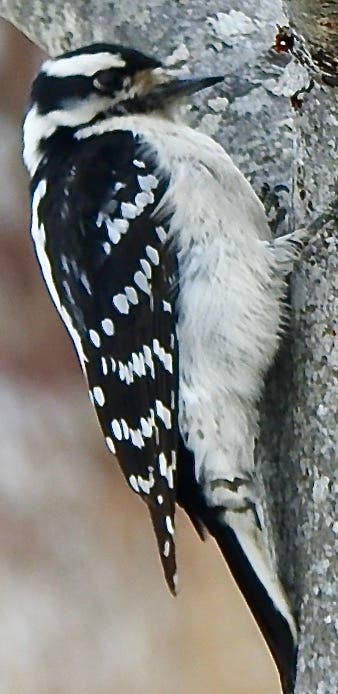
Downy Woodpecker photo by Debbi Collar