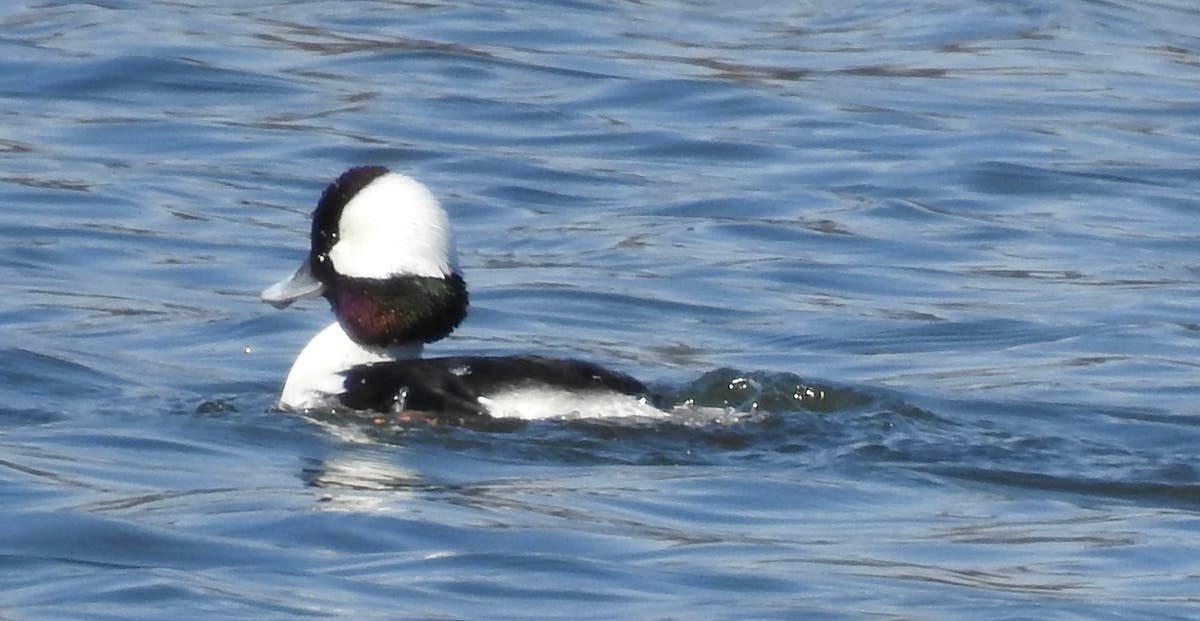
Bufflehead duck
Readers following this Melrose Mirror/Melrose Patch post know how much I follow the behaviors of the swans on Ell Pond in Melrose, Massachusetts. Well, this week, let's add a few new visitors/potential residents to the mix. At least one pair of Bufflehead ducks were seen flying, swimming and diving in the area. Could it be they are the same pair that was observed in the Saugus area in another pond off Sweetwater and Claremont Streets?
Find out what's happening in Melrosefor free with the latest updates from Patch.
As we wait for spring to arrive, here are a few fun facts to ponder from Wikipedia. Watch the waters around both ponds to see which property the pair chooses for a new home.
Here's a description of the Bufflehead ducks, their behaviors and their history.
"A buoyant, large-headed duck that abruptly vanishes and resurfaces as it feeds, the tiny Bufflehead spends winters bobbing in bays, estuaries, reservoirs, and lakes. Males are striking black-and white from a distance. A closer look at the head shows glossy green and purple setting off the striking white patch. Females are a subdued gray-brown with a neat white patch on the cheek. Bufflehead nest in old woodpecker holes, particularly those made by Northern Flickers, in the forests of northern North America.
Find out what's happening in Melrosefor free with the latest updates from Patch.
"Bufflehead will take up residence in nest boxes during the summer in forested areas of central and western Canada. Consider putting up a nest box to attract a breeding pair."
"The Bufflehead nests almost exclusively in holes excavated by Northern Flickers and, on occasion, by Pileated Woodpeckers.
Unlike most ducks, the Bufflehead is mostly monogamous, often remaining with the same mate for several years."
"Bufflehead normally live only in North America, but in winter they occasionally show up elsewhere, including Kamchatka, Japan, Greenland, Iceland, the British Isles, Belgium, France, Finland, and Czechoslovakia. In some of these cases, the birds may have escaped from captivity."
"The oldest Bufflehead on record was at least 18 years and 8 months old. It was caught and re-released by a bird bander in New York in 1975."
"Bufflehead fossils from the late Pleistocene (about 500,000 years ago) have been found in Alaska, California, Florida, Illinois, Kansas, Texas, and Washington. One California fossil that resembles a modern Bufflehead dates to the late Pliocene, two million years ago."
Swans "Mel" and "Rose" seem to take over Ell Pond each year . If the Bufflehead ducks decide to become residents of Ell Pond as well, I wonder if "Mel" and "Rose" will be tolerant of the newcomers.
That isn't all that has been happening in the waters though. The day following the storm, a flock of ducks believed to be redheads and canvasbacks flew in to the area. Or should we say they became disoriented during the storm? Several of the newcomers introduced themselves to the pond's most familiar residents, the swans, the geese and the mallards.
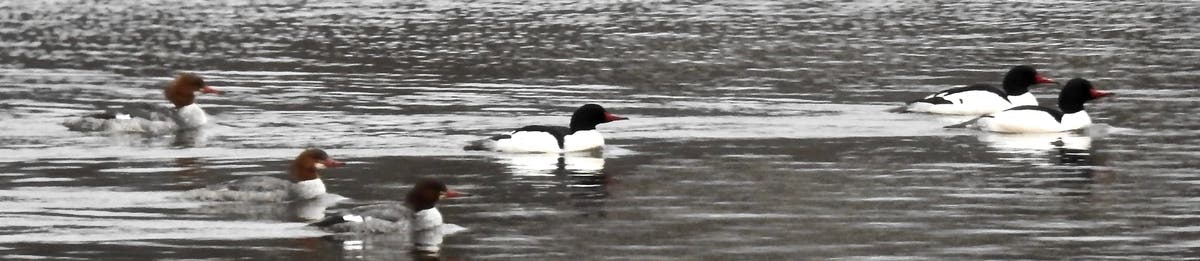
Common merganser ducks on Ell Pond
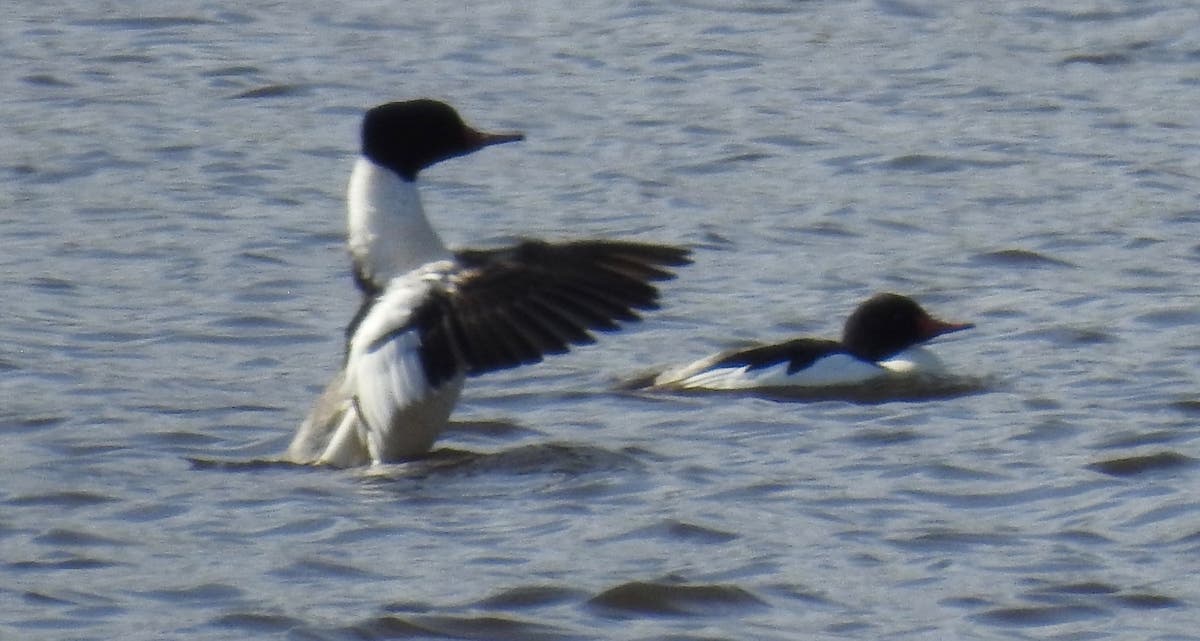
Common merganser ducks
Is there room enough for all to nest at this location?
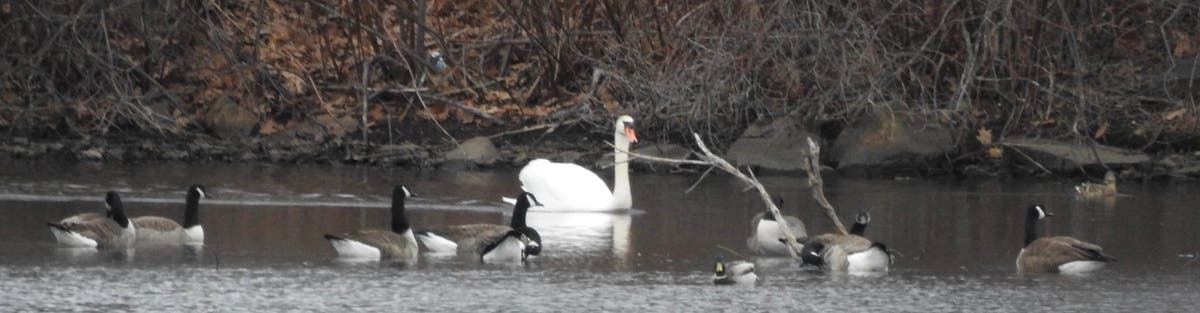
Although they are closely related, geese and swans usually don't get along very well
It's an active pond as of this date, (March 4, 2018) and promises to be even busier throughout the spring,summer and autumn months before the cycle of seasons begins again bringing us back to another winter.
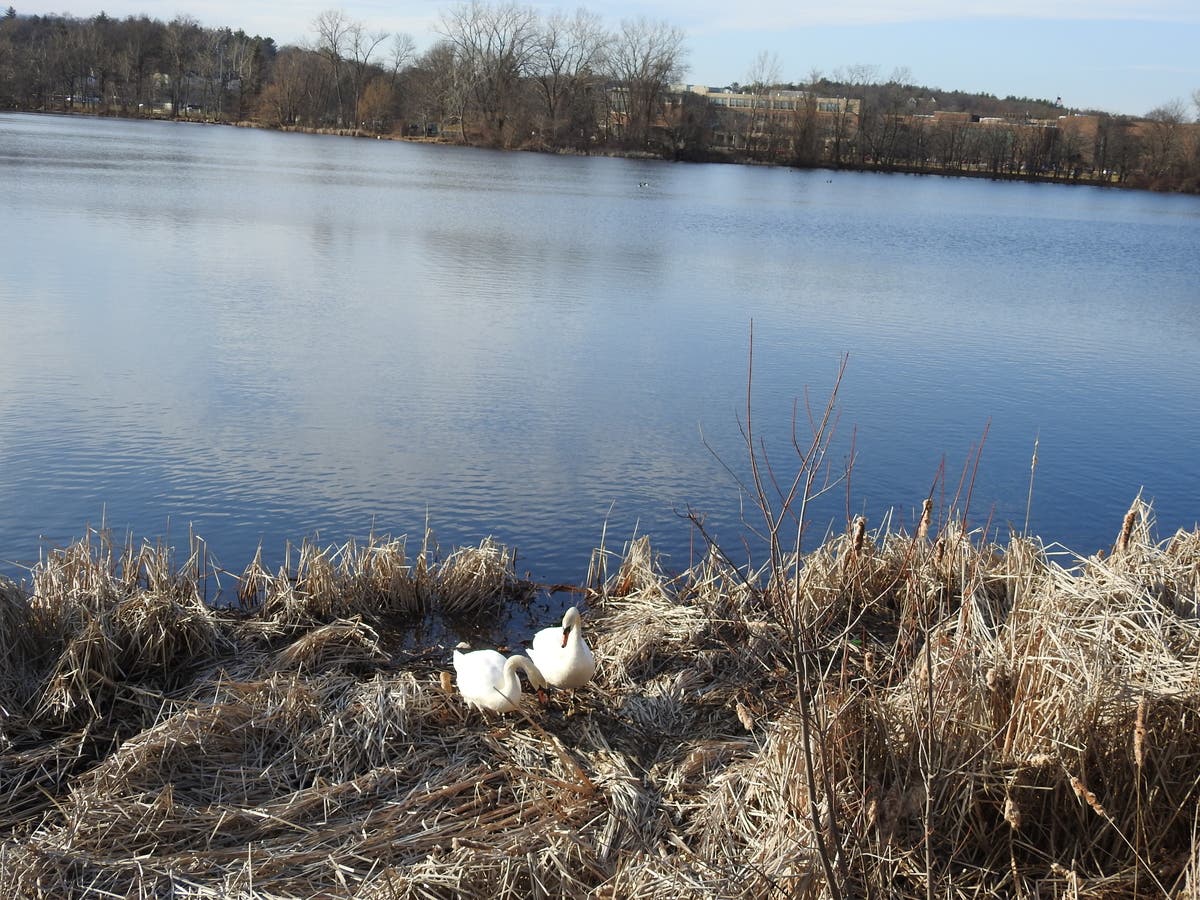
Mel and Rose checking out waterfront property for their nest this year.