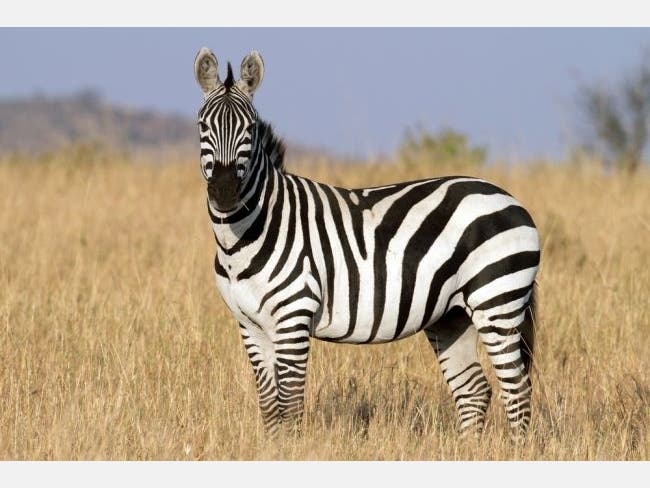
Zebras are single-hoofed animals that are native to Africa. Zebras are very closely related to horses and donkeys; in fact, they are in the same genus, Equus. The most prominent feature of zebras is the bold patterns on their coats.
Zebras are generally thought to have white coats with black or brown stripes, according to the San Diego Zoo, because the stripes end at their bellies and the inner side of the legs, which are white. However, zebras have black skin under their white coats!
Each species of zebra has a different general pattern of stripes. The Grevy's zebra has very thin stripes. The mountain zebra has vertical stripes on its neck and torso, but horizontal stripes on its haunches. Some subspecies of plains zebras have brownish "shadow" stripes between the black stripes, according to the San Diego Zoo.
It is believed that the zebra's stripes work like camouflage, according to the National Geographic. When zebras stand together, it is harder for predators to determine how many zebras are in the group. The stripes may also make the zebra appear unattractive to smaller predators, such as bloodsucking horseflies, which can spread disease. In addition, the stripes may work as a natural sunscreen. Each zebra's stripes are unique. Just as no two human fingerprints are alike, no two zebras have the same stripe pattern.
Find out what's happening in Melrosefor free with the latest updates from Patch.
Zebras have several ways they communicate with one another. Facial expressions, such as wide-open eyes or bared teeth, all mean something. They also bark, bray, snort or huff to get their point across. Even the position of their ears can signal their feelings, according to the San Diego Zoo. For example, ears flattened back means trouble. Another habit of zebras is mutual grooming, which they do to strengthen their bonds with each other. Known predators of zebras include lions, leopards, cheetahs and hyenas. When danger approaches, the stallion will alert the others with a high-pitched snort, according to the University of Michigan. He will stand his ground while the rest of the family runs away in zigzag fashion. If he must fight, he will lower his head with neck outstretched and teeth bared, prepared to bite. However, running away is the usual tactic, sometimes accompanied by a defensive kick. The kick can be powerful, though, and can cause serious injury to a predator.
source:www.Livescience.com