Arts & Entertainment
Married Writing Team Coaches Distracted Couples
"Married to Distraction," a new book by Boston-area husband and wife authors Dr. Edward and Sue Hallowell, looks at the burden of hyper-busy schedules and constant technology interruptions on long-term relationships


A relationship can easily fall apart when faced with overloaded scheduling and the diversions of modern life. First came books and radio, then television and glossy magazines, and now social networking, cable and smart phones consume many of our precious moments.
But by dedicating short periods of time every day to a few essential tasks, married couples can overcome communication disturbances and rediscover affection for each other, say Dr. Edward and Sue Hallowell, the husband and wife team behind "Married to Distraction: Restoring Intimacy and Strengthening Your Marriage in an Age of Interruption."
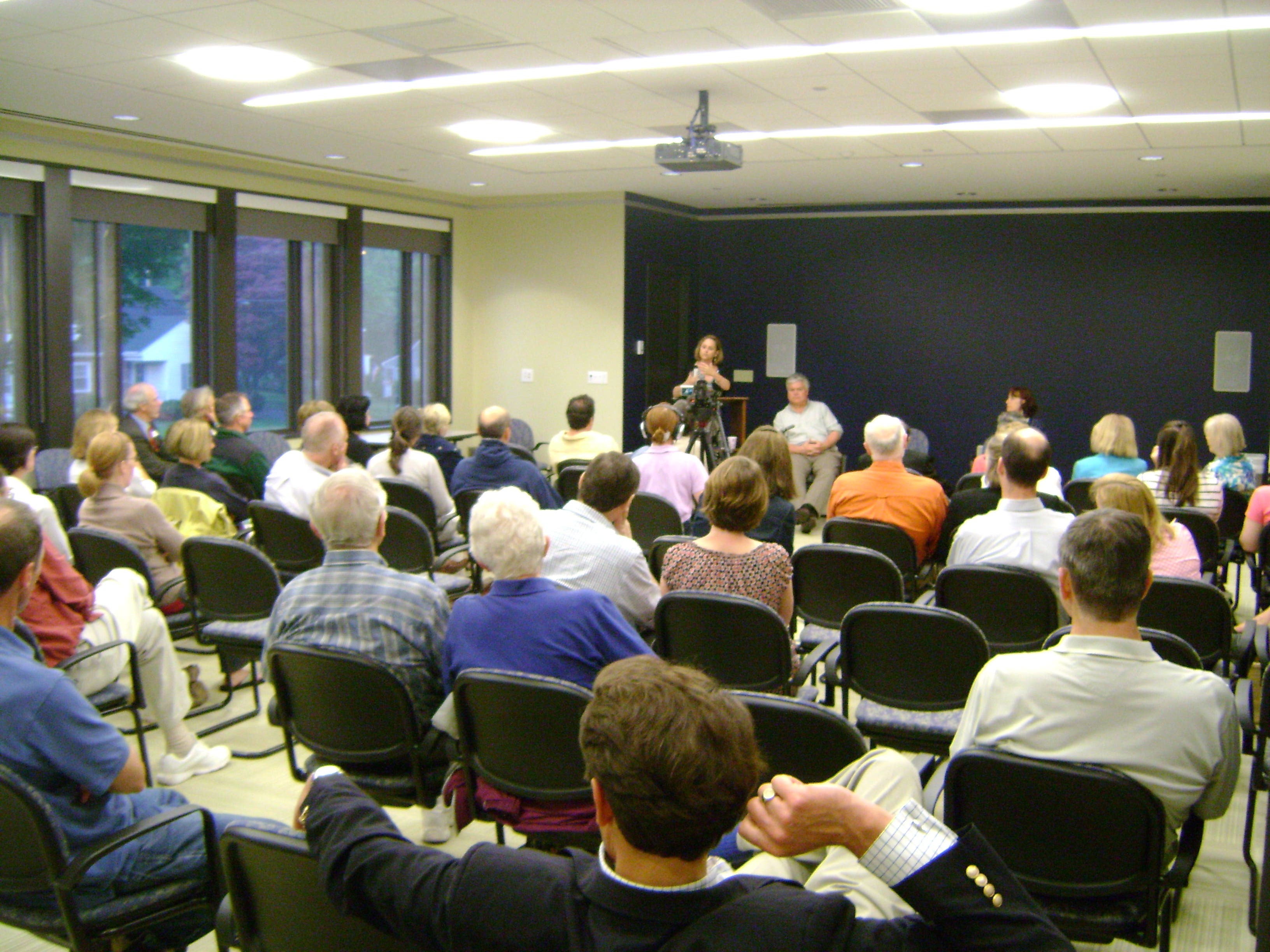
The Hallowells discussed their book at the Milton Public Library on Tuesday night. About 50 people gathered for the last in a series of literary events sponsored by the Milton Library Foundation.
Find out what's happening in Miltonfor free with the latest updates from Patch.
Head of the foundation's program committee and a long-time friend Bella English introduced the couple, calling theirs a "special book" because of its powerful instructions for ailing marriages.
Dr. Hallowell spoke first, outlining the problems that motivated him to start researching the book. He had already written several books about the problem of wandering distraction for those afflicted by ADD and ADHD when he found that many patients in bad marriages suffered not from the disorders themselves but rather from "destructive roadblocks" put up by the unique rigors of 21st century living.
Find out what's happening in Miltonfor free with the latest updates from Patch.
"What they had was a severe case of modern life," said Dr. Hallowell, a former Harvard Medical School professor and frequent contributor to such news media as CNN, The Today Show, Dateline and 60 Minutes.
"It dawned on me one day when I was sitting in a bathroom at a fancy hotel and there was a telephone," he said. "What do you do if this thing rings?"
About 15 years ago, Dr. Hallowell said, technology began to seriously creep into people's lives, so that "electronic moments" began to substitute more and more for important physical, real-life connections between human beings.
This soon led to what he termed "sound-byte relationships", in which partners are unable to connect as well emotionally, spiritually and sexually because they spend too much time obsessing over internet or phone communications rather than developing intimacy.
"So, we wrote this book," Dr. Hallowell said, to bring attention and potential solutions to the issue.
Sue Hallowell, a family therapist in Cambridge, then took her husband's place at the front of the room to break down some of those solutions. First, it's "just not true" that relationships take care of themselves, she said. Marriages especially require time and effort to thrive.
Among her lessons from years of marriage counseling: be curious about each other, remember the importance of empathy, and take personal responsibility. "It's much easier to change yourself," she said.
Suggested tasks from "Married to Distraction", published by Random House earlier this year, include doing activities as a couple, writing relationship prayers and sharing memories about special objects.
So, how exactly does a married couple overcome the Blackberry, the laptop, the television and a thousand other distractions every day? TIO, Dr. Hallowell said. Turn it Off.
"It's that simple, and yet that difficult," he said. "It's very hard not to sneak a peak, to the point that it intrudes."
In response to a question about the quickening pace of electronic diversions in modern life, Dr. Hallowell reflected on the modern paradox of technology that connects people in new, limitless and often helpful ways but at the same time distances them from each other.
"What is the value added of this?" he said, pointing to the basement room of the library where he stood. "Where you find connection you find health and productivity."