Community Corner
Exhibits to Bring You Back
The Northborough Historical Museum has a list of wonderful exhibits opening in September.


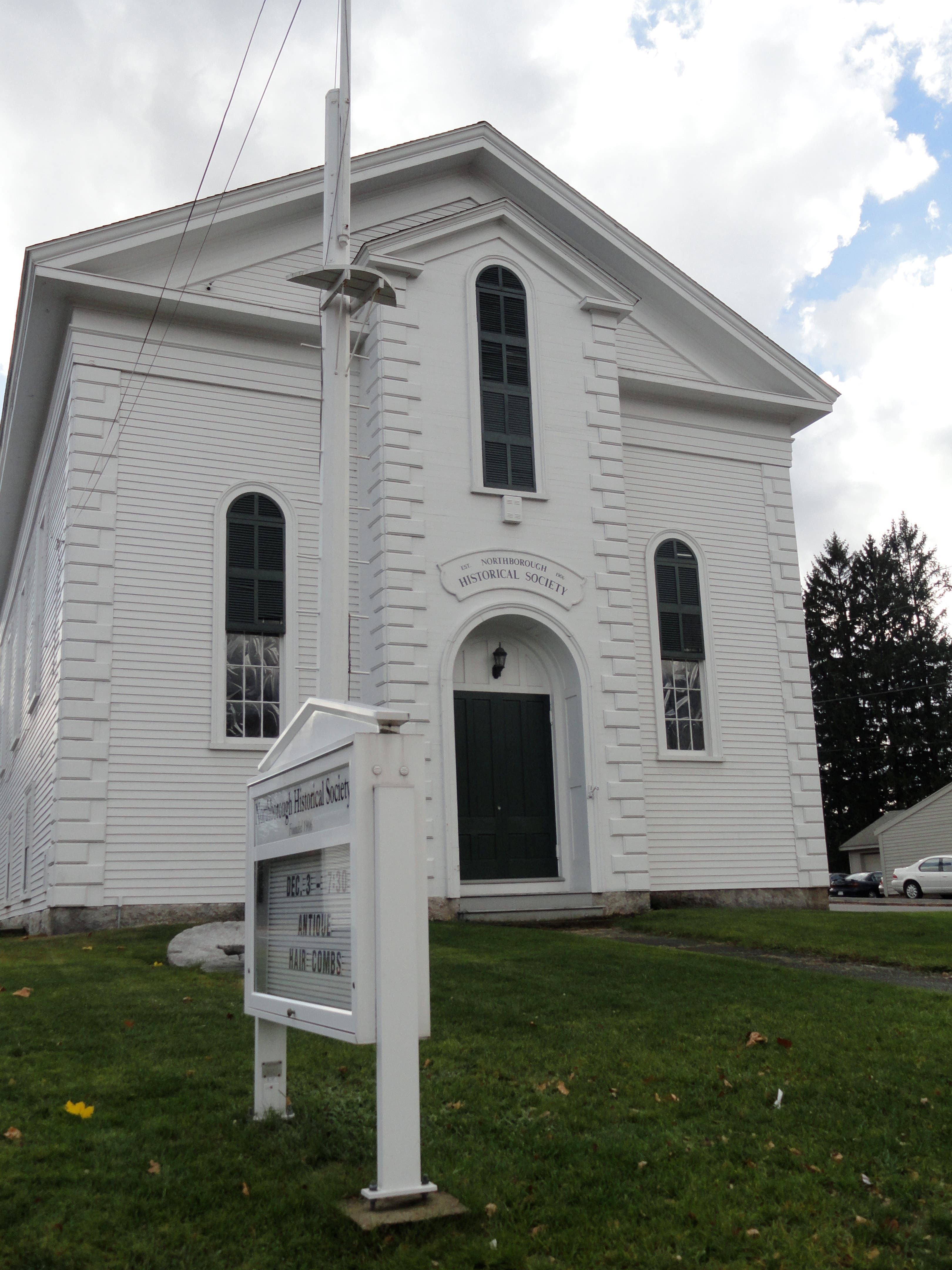
This fall, the Historical Society has a variety of displays and exhibits. Supplied by Carolyn Squillante, here are some of the remnants of Northborough that can be viewed.
Some of the exhibits include woodworking tools, some used here in Northborough, kitchen utensils and upholstery tools.
Portraits include Isaac Davis (1759-1826) who ran a tannery business on Davis Street and later owned two cotton mills. His son, Col. Joseph Davis (1814-1883), ran the businesses with his father and his house is still standing on Davis Street. Another portrait is of his brother Governor John Davis. A portrait of Dr. John Coffin (1852-1935), who
lived on Pleasant Street is on display as well as two paintings by a Northborough artist, J. Thurston Marshall, who lived on the corner of School and Summer Streets.
Other portraits include Abraham Wood (1786-1821), John C. Wyman (1822-1900), who was a Civil War veteran who accompanied Abraham Lincoln’s body to be buried in Illinois, and Samuel Austin Fay (1809-1843) who was the first pastor of the Evangelical Congregational Church when it separated from the town church. Also above the fireplace is a portrait of Elizabeth Howe Warren (1810-1887) and her husband, Caleb Harrington Warren (1808-1876). A portrait of Governor John Davis (“Honest John”), (1787-1854)
has over the stage. He was born and educated in Northborough. He was Governor of Massachusetts, served in the House of Representatives and the U.S. Senate, Samuel Wood (1832-1898), Caleb Chapin (1806-1883) who owned Chapin Mill on Hudson
Street, Abraham Seaver (189-1887), an officer with the Northborough National Bank and Anson Rice (1798-1875) who was very active in town affairs and wife Lucy Sherman Rice (1791-1868). Also, Captain Cyrus Gale (1785-1860, his second wife, Sarah Patrick Gale (1795-1880). He had a general store across from the library. The story goes that if a customer bought a lot of goods in his store, he would give out a free tot of rum.
Find out what's happening in Northboroughfor free with the latest updates from Patch.
Many customers just came in to drink and socialize. This was not permitted for ladies, and Mrs. Gale put a stop to it. Business fell off for about six months, but later business resumed. Cyrus Gale, Jr., gave land for the Town Hall and Assabet Park, and paid for the construction of the Gale Library. A portrait of Luther Rice is included. He was born
in 1782 in Northborough. His home was across from the Lincoln Street School. When he was six years old, his father was a member of a party escorting George Washington to the Williams Tavern in Marlborough. He grew up to become a Baptist missionary in
India and in the American south, and the founder of Columbian College, which was later renamed George Washington University in honor of the president whom young Luther had seen pass through town. Today there is a small museum in his honor on the site of
his home near the Rice Baptist Church on Lincoln Street.
Medical displays include items from Northborough’s three Dr. Stephen Balls. The first Doctor Ball bought the yellow house next to the library. He was the son of James and Sarah Ball who lived on Ball Hill. Dr. Stephen Ball II was a doctor for 54 years and his apothecary shop was where the library is now. He married Lydia Lincoln of Hingham.
Her piano is on the stage in the museum. The third Dr. Stephen Ball built the brick house to the right of the library as a summer home. He was educated at Dr. Allen’s home school, Leicester Academy, and then Harvard Medical School.
The early Dr. Balls were not doctors as we know today.They had no formal training and made their own medicines from herbs by mixing cooking sage, tobacco, bittersweet root, catnip, butter, hogs lard, peppermint and other ingredients. The had a basic misunderstanding of the nature of illness. “Bleeding and blistering, purging and puking” were the remedies that American physicians and many other healers offered their patients.” Teas or salves were also used to gain some sort of relief. Bloodletting was also done and was as common as
taking aspirin (called Phelebotomy). On display is a spring-operated bloodletting scale and Dr. Ball’s bleeding instrument.
There is a complete set of weights and measures said to be the oldest in the state of Massachusetts. When farmers brought their produce to town to sell, it was weighed on these.
The Indians, or Native Americans, in this area were the Nipmics and they spoke Algonkin. They were a friendly people, other tribes were not. During the French and Indian Wars, the French sided with the Canadian Indians to fight off the English and staged many vicious raids. Northborough had only one Indian casualty – in 1707 Mary
Goodenow ws gathering herbs with her sister-in-law, Mrs. Mary Gersham Fay, when they were attacked by a party of 24 Canadian Indians. Mrs. Gersham Fay was able to run to the safety of the garrison, but Mary, being lame, was not and was killed by the Indians.
Her hourglass is on display. Her grave is on Route 20.
Indian relics include arrowheads, a hatchet head, a stone pestle, and quern used for grinding corn, herbs and roots. These were found in Northborough.
Mastodon bone fragments (wooly mammoth) are on display. Farmers digging a trench in 1884 across from Ward Hill discovered the skull fragments and teeth. More of the pieces are displayed in the Worcester Science Center.
Towns had their own bands in the early 1900s and performed at dances and parades and holidays. There is a photo of the Northborough Band, a band uniform, and Lucy Allen’s guitar c.1830, which she used to entertain the boys in Rev. Joseph Allen’s school.
Toys were scarce and expensive to buy. Children made their own toys from wood, corn husks, cloth, etc. and play games. Noah’s Arc toys were desired because children were allowed to play with these replicas of the bible story on the Sabbath. They are displayed in the glass case.
In the textile section is a loom, spinning wheels, carders, niddy-noddy, hatchels. Fabric and clothing was scarce and expensive for the early settlers and also they refused to buy goods from England during the Revolution. This meant they had to produce their own.
Find out what's happening in Northboroughfor free with the latest updates from Patch.
The wool was clipped from sheep, washed, carded, spun on the large wheel, then woven into fabric on the loom. Then it was sent to the mill to put a finish or fluff surface on it and also to shrink it into a tightly woven cloth. A sample of flax is next to the loom.
Linen was made from the flax plant after it was harvested, soaked, dried and beaten to break it into fibers and spun on the small spinning wheel. It took 20 operations before it was ready to weave. Children did much of this work. This was used for bedding, shirts
and undergarments.
A Victorian parlor of late 1800s includes a hand made quilt, beaver hat, and a horse hair sofa. Children are welcome to handle the stereoscope (View Master). There is a basket of flowers made of human hair, a craft popular before cameras were invented to
remember the deceased.
There were four sawmills by the late 1790s, as well as flour, corn and wheat grinding mills, an iron and potash works, a fulling mill to put a finish on fabric, tanneries to make leather, a clothier’s business, brickyards, shoe and cabinet makers, and even a shop for musical instrument parts. Horn and tortoise shells were used in making combs and buttons. There also was a rifle and a metal working business. Most of these were near the river.
There are two green vases once belonging to Daniel B. Wesson, a gun manufacturer (Smith-Wesson). He built White Cliffs in 1886 as a summer residence for his wife Cynthia, a Northborough native.
The kitchen exhibit is dated from the 1940s. You will see the Easy Spindrier Washer, 1949, Fridgidaire built by General Motors, 1936. Before kitchen cabinets, the Marsh “High Point” Hossier cabinet from the 1920s was used. Flour sack fabric was made into curtains from the depression era, and Federal Coal or Gas stove, home-made
rag rug and you will see Alice (the Mom) working at the stove.
There is a butter churn from the 1700, various fireplace cooking items, a bed warmer, and a foot warmer from the early 1800s.
The war displays feature an exhibit of the Revolution, War of 1812, Civil War, Spanish American War, WWI and WWII.
There is a cheese press, sugar grinder, and large bellows from the blacksmith shop behind Lowe’s former location on Main Street.
There is a Fire Department display of a fire alarm system and whistle from the Town Hall, 1868. Chapin Post Office on Hudson Street and railrood ticket station., a cobbler’s bench.
In the small display case on the desk is a sampling of items that may have been sold at Capt. Gale’s General Store, Main Street, in the 1800s. Desk and chair from Josiah Proctor’s button and comb factory on Blake Street, 1880s.
There is an eyeglass exhibit with eyeglasses from 1790 through 1960.
Thomas Blair had several businesses over the years. He started the American Camera Mfg. Company, inventing his own camera, which Kodak Company considered competition, so they bought out his patent. Another company of his, Whiting Mfg. made several products including a cash register (the woo9den one), and manufactured street
lights.
John Kellette lived at 67 Main St. and was a news reporter for the Worcester Telegram and Gazette, and wrote scripts for silent movies and later was a song writer and wrote the famous “I’m Forever Blowing Bubbles.”
Rev. Joseph Allen’s ink well is on display. He was the third town minister.
The sports display features Mark Fidrych, 1976 Rookie of the Year and pitcher for the Detroit Tigers and also played for the Red Sox. He lived in Northborough. Mike Sherman graduated from Algonquin and was head coach for Green Bay Packers, football. He is now at Texas A&M.
School exhibits include East School on Maple Street, South School on Plains Road (Davis Street near Northgate Road, North School on Whitney Street (still standing), West School on Church Street (still standing). In 1837 the Center School (Grange Hall building) on School Street replaced the four district schools. Woodside or the Factory
School, Hudson Street was built in 1880 for factory workers’ children. The Hudson Street School was built in 1895 to replace the aging Center School.
The first high school was build next to the Unitarian Church and had four rooms. It burned in 1920s. The next high school was built on Main Street in 1938. It burned and was rebuilt, and is now the Town Office building. Private schools were also available for those who could afford it.
Northborough had several. The Allen Home School for boys, 1834, was run by Rev. Joseph Allen and his wife for about 30 years. The Seminary was in the corner of Church and Pleasant in 1779, and the Valentine Boarding School on Cherry Street, 18836-65 was
noted for its fine penmanship. The Northborough Lyceum held discussions of national and town affairs and brought in lecturers to educate the adult population.
Get more local news delivered straight to your inbox. Sign up for free Patch newsletters and alerts.