Neighbor News
Help Boston's Hard-Hit #HeatandEat
Help me raise money to support those most affected by this year's weather. All proceeds go to charity.
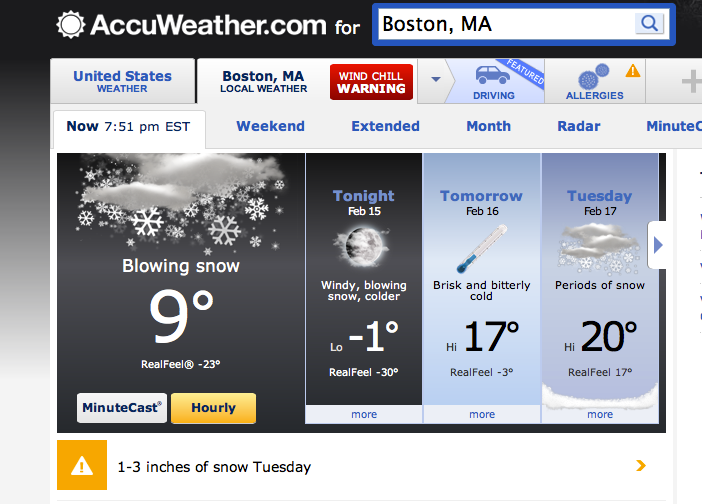
In light of this year’s historic snowfall, I’ve started a campaign to help Boston’s most vulnerable. While it might mean a fun snow-day for some of us, for all too many of our neighbors, this snow means financial catastrophe and personal suffering. Many residents are without heat or struggling to keep the heat on in the frigid weather. Homeless shelters are at overflow capacity, and with schools closed due to snow, many area kids are missing the school meals they depend on. Click here to donate and help Boston’s most vulnerable #HeatandEat!
Boston has received over 82 inches of snow so far this winter, with 45 of those falling in the last month. In fact, the last month has been Boston’s snowiest month ever since record-keeping started in 1872. This does not include the 12-18 inches falling at the time of this writing, which is expected to bring with it the coldest weather in a decade. Parts of the Northeast will feel like -33 degrees with wind chill.
This weather has caused multiple failures and unexpected closings of the public transit system. When the transit system does operate, commuters face extreme delays and unpredictable service. Large snow piles and unshoveled sidewalks make driving and walking treacherous. In some areas the accumulated snow has caused roofs to fail. While this is a nuisance for everyone, for some it’s a threat to survival.
Here‘s how the weather has affected the most vulnerable among us:
Find out what's happening in Roslindalefor free with the latest updates from Patch.
- As of February 10, Boston public schools have been closed for 8 snow days, with more closings expected following the Valentine’s weekend storm. When schools are closed, low-wage parents may have to sacrifice pay to stay home with young children.
- Children from low-income households who may rely on school lunch or breakfast programs for portions of their daily meals have to do without these meals when school is closed.
- When public transit shuts down, many low-wage workers find themselves with no way to commute to work, and subsequently miss out on a day’s pay. (Cabs and Ubers are too expensive to be viable options. One ride can cost workers a large portion of a day’s pay.)
- Thankfully, Massachusetts law provides utility shutoff protection to households with seniors, infants, the seriously ill, and low-income residents, meaning that these households’ gas and electricity cannot be shut off in the winter. However, many Massachusetts homes are older and rely on oil-based heating systems. Oil is one of the most expensive ways to heat a home, and there is no law requiring oil companies to supply oil to residents who cannot pay. About half of Bostonians who receive heating assistance have already exhausted their annual allotment and are living with no heat.
- While homeless shelters are usually closed from dawn to dusk, this winter’s weather means shelters are staying open around the clock to provide food and warmth to those who need it most. This puts a tremendous strain on homeless shelters’ already scant resources, and many shelters are at overflow capacity.
In light of all of this, we’re asking you to donate to help Boston’s most vulnerable residents #heatandeat. All proceeds raised will be donated to the charities listed below. Our goal is $3,000, $1,000 for each organization.
- Salvation Army Massachusetts Good Neighbor Energy Fund ( http://www.magoodneighbor.org): Now in its 30th year, the Massachusetts Good Neighbor Energy Fund has provided energy assistance to hundreds of thousands of residents in temporary crisis who are struggling to pay their energy bills and do not qualify for federal or state energy funds. The Good Neighbor Energy Fund is a cooperative effort between Massachusetts energy companies and The Salvation Army of Massachusetts, and last year it helped more than 1,425 families pay an electric, gas, or oil bill. The Good Neighbor Energy Fund provides assistance to those whose household income falls between 60% and 80% of Massachusetts median income. If anyone knows of a non-governmental organization or program that provides funding to those below the 60% line (especially those who have already exhausted state and federal subsidies), please let me know!
- Catholic Charities Basic Needs Program ( http://www.ccab.org/?q=basic-needs): With 10 sites throughout Greater Boston, Catholic Charities provides a wide range of support, including food pantries, rent and mortgage assistance, and utility assistance.
- Boston Rescue Mission ( http://www.brm.org):Boston Rescue Mission has extended additional services to homeless guests to ensure their safety and well being. During bitter cold weather and snowstorms, overnight guests are also welcome inside during the day.
Check out the following links if you’d like to learn more about how the weather is affecting the most vulnerable populations: