Business & Tech
Somerville Activists Seek to Combat Rampant Wage Theft
State: Employers have cheated workers out of over $200,000 in five years

By Jane Regan, Somerville Neighborhood News
SOMERVILLE, Mass., Nov. 19, 2019 – Somerville bosses have been quietly cheating employees out of tens of thousands of dollars for years now.
The state attorney general’s office has assessed employers based in, or working in, the city almost $230,000 in fines for various labor violations since January 2015. As of Nov. 1, most of them, including the Herb Chambers Companies, had not yet completely paid the penalties. Many are still in business, and it’s entirely possible there are other deceitful employers who have not yet been caught.
Find out what's happening in Somervillefor free with the latest updates from Patch.
But a coalition of labor groups, unions, the Our Revolution Somerville Labor Committee and other worker advocates are hoping to put an end to “wage theft,” includes instances where employers deny workers wages and benefits, such as a lunch break, tips, paid sick time, or when they force employees to work off the clock.
Find out what's happening in Somervillefor free with the latest updates from Patch.
Rampant nationwide and in Somerville
The practice is rampant. A 2018 report from Jobs with Justice and Good Jobs First found that from 2000 to 2018, large employers were assessed $9.2 billion in penalties as a result of lawsuits or state or federal investigations.
Closer to home, the Attorney General’s Fair Labor Division dataset lists 21 violations by Somerville-based companies with assessments totaling almost $190,000 since January 2015. If two non-city based Assembly Square subcontractors are added in, the total jumps to almost $230,000.
All of the alleged violators agreed to civil proceedings and but not all have paid up, according to the data. The Herb Chambers Companies was assessed $116,758.48, but as of Nov. 1 had not yet “paid in full.” Nor had K.A.G Drywall ($12,405.43), which worked at Assembly Square, nor Terri’s Little Pumpkins ($12,954.76), a childcare center that used to be on Broadway. In fact, only ten of 23 fines listed as of Nov. 1 had been “paid in full.” (Those companies will be or have been subject to a tax lien, according to state law.)
Other employers assessed fines include Hawkeye Hospitality, owner of Davis Square’s Five Horse Tavern, which was found not to have paid its workers tips or legal minimum wage. Hawkeye did pay: a total of $17,264.08.
Fighting back with a new law?
Because the employers dealt with by the state likely represent only some of the many violators in and around the Boston area, a group of advocates and activists is hoping to confront the problem head on with changes to the city’s existing wage theft law, Ordinance 9-31. Representatives recently met at the library to discuss progress on the proposed changes and to consider whether establishing a workers center might also help.
Greater Boston Legal Services Ben Traslavina told the Oct. 28 gathering that Somerville’s current wage theft law is ineffectual.
“It only comes into effect if a company has been found to have criminally violated the law,” he explained. “As all of you know, prosecutions, criminal prosecutions of wage theft, are almost non-existent. It’s on the books but it’s a dead letter.”
Traslavina, who has been helping craft the language that would essentially replace the existing ordinance, noted that while it’s difficult to prosecute employers, cities and towns have power.
“We do have, as a municipality, the power to decide what businesses can work in our community,” he noted.
The proposed new ordinance – currently being considered by the Licenses and Permits committee – would give city agencies the power the deny abusive employers building permits, licenses and even contracts. It also calls for an advisory committee that would include representatives of a number of city-based advocacy organizations.
Councilor-at-large Wilfred Mbah, vice president of the committee, said members hope it will become law by the end of the year.
“We are hoping to vote it out of committee on Wednesday, Dec. 11, and adopt it into law at our last Council meeting of the year on Thursday, Dec. 12,” he said in an email dated Nov. 11.
A workers center?
Many of the advocates at the Oct. 28 meeting also said they would also like to set up a workers center.
“There’s a lot of amazing work already in the community,” acknowledged Marcy Goldstein-Gelb, co-executive director of the National Council for Occupational Safety and Health (COSH), but she added that workers need “a safe space.”
Before it moved, the immigrant advocacy group Centro Presente helped many of the city’s laborers, including those being cheated by the Diva Indian Bistro in Davis Square. In 2012, the agency helped workers sue owner One World Cuisine for $183,000 and helped organize weekly pickets for a year.
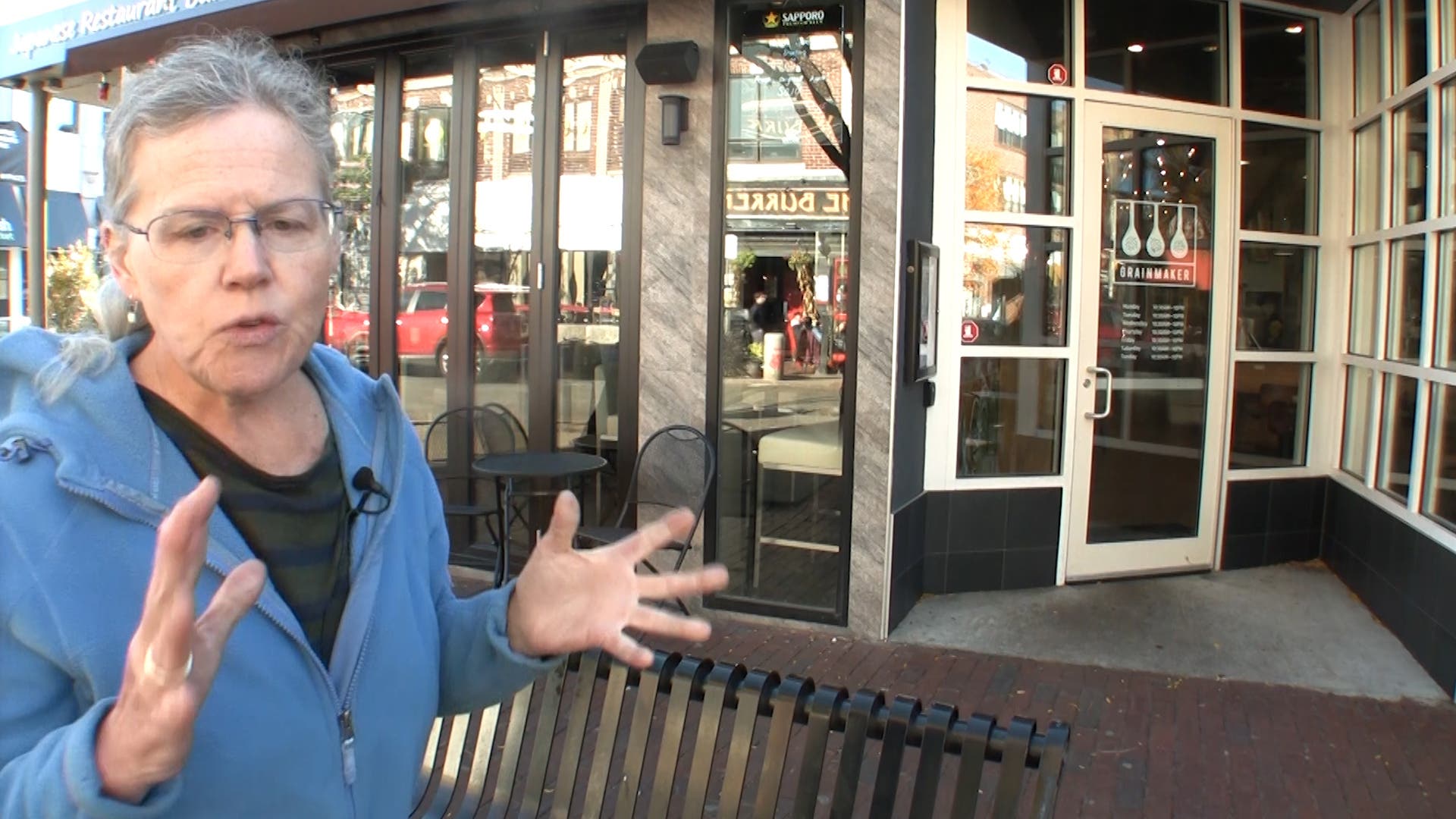
Mary Jo Connelly, active with Jobs for Somerville and other groups, and who attended the Oct. 28 meeting, remembered the weekly marches.
“Every Friday there was a crowd of people and I was one of them, sometimes my kids were with me, saying: ‘Don’t eat at Diva!’” she said during an interview in Davis Square.
The company eventually settled out of court.
More recently, Somerville workers have had to find help outside the city, according MassCOSH’s Milagros Barreto.
“We’ve been helping workers from Somerville for many years now,” said Barreto, whose office is in Dorchester.
Goldstein-Gelb and others, including the ORS Labor Committee, are hoping a center can be funded, at least in part, using monies from the Job Creation and Retention Trust Fund, created by assessing commercial developers of sites over 15,000 square feet a fee.