“We entreat you,” the seven women of Stoneham wrote, “to take such action . . . as will show plainly that our influence is on the side of justice and humanity.”
Their words, written 180 years ago are as relevant today as then. They could be a protest against the detention of children, the raids on immigrants and the dismantling of families across our country.
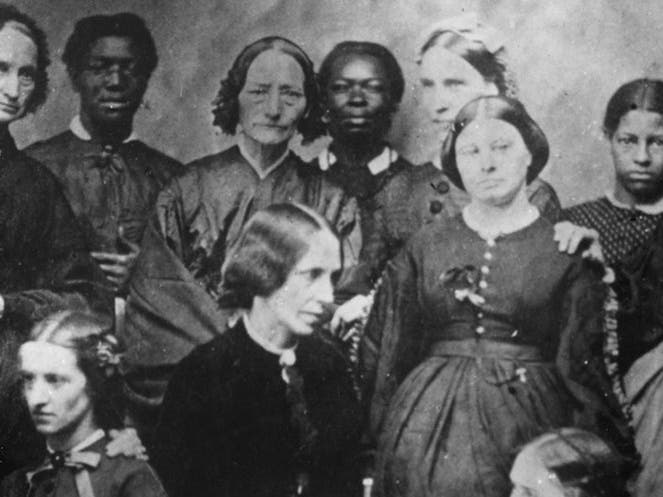
The courageous women who wrote that letter could not vote and had little access to public discourse. But that didn’t stop them. The year was 1839 and the seven—Sarah Gerry, Sarah Buck, Mary Bryant, Abigail Green, Sally Richardson, Nabby Richardson and Mary Newhall—were stating their opposition to the enslavement of nearly four million men, women and children in Southern states.
Find out what's happening in Stonehamfor free with the latest updates from Patch.
Being members of a faith community, these wives and daughters were calling on the leaders of their church to take a public stand, to stand apart from their sister churches that either sanctioned slavery or enabled it by their silence.
“We the undersigned have been convinced that slavery is an evil of immense magnitude,” the letter reads, “and being deeply aggrieved that such an utter abomination in the sight of Heaven is now sustained and defended by almost the entire Christian church at the South, with whom we are in fellowship, and, believing, moreover, that while we refuse to rebuke and remonstrate, we do in fact participate in their guilt….”
Find out what's happening in Stonehamfor free with the latest updates from Patch.
The letter ends with a final appeal, but this line stops me in my tracks. What the Stoneham abolitionists are saying is that when we, people of faith—in this case, Christians—fail to speak out against those committing cruelty, against those using the law to abuse others, we are also guilty.
For the brave women of Stoneham, their entreaty to their church was just a start. Not long after, they and twenty others would form the Stoneham Female Anti-Slavery Chapter, recognized soon after in The Liberator, the abolitionist newspaper edited by William Lloyd Garrison. A men’s group would form a year later.
In a time when there was violent opposition to abolitionists, these women would organize meetings in their homes, raise funds for anti-slavery efforts, and harbor fugitive slaves on their way to Canada.
Their entreaty to church and town to stand up for, to speak out against, and to take action on behalf of the most vulnerable among us, should inspire us today as we, too, confront the violation of human rights in our communities and at our borders.