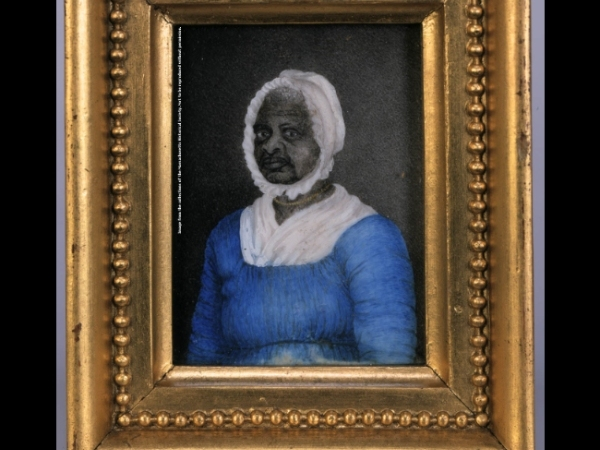
It was 1781, and the Revolutionary War would drag on for three more years. Meanwhile, in the Ashley home in the Berkshires, an act of violence precipitated a court case that would change the lives of thousands of men, women and children in Massachusetts--enslaved men, women and children.
The principal characters in this drama are John Ashley and his wife, Annetje; their houseslave, a woman known as Mum Bett; another slave named Brom; and a Stockbridge attorney named Theodore Sedgwick.
One day in a fit of anger, Mrs. Ashley grabbed a hot fireplace shovel and swung it at Mum Bett’s younger sister, Lizzie. Quickly stepping between them, Bett took the blow on her arm, leaving a deep gash.
Find out what's happening in Stonehamfor free with the latest updates from Patch.
The injury, which Bett refused to cover up so all could see, may have been what drove her in desperation to seek legal remedy. But there were other factors. Illiterate and in her fourth decade of bondage, Bett was nevertheless keenly aware of the talk of the age.
Some think she overhead dinner guests in the Ashley home discussing the new Massachusetts Constitution, ratified the year before, which began, “All men are born free and equal, and have certain natural, essential, and unalienable rights.”
Find out what's happening in Stonehamfor free with the latest updates from Patch.
Or she may have heard a reading of the Declaration of Independence: “We hold these truths to be self-evident, that all men are created equal.”
Not long after the assault, Bett and Brom, also owned by the Ashleys, knocked on the door of a young Stockbridge attorney, Theodore Sedgwick. Would he take their case? Since 1770, a dozen other enslaved persons in Massachusetts had sued for their freedom. And lost.
Mum Bett, however, would not be deterred, and she was thrilled when Sedgwick agreed to represent them. In July 1781 Sedgwick filed her case, Brom and Bett v. Ashley in the Court of Common Pleas.
Mum Bett would later take the name of Elizabeth Freeman. But that’s getting ahead of ourselves. We will let her tell the rest of the story when she visits Stoneham on Sunday, January 19, the day before Martin Luther King Day. She will be presented by storyteller Tammy Denease at the Stoneham High School.
Her story will be part of a matinee celebration of the legacy of Martin Luther King, Jr., titled “Free, free at last.” She will be joined by the Janelle Gilchrist Dance Troupe and students from Stoneham schools presenting art, music and poetry.
As a child in Mississippi, Tammy Denease remembers the stories told by her grandmother and great-grandmother, who had survived slavery. Now, as an historical educator, she brings the lives of “forgotten” African-American women to audiences around the country.
To hear the rest of Mum Bett’s story, head up to the High School on Sunday, Jan. 19, for Tammy’s performance, “One Minute a Free Woman.” It’s a tale of suffering, persistence and courage, and a salute to the strength of the human spirit. You won’t want to miss it.