
# 1 of 4 now March- Lebanon’s State Level Analysis
(each to follow every month.)
#2 of 4 in April- Lebanon’s Globalization Report
Find out what's happening in Stonehamfor free with the latest updates from Patch.
#3 of 4 in May- Lebanon’s Power, Is it only in its Military or in its People’s Innovative Ideas?
#4 of 4 in June-Economics is connected to Peace
Find out what's happening in Stonehamfor free with the latest updates from Patch.
Lebanon’s State Level Analysis
Lebanon is a fascinating country, one because it’s diverse religion and second because of its geographical location. If I were to describe it ……in elementary school, I would have described it as an “Oreo.” An “Oreo” cookie, you are asking yourself at this moment, has this college student gone mad? Well, I think you will understand why I say this by the time we are at the end of this class. Beirut bears the nickname of the “Paris of the Middle East” that is the “creamy center” of the “Oreo.” I would say that is the most delightful part of Lebanon. The cookie wafers that surround it are the players in its deliciousness, but something one can do without, as my son Q would say, symbolizing an obstacle to get to “Paris.” These obstacles would be the different factions, and political turmoil Lebanon experiences. And so I’ll explain these struggles that Lebanon has, and quite surprising not as in bad shape as other Middle East countries but always on the edge. These factions have been around for hundreds if not thousands of years.
A brief history of Lebanon is as follows:
“Mamluks had been Supreme,” for controlling Lebanon “for two and a half centuries,” Mamluks were a specific type of warrior for hundreds of years roaming from the Mediterranean to Egypt. (Phoenicia pg1) But, even though they were powerful up to the 19th century, during the 16th century the Ottoman Turkey Warrior/Army emerged to be much more in control of the Lebanon area which was part of Syria before the French Mandate after WWI. The Emperor of the Ottoman Turkish Empire was “Salim” who won many battles before controlling the Lebanon area. They “turned their attention to the Mamluks.” And, so Lebanese always being in the middle of battles always delegated to survive it made sense that the “Lebanese Delegation of Chiefs presented themselves to Salim to offer homage.” (Phoenicia I) But , today’s Lebanon is a parliamentary democratic republic form a kind of government put in place with a Constitution and independence from France January 1, 1944 (BBC.com).
Today’s Lebanon
A parliament election is every four years and a presidential election is every 6 years. The president’s seat “has been vacant since Michel Suleman’s term expired in May 2014.” (reuters.com) Lebanese are very patriotic and are proud of their nation, but they feel they can be greater. If they could be left alone from outside influences and religious factions, Lebanese would change and amend their constitution to put in an amendment to allow the people to elect a president, not by the parliament which is the norm in many European and Eastern continent procedures. But, unfortunately of what I hear on TV and broadcasts is that Lebanese are stuck in the middle of religious and tribal grievances/battles and as of the moment and near future the only way to survive as a people would be by confessionalism. By representing these religious groups which are many, consocialism will have the shared power of governing. Shi’ites are on the Maronite Christian side, while Sunnies are on Syrian side of matters. Nabih Berri is a Shiite and made a statement he said “The president is elected by parliament and must be a Maronite Christian according to Lebanon’s sectarian power-sharing system. “But Lebanese politicians, deeply divided over issues including the war in neighboring Syria, have been unable to reach the kind of deal needed to fill the post.” (reuters.com) There may be positive things coming of Iranian nuclear deal, since Lebanon’s Shi'ite party is Hezbollah. “Hezbollah is backed by Iran and since “Berri is a Shi’ite” positive repercussions on the region”, can and may help realize a breakthrough in Lebanon” to elect a president soon. (reuters.com)
Economic Trouble
Lebanon is being challenged economically because Lebanon is in the process of trying to address the needs of its people. Either it’s democratization efforts with factions of its government or trying to have the public reach public-private partnerships is a challenge. Since Policies are geared toward “social protection and social development” Lebanon understands this isn’t enough for the macroeconomics they most definitely want. And, so “considerable numbers of new international initiatives and studies focus on the importance of social capital” in hopes that would spark an economical secure Lebanon. (hdv.undp.org 24)
Foreign Policy is crippled in Lebanon, because the Constitution is always being debated over by the actors of Lebanon which include the “following divisions Labor-Shiite Liberation, Sunni reconstruction and Maronite Sovereignty.” (hdr.undp.org 99)
Consociation has brought about denationalization of Lebanese space, and so affects its foreign policies. The problem with Israel, Syria & Hezbollah has caused the inclusion and exclusion of people. In hence, making it difficult for Foreign Policies to be implemented because power is lost due to this problem. The problem Lebanon finds itself losing power it has and finds itself in “a crisis in the political power” within its state “and in its claim to control borders, resources, and coercive force.” (hdv.undp.org 24)
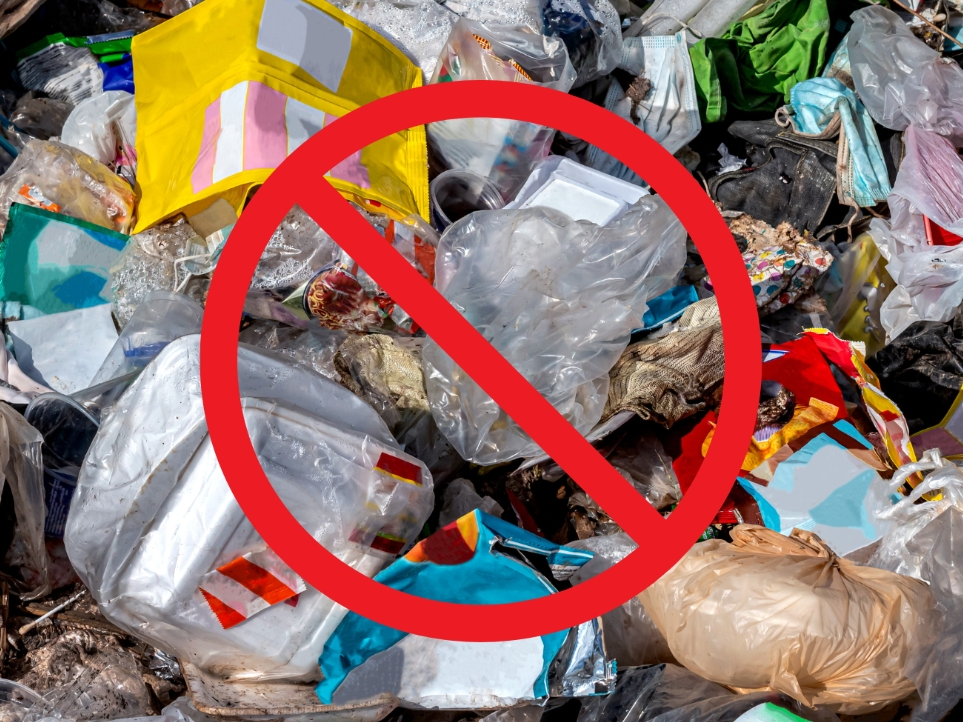
And to make matters worse Lebanon is in a trash crisis that began in July. That hurt economics by making it harder to travel to work and costs workers more money to travel around it, in which that money could have been spent on other necessities. Not having a President is partly to blame for this mismanagement. "Trash piled up in the streets, protesters began holding demonstrations."(new.yahoo.com) In Conclusion, once nationalism is dampened by such horrific smells of trash or things of that nature that separates the people “to the homeland”, which then causes a call to government to return it. ( boyer 85) These demonstrations are expanded to other matters, not just the trash, but to "take aim at the government's longstanding divisions and impotence." (news.yahoo.com) In conclusion, things have settled down now and a band aid will hold this crisis for a little longer opening old landfills. But, the underlying problem of Lebanon must be addressed, and Leader must come forth for these courageous wonderful citizens, they deserve a President of Lebanon.
Work Cited
Hdr.undp.org/sites/default/files/nhdr_lebanon_20082009_en.pdf
www.reuters.com/article/2015/07/15/us-lebanon-politics-iduskcn0pp1kE20150715
Phoenicia.org/maronites.html
www.bbc.com/news/world-middle-east-14649284
news.yahoo.com/Lebanon-cabinet-approves-plan-end-trash-crisis-205020805.html