As Red Sox Nation grieves what could have been this year, it’s good to remember that baseball is about more than one season, or even about one team, or sometimes, more than about baseball itself. I was reminded of this on a recent trip to Maine. While Becky and her cousins attended the annual meeting of the Wiscasset Female Charitable Society, I spent some time with Dean Shea, a retired teacher, who recalled a trip he made to the Big Apple when he was 12.
It was in 1953, and they were three brothers riding in the back of a Volkswagen. Their older cousin, Pat, and her husband, Marvin, were taking them to New York to see a game between the New York Giants and the Brooklyn Dodgers. Early in the morning, they headed for Kittery.
None of the boys had been out of the state before. On the bridge to Portsmouth, just past the marker for the state line, Marvin stopped and they all got out. “Notice how the air smells different,” he said.
Find out what's happening in Stonehamfor free with the latest updates from Patch.
Hours later they arrived at the Polo Grounds in Harlem. Capacity of the storied ballpark was 55,000, but to Dean, a boy from a Maine village, it looked twice that number, an endless sea of faces curling behind home plate and along each side to center field.
What took place at the Polo Grounds is part of New York lore. In 1945 Mel Ott hit his 500th home run there. In 1951 Bobby Thompson hit the “shot heard round the world,” as the Giants defeated their crosstown rivals, the Brooklyn Dodgers, to clinch the National League pennant. In the 1954 World Series against Cleveland, Willie Mays ran deep into the 450-foot-deep center field to make the most famous catch of all time.
Find out what's happening in Stonehamfor free with the latest updates from Patch.
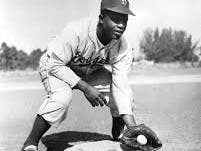
What Dean remembers most, however, was not Thompson or Mays, but a second-baseman with the Brooklyn Dodgers. His name was Jackie Robinson.
The first black to break the color barrier in major league baseball, Robinson had hit his first major league home run in the Polo Grounds, on the Giants home opener in 1947. No homers, however, on the day the Maine boys were there.
“Jackie had an all-right day,” Dean recalls, “a couple hits, but nothing spectacular.”
What Dean remembered most about Robinson took place before he ever came up to bat or grabbed his glove.
First, you have to know that in the Polo Grounds the team clubhouses weren’t behind the dugouts, but in center field, some 500 feet from home plate. When players arrived, they descended a flight of stairs onto the field and walked to their dugout.
On this particular day, uncharacteristic of Robinson—traffic jam on the expressway, perhaps—he arrived late to the Polo Grounds. When he did arrive, warm-ups were over and the Giants were getting ready to take the field. When Robinson finally stepped onto center field and began his long walk, it sounded like fifty thousand voices erupting in boos and jeers.
“Jackie walked as if no one was there,” Dean remembers, “looking neither left nor right.” With enormous dignity, he crossed the field and stepped into the dugout.
That night, Marvin and Pat drove the boys to Brooklyn, where they slept in sleeping bags in Prospect Park. The next day they visited the Museum of Natural Science and the Statue of Liberty. In the stairwell climbing up to the Crown, Dean heard languages never heard in Wiscasset.
Now, many years later, Dean remembers their boyhood trip to New York as a stepping stone to the future. Like his brothers and sister, Dean would excel in school, graduate from college and become a teacher. Among all he saw in New York, the baseball game at the Polo Grounds stands out.
Watching Jackie Robinson take that long walk gave him a glimpse into the cauldron of race relations in America. It also showed him the courage it takes to bring change.