Neighbor News
Voices in the Commonwealth
Massachusetts celebrates its heroes during Black History Month
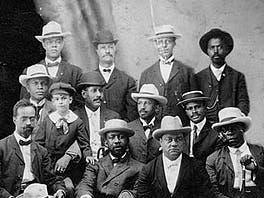
I’m not a native of Massachusetts, but I’ve come to love the Bay State, its green hills and rocky harbors, its fens and fells, its rivers and ponds. And its rich literary history. In high school in California, I read Thoreau’s Walden. In college I read Emerson and Dickinson, Melville and Hawthorne. Later I read biographies of John Adams and Clara Barton. With our children we read Little Women.
But only in recent years have I become aware of the rich history of African Americans in our Commonwealth and of their eloquent and powerful words.
“In every human Breast, God has implanted a Principle, which we call Love of Freedom; it is impatient of Oppression, and pants for Deliverance,” wrote the slave girl, Phillis Wheatley.
Find out what's happening in Stonehamfor free with the latest updates from Patch.
Kidnapped at age 7 in Senegal, she was purchased in 1761 by the Wheatley family on the wharf in Boston. Educated by Susanna Wheatley and her children, Phillis started writing poetry at age 12. in 1773 a volume of her poems came out in London, making her the first published poet of African descent in America.
We all know of Frederick Douglass, who after fleeing enslavement in Maryland found refuge in New Bedford. A sought-after speaker at abolitionist meetings, Douglass became a prolific writer, authoring numerous essays and three editions of his autobiography. He founded and edited the abolitionist newspaper, The North Star.
Find out what's happening in Stonehamfor free with the latest updates from Patch.
But there were others, less known, like David Walker, son of a slave and a free woman, who in 1830 in Boston published an appeal to “colored citizens of the world.” Walker’s reasoned but fiery treatise emboldened abolitionists and enslaved people throughout the country. It also struck fear into the hearts of their owners.
Then there was Elizabeth Freeman, the Sheffield woman who won her freedom in a Massachusetts court in 1781. Her simple declaration still resonates with us. She said: “Any time while I was a slave, if one minute's freedom had been offered to me, and I had been told that I must die at the end of that minute, I would have taken it just to stand one minute on God's earth a free woman, I would.”
In the four centuries of our Commonwealth, other African Americans—poets, teachers, politicians and historians—have taught and inspired us with their words. Who today is not acquainted with Henry Louis Gates, Jr.? Many know him from his “Finding Your Roots” series on public television.
I recently picked up Gates’ book, The African Americans: Many Rivers to Cross, a companion to his recent PBS series, written with fellow historian, writer and Harvard Professor Donald Yacovone. Beautifully written and illustrated, the book tells the stories of “ordinary individuals, unsung heroes whose passions and beliefs changed their world.”
In the book’s introduction is a quote from another native son of Massachusetts, the noted sociologist and historian, W.E.B. DuBois. Born in Great Barrington in 1868, Dubois became the most prominent voice for civil rights in the early 19th century. I remember reading his beautiful prose in The Souls of Black Folks, a literary classic and seminal narrative of black experience during and after Reconstruction.
Here are the encompassing words of DuBois, as quoted in Gates’ and Yacovone’s Many Rivers to Cross:
“The most magnificent drama in the last thousand years of human history is the transportation of ten million human beings out of the dark beauty of their mother continent into the new-found El Dorado of the West. They descended into Hell; and in the third century they arose from the dead, in the finest effort to achieve democracy for the working millions which this world had ever seen.”
The voices mentioned above are but a few of many. They deserve our attention, not only during Black History Month, but all year long.