Neighbor News
Working on St. Patrick's Day
In 1847 they worked for free, loading a warship with food bound for Ireland
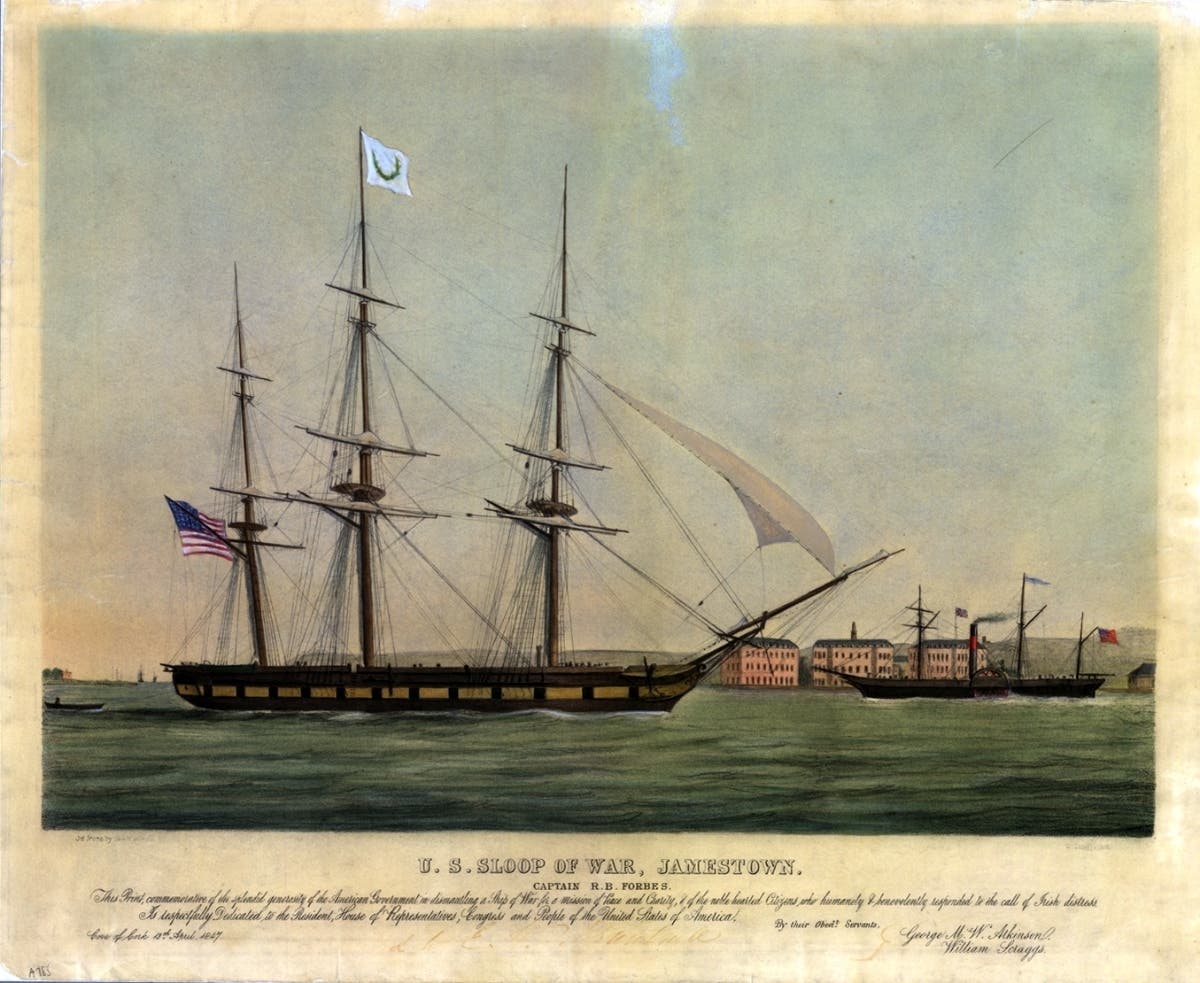
They were immigrants, mostly Irish, and they had turned out on St. Patrick’s Day at the Navy Yard in Charlestown. It was March 17, 1847, the second year of the Great Hunger, and these men, members of the Laborours’ Aid Society, would spend the day loading the sloop-of-war, the USS Jamestown, with food.
These stevedores, rolling barrels up planks and packing them into the ship’s hold, were joining thousands of Americans who had donated food, money or labor in response to the desperate plight of their brothers and sisters across the Atlantic.
It was the first time in modern history that any nation had come to the relief of another, not with military aid, but with grains, meat, vegetables and dried fruit.
Find out what's happening in Stonehamfor free with the latest updates from Patch.
Eleven days later, the USS Jamestown sailed out of Boston harbor with 8,000 barrels of food stuff bound for Cork, Ireland. It was the first of some 130 ships from American harbors to reach Ireland with desperately needed relief supplies.
The story of the Jamestown, its captain Robert Bennet Forbes, and the many government, religious and lay figures who inspired and managed the missions of mercy, can be read in Voyage of Mercy, by Stephen Puleo. Released just this month, it is available at the Book Oasis on Main Street. On April 26, Stephen Puleo is scheduled to tell this story at 2 p.m. in Town Hall.
Find out what's happening in Stonehamfor free with the latest updates from Patch.
The relief mission was made possible by unprecedented cooperation between public and private organizations. The government, despite being engaged in a war against Mexico, provided ships, as well as key initiatives encouraging cooperation and facilitating transportation. Farmers and businesses throughout the United States donated food stocks and money.
As newspapers carried accounts of the horrors of the famine and accompanying disease, Americans of all ethnic and religious groups responded. Catholic parishes, many of them populated by Irish immigrants, were quick to raise money from the pulpit and in parochial schools. They were joined by Protestant churches, synagogues and public schools, as well as labor, fraternal and civic organizations. Essential coordination was provided, both in Boston and in Ireland, by Quakers.
During the Great Hunger in Ireland, a million would die, and another million cram into ships for America. Thousands would arrive in Boston. The years of famine left the island depleted and bereft. It was a tragedy of enormous scale, caused by natural and unnatural forces and exasperated by structural poverty and prejudice.
The first international relief campaign of its kind, the “voyage of mercy” changed the way societies look at suffering in other countries. It became a model for numerous humanitarian programs to come, including the 1948-9 airlift of food supplies to starving Germans in Berlin.
If there is a lesson for us today, it is that people of good will must come together to address the most urgent needs of human health and well being. We must set aside national, ethnic, racial, religious and political differences.
Puleo’s story reminds us that disasters, whether hurricane, famine, or viral disease, call us to our better selves. Voyage of Mercy affirms the truth that the human heart, despite its capacity for selfishness and indifference, is also capable of great compassion and valor.