Arts & Entertainment
Possible Break in Search for Babe Ruth's Piano
Divers have found what may be the veneer from an old piano.

Depending on whom you ask, Babe Ruth's piano could have ended up on the bottom of Willis Pond in Sudbury in one of two ways. Either the Bambino heaved the instrument in during a drunken rage, or he dragged it out onto the ice for a winter dance party and left it for the spring thaw.
Some people don't even believe it's there. Kevin Kennedy is not one of these people.
Over the course of 10 years, Kennedy has spearheaded a watery search that until recently seemed to have found everything but a piano: a 19th-century plow handle , a folk-art wooden whale, antique bottles, a black-and-white TV, a Citgo sign from the 1960s (which to Kennedy — who as a lifelong Red Sox fan knew about the giant Citgo sign outside of Fenway Park — felt like a portent), and even a 1987 Subaru with the keys in the ignition.
Find out what's happening in Sudburyfor free with the latest updates from Patch.
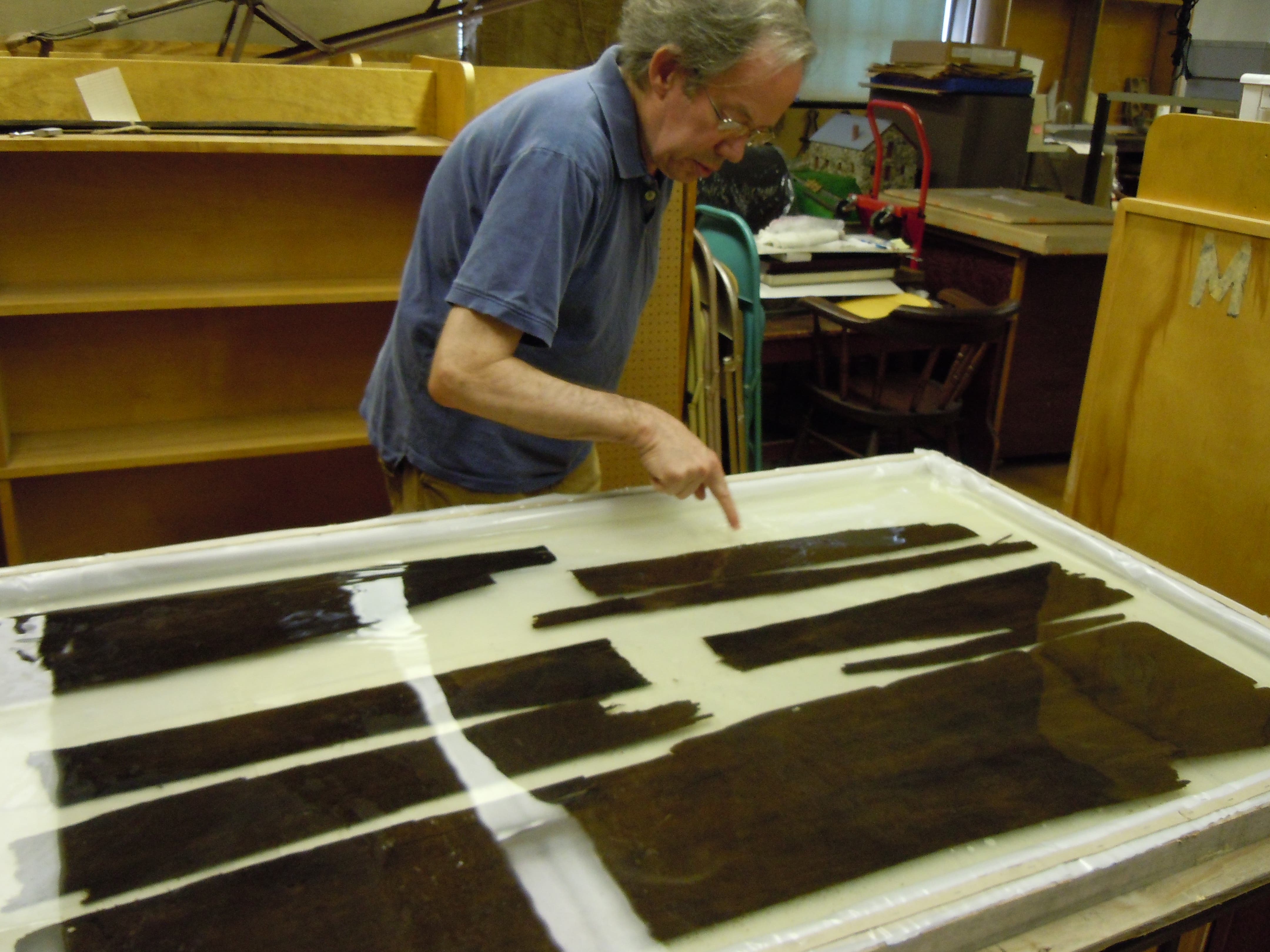
Last month, Kennedy's group of divers pulled out three 48-inch pieces of wood, possibly white oak, that piano expert David Sanderson of Sanderson Piano in Littleton believes is the veneer of an old piano. The divers also believe they have located the piano's harp beneath the murky waters.
"If this is it, it's like finding Paul Bunyan's axe," Kennedy said from the shore of the peanut-shaped pond.
Find out what's happening in Sudburyfor free with the latest updates from Patch.
He paused, scratched his salt-and-pepper beard and decided, "Well, we're not looking for his baseball bat, so it might be more like finding Paul Bunyan's accordion."
An upholsterer by trade, Kennedy, who stands a large 6-foot-2, created a search team, known as the Big Kahuna Search Group, hoping to find and fix the instrument, which would have been submerged for nearly a century by now. He's been called Captain Ahab, Sisyphus, Don Quixote, a rainbow chaser, and worse.
But, despite the mythic nature of the artifact, Sudbury historians say the legendary existence of such a piano may be rooted in fact. According to deeds, Ruth owned at least one cottage along side the pond, and the story of his piano has been a part of town folklore for decades. Lee Swanson, director of the Sudbury Historical Society, says there have been at least three sets of boys from the 1950s, 60s, and 70s who have said they encountered a piano in and around the pond.
"We have all these stories of kids playing with, burning, and even urinating on the piano," Swanson said.
Swanson also said he even received a call from a source who claimed her father was at the party where Ruth brought out the piano.
"She was very adamant that he was not drunk," Swanson said. "Her father says he brought the piano out to play for children and the Babe never drank around children."
The story of Kennedy's search received some national attention in the early 2000s when people began equating the search with an effort to break the Red Sox World Series drought known as the Curse of the Bambino.
"I was probably the only Red Sox fan who was heartbroken when they won the series," Kennedy said. "I always assumed there would be some sort of synchronization of finding the piano, and then winning it all. We even had the idea we'd bring it out in Game 7 of the World Series and play the Star Spangled Banner on it."
But the quest didn't end there for Kennedy. To him, the Babe has always been more than a curse.
"He's the biggest American icon," he said. "When I asked my sister-in-law, who isn't from the States, to describe America, she says Babe Ruth and apple pie, in that order. When Japanese soldiers charged in World War II, they used to yell, 'To hell with Babe Ruth,' in English."
Kennedy, who calls himself an amateur history detective, has spent hours digging through archives, taking oral histories, and even crouching under the fire of duck hunters along the pond in the autumn. Recently, after years of dead-ends, Kennedy pursued the only, well, sensible option that remained: he hired a psychic.
"There comes a time when even the best investigators get frustrated and call in a psychic," he said. "If I wasn't a believer before, I am now, because she pinpointed that veneer."
In order to locate the piano, Kennedy and the psychic went to the site of one of Babe Ruth's old lakeside cottages. Looking out at the pond, the psychic pointed to spots on a circle drawn in the dirt and gave her directions.
"First she said, 'home plate,' which I knew to mean Ruth's cabin," Kennedy said. "Then she said, 'shortstop 20 feet out,' which I knew to mean 10 o'clock, location- wise."
It was at this spot that divers found the veneer. The large chunk of metal believed to be the harp was located just feet away.
With this find, Kennedy says he can finally walk away from his search. Sure, the water is so muddy it's hard to tell if they really did find the harp (divers on this mission are performing what they call a "Braille dive"), but Kennedy feels as if he's accomplished his objective. He's put in the years and the money, and knows that surfacing and preserving a submerged piano could cost him a lot more of both.
He has a letter of commitment from an underwater archaeologist to excavate, and that's enough for Kennedy.
To some, quitting after having possible found the piano, but before it has been landed might seem akin to hitting a home run and stopping before home plate. To Kennedy, it's more like going out on top.
"Historically, people don't know when it's time to leave what you love," Kennedy said. "Even Babe Ruth ended up sticking around too long. He came back as an overweight Boston Brave, incapable of hitting at a Major-League level. After 10 years, the last thing I want to do is crawl to the finish line."
Get more local news delivered straight to your inbox. Sign up for free Patch newsletters and alerts.