Politics & Government
With No Bids for Old Library Branches Committee Exploring Sale
After four years of intermittent efforts toward finding a use for the vacant North and East Branch Libraries, the town has decided to consider selling them – an option it has long postponed – while continuing to seek lease candidates.
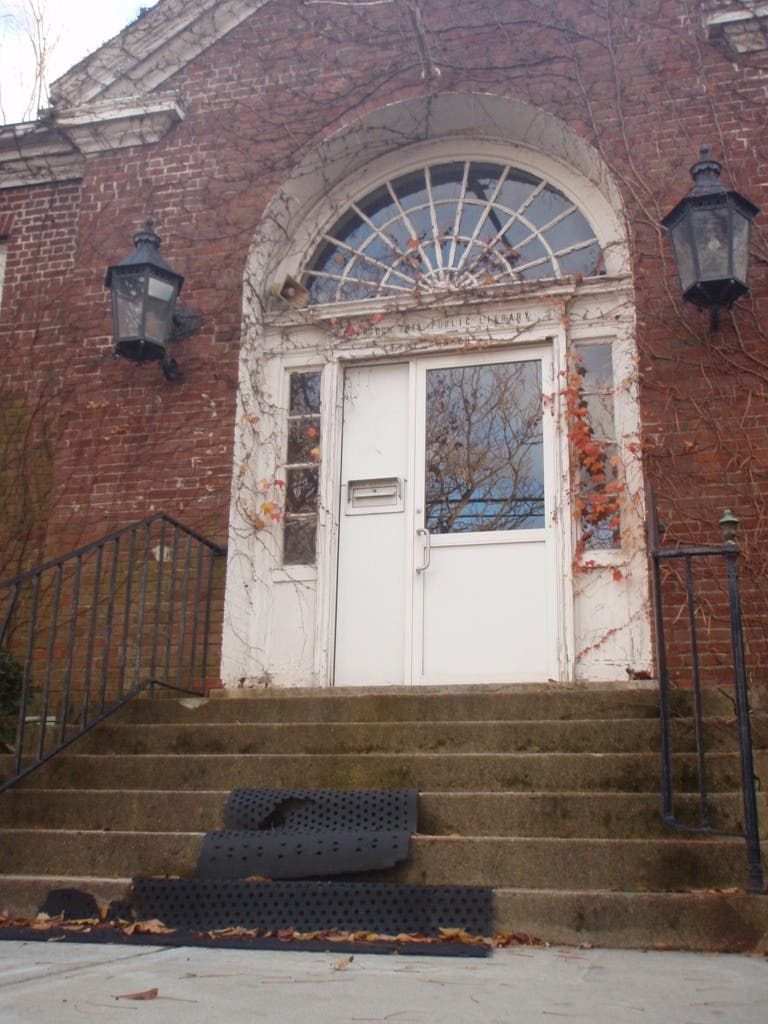


Since the summer of 2006, the former North and East Branch Library buildings in Watertown have sat vacant, occupied only by stacks of boxed town documents and the occasional piece of gym equipment.
Now, after years of intermittent efforts toward finding a use for the properties, the town has decided to consider selling them – an option it has long postponed – while continuing to seek lease candidates.
"I wish we could lease them ... but at some point when reality collides with idealism, we've got to do the realistic thing too," said Town Councilor Vincent J. Piccirilli Jr., co-chair of the Former Branch Libraries Reuse Advisory Committee, in an interview. "If we cannot realistically lease these properties, then I think we need to consider alternatives."
Find out what's happening in Watertownfor free with the latest updates from Patch.
The committee voted Nov. 3 to begin discussions on drafting requests for buyer proposals, in addition to revising and republishing the old requests for lessees.
After years of declining use, the branches were shut down as the town funneled resources into expansions at the Watertown Free Public Library, Piccirilli said. The town held a meeting about nine months later to gather the community's thoughts on the vacant properties. There the public mainly expressed a desire to put them to municipal use, according to a report prepared by the Watertown Community Foundation.
Find out what's happening in Watertownfor free with the latest updates from Patch.
However, two and a half years passed and Watertown had not found any public use for the former branches, according to town documents and officials, so a committee was formed at the start of 2010 to pursue leasing the buildings.
Still, no prospective tenants have yet stepped forward with valid proposals, the committee said.
"I don't want us to be continuing to hit a brick wall," said Joseph E. Previtera, a committee member who voted in favor of starting talks on a sale. "What's most important is figuring out a way to get these buildings back into use (in a way) that would be in the best interest of the community at large."
Previtera, who also backed continuing attempts to lease the properties, said he had "the utmost confidence" that the town will eventually find renters, but did not want to rule out other possible solutions. He further noted that it is yet to be seen where the sale discussions will lead.
Town Councilor Angeline B. Kounelis, a committee co-chair, opposed the motion to explore selling the properties, one of which is in her district, and favored first publishing a third round of requests for lease proposals, according to a report of the meeting prepared by Piccirilli.
"All efforts should be made" to keep town ownership of the buildings, she said in an interview. "We … need to generate revenue for today and retain for tomorrow."
She described the sale of Watertown's Parker School, on Watertown Street, as "one of the biggest mistakes" the community has made, saying it could have drawn in more money for the town as a rental property which would have helped to alleviate property taxes.
Another committee member, Rena Baskin, agreed with Kounelis and cautioned against going "for the quick buck" by selling the branches.
The greatest obstacles to leasing the buildings are their lack of parking and the high cost of the renovations that the new occupants would be required by law to perform, said Steven Magoon, the director of Watertown's Department of Community Development and Planning.
The East Branch Library would need almost $1.4 million in restorations, and the North Branch almost $1 million, according to assessments that the town commissioned in 2007.
Moreover, the town's zoning ordinances prohibit most commercial operations from utilizing the properties, instead only permitting "community-oriented" uses specified in the committee's published requests. Watertown has also stipulated that the building may not be razed and that changes to its exterior "must be historically appropriate."
"I'm just not sure what the market is for such a limited-use" property, said Neal Corbett, a committee-member, given the high front-end costs "for what could be such a minimal return on investment." Corbett works at an architectural firm.
At one time, TILL Inc., an organization that assists the mentally-impaired and possesses other property in Watertown, was interested in using one of the branches as a school for autistic children. However, they "determined that the sites were too small and too expensive to renovate," the report states.
And in a later interview, Tom Nordberg, TILL's director of facilities, clarified: "The president of the company has decided not to pursue anything any further." He said the president, Dafna Krouk-Gordon, did not wish to comment on the reasons for her decision.
St. James Armenian Apostolic Church submitted a "preliminary proposal ... for discussion purposes only" to the town, in which it suggested leasing the East Branch for 99 years at a rate of $1 per year, according to the committee's report. The town would benefit from this arrangement since the church would renovate and maintain the building until the end of the lease, said Scott H. Kapilian, chairman of the St. James Parish Council.
But the committee concluded that "a lease of this length for a token payment was not in the best interest of the Town," the report reads. Furthermore, they did not consider the church's proposal to be valid because it did not include a required $2,000 deposit.
The committee's suggested lease term of 20 to 30 years would not be worth the cost of repair, Kapilian said, even if the church were exempt from paying rent. On the other hand, the church has communicated an interest in buying the neighboring East Branch property since the library first closed, though they would need to raise the funds to pay for it.
As for how the town can make leasing more attractive, Piccirilli said the committee might relax its rules to allow greater structural changes to the properties. The North Branch building lies in his district.
So far, the committee has decided against rezoning the buildings due to the repercussions it could have for the neighborhoods, according to the report – although Corbett said in an interview that he did not want to take the option off the table. Baskin also thought they might be able to find low-impact commercial uses for the properties.
Magoon said that the cost of maintaining the vacant buildings has been insignificant thus far. Having been winterized, the buildings do not require heat but only electricity for the security system, according to Gerald S. Mee Jr., superintendent of Watertown's Department of Public Works.
However, Magoon "warned that the longer we wait to find a use for the buildings," reads the committee's report, "the sooner the Town will need to spend money on preventive maintenance."