Politics & Government
Watertown Cable a Leader in Providing Closed Captioning
WCAC will begin providing closed captioning for Town Council meetings on Feb. 8. The station may be the first in Massachusetts, one of a handful nationwide to do so.



Tuesday’s Watertown Town Council meeting will have a new feature, one that few, if any, other towns in the Bay State can boast – closed captioning for those watching on television.
By turning on the closed caption feature on their TVs, viewers can see text of the dialogue from the council meeting for the first time on the Watertown Cable Access Center Television channel.
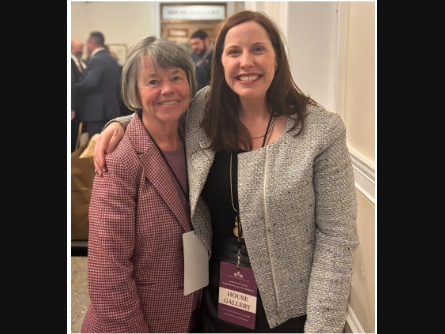
The captions will be a boon for the deaf or the hard-of-hearing, said Carol Menton, a member of the town’s Commission on Disabilities and past chairman who has hearing difficulties herself.
Find out what's happening in Watertownfor free with the latest updates from Patch.
“This is great and certainly marks Watertown as a front-runner in providing communication access!” Menton wrote in an e-mail. “It will provide immediate communication access to town government. The state Legislature and U.S. Congress already caption their proceedings on-line.”
In the past, Menton wrote, people with hearing difficulties would have to wait to read a summary of meetings from news reports.
Find out what's happening in Watertownfor free with the latest updates from Patch.
The effort to provide close captioning goes back years, said WCAC Executive Director Tamarah Green.
“I’ve been here 3-1/2 years and we have in talks with the Commission on Disabilities almost that entire time,” Green said.
WCAC had a few programs with captioning a few years ago.
Pam Piantidosi, host of Watertown Weekly News, captioned her shows early on and occasional School Committee meetings had captions, Menton said.
About a year ago, television technology changed when the federal government mandated the switch from analog to digital television. When that happened, Green said, WCAC did not have the technology to provide captioning.
While closed captioning is requires for broadcast and cable stations, Green said, cable access channels have an exemption.
WCAC had to buy an encoder, Green said, which when used with special software allows someone to type during the meeting and have it appear on the screen in real time.
The Commission on Disabilities agreed to pay for someone to provide captions at the Town Council meetings for a year, said commission Chairman George Donahue.
“We had two options,” Donahue said. “One is to do it remotely and have data line and phone lines to an organization in Florida which would listen and transcribe. Or you can put someone in the Town Council chamber. We went that route.”
Few if any other cable access systems in Massachusetts do closed captions for meetings, Green said.
“I’ve done some research and we believe we are one of the first in Massachusetts, if not the first,” Green said. “We found that there may be 11, or so, other communities across the country are doing it. Most are municipally run, not like us, and all are in major cities like L.A. And most are in California.”
Most local cable stations can not afford the cost of the equipment and paying for the person to do the transcription, Green said.
“It is very expensive. If we didn’t have the partnership (with the Commission on Disabilities) we would not be able to go it alone,” Green said.
Donahue said it is fitting that a Boston-area cable access station is among the first to offer captioning. The first closed-captioned program was Julia Child’s PBS cooking show “The French Chef,” produced at Boston’s WGBH, which started the service in 1972.
From 1972-1982, 190 PBS stations across the nation aired re-broadcast of the ABC Nightly News with captions a few hours after the live broadcast.
“When look at local level, we are taking something that started (38 years ago) and bring it to local television – it is just the next step,” Donahue said.
The Town Council meetings air on the second and fourth Tuesdays of the month at 7:15 p.m. Rebroadcasts are aired on Thursdays at 10 a.m. on Comcast channel 10.
Right now, Green said, RCN will not have the captions, but they may do so later.
Live broadcast of the meeting and on-demand video with captioning is also available at on the WCAC Web site.
For more information, please contact WCAC at 617-923-8610 or the Commission on Disabilities at info@wcod.org.
Get more local news delivered straight to your inbox. Sign up for free Patch newsletters and alerts.