Schools
Parent Support Forum Yields Tips, Encouragement for Coping with Tragedy
The forum at Wayland Middle School Tuesday night was designed to give parents a chance to process and cope with Lauren Astley's murder, so they could help their kids.


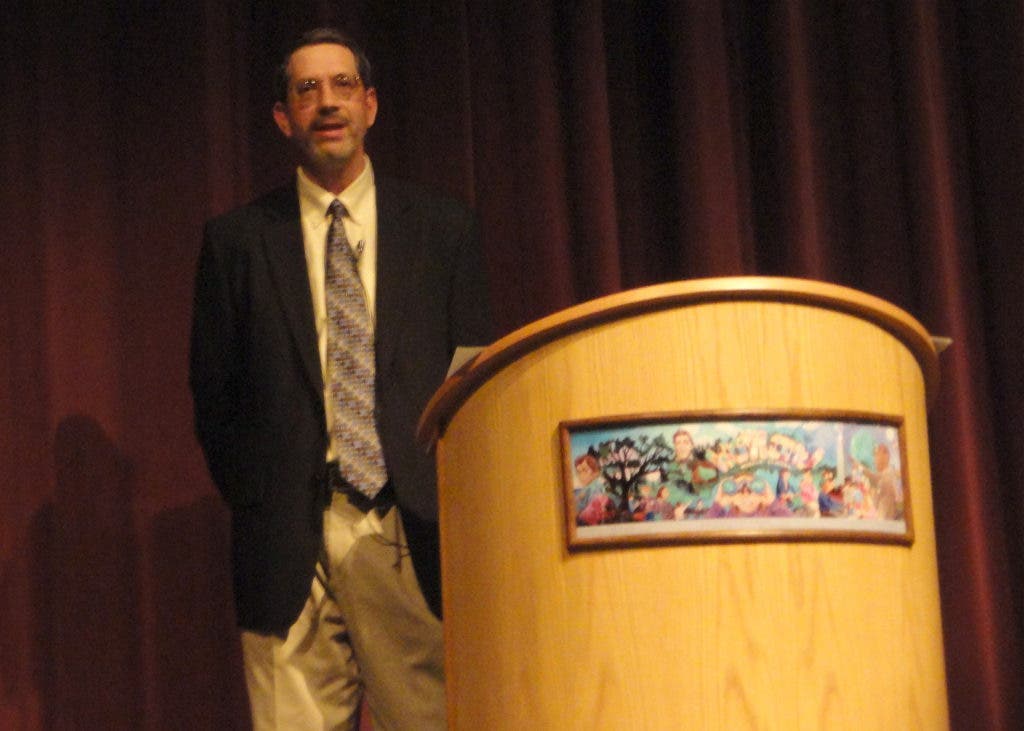
Parents, guardians, grandparents, school officials and more filled the auditorium at Tuesday night for a parent support forum organized in response to Lauren Astley’s murder.
Principal Pat Tutwiler opened the meeting by referring to an unnamed person with whom he had recently discussed the tragedy and recovery from it.
“In situations like this,” Tutwiler said the person told him, “tragic as it is, sad as it is, if the adults are looked after, if the adults have the opportunity to process and connect, if the adults are cared for, the young people, the kids, will actually benefit.”
Tutwiler said that was the goal of Tuesday’s forum: To give adults a chance to connect and process so they could effectively help their children do the same.
Dr. Mark Kline, a psychologist and the associate director of the Human Relations Service of Wellesley, facilitated the evening’s conversation. Repeatedly, he drew from his years of experience working with kids and teens and encouraged parents with his assertion that “kids are more resilient than we give them credit for.”
“What we see with most kids this age is they are able to cope, they are able to move on and it doesn’t lead to long-term mental health issues,” Kline said. “I have a lot of faith and confidence that all your children will [be able to move on] as well.”
Even with the encouragement, parents raised a wide array of questions. Both audience members and Kline provided the tips below in response to some of those questions and concerns:
Question: How much information should be disclosed to children?
“I don’t ever recommend lying to your child,” Kline said. But, he added, functioning on a “need-to-know” basis is appropriate for young kids. Withholding some of the more “lurid details of this,” he said, was likely a good option.
He warned that kids may come home having heard other details, whether gossip or truth, from other sources. In that case, parents have an opportunity to have a conversation with their children about how that new information made them feel, Kline said.
It’s also an opportunity to help children sort gossip from fact. Kline said with his own children, he uses a conversation about gossip and truth to communicate that they can “trust me to be an arbiter of what is gossip and what is truth.”
Question: What does this mean about how we talk to girls about healthy dating and relationships?
Kline said one thing to keep in mind is that the Astley murder is being called an “extreme case” of teen dating violence.
“This tragic event isn’t a common or typical outcome of relationships between boys and girls,” he said. Still, for he and his 16-year-old daughter it opened a door for him to talk with her about ways to assess whether a relationship is healthy.
Another audience member spoke up and said she and some other parents contacted Voices Against Violence in Framingham, who sent a representative to talk with a small group of girls about the difference between care and control in relationships, and signs so they can know the difference.
“I think kids are resilient,” said a Voices Against Violence representative who was in the audience. “But I also think it’s our job and our responsibility to teach girls what the warning signs are.”
She recommend the Voices Against Violence website for tips and information.
Question: How do we continue to support our children when they leave for college in the fall?
An audience member who raised this question said she and other parents in a similar situation had contacted the colleges their children plan to attend in the fall.
“We know this is a process,” the audience member said. Because of that, she said they have contacted the colleges to make sure that “someone on the other end” is aware of the situation and can be a resource for the new student in the fall.
Question: How do Wayland High School administrators plan to address this tragedy when school resumes in September?
“The honest answer is right now, I’m not sure how we’re going to deal with that come September,” Tutwiler responded. “This is very new territory for me and the staff at Wayland High School.”
Tutwiler said the staff of WHS will work to ensure students know there are adults at the school to whom they can talk, but he also said that, come September, it could do more harm than good to draw undue attention to this tragedy.
“We shouldn’t necessarily be pushing this in their face again come September,” Tutwiler said, acknowledging that everyone grieves in different ways and at different speeds. “To the extent that we continue to raise this with them and assume that they need more, it might actually have the opposite effect. The processing is happening, the healing is happening.”
Question: How will the schools assure Nathaniel Fujita’s (the man accused of killing Astley) younger brother is safe and cared for at school in the fall?
Kline said this is a “tricky” question to answer because there is no way to predict “what kids are going to be feeling in the fall.”
Whatever happens, said Claypit Hill counselor Mike Hehir, “I think that we would want to reflect kind of what’s happened in the community so far in that we need to have some tolerance.”
Closing
“I actually think that the most important tip is that you’ll rarely go wrong by relying on what is most important between you and your children: caring and connection,” Kline said at the end of the 90-minute forum.
“What they really need is you to be there for them and somehow we’ll all get through this.”
Get more local news delivered straight to your inbox. Sign up for free Patch newsletters and alerts.