Schools
Youth Survey Indicates Some Good News, But Plenty to Work On
Wayland High School Students presented, "In Their Own Words," a program relaying information from the 2010 Youth Risk Behavior Survey.


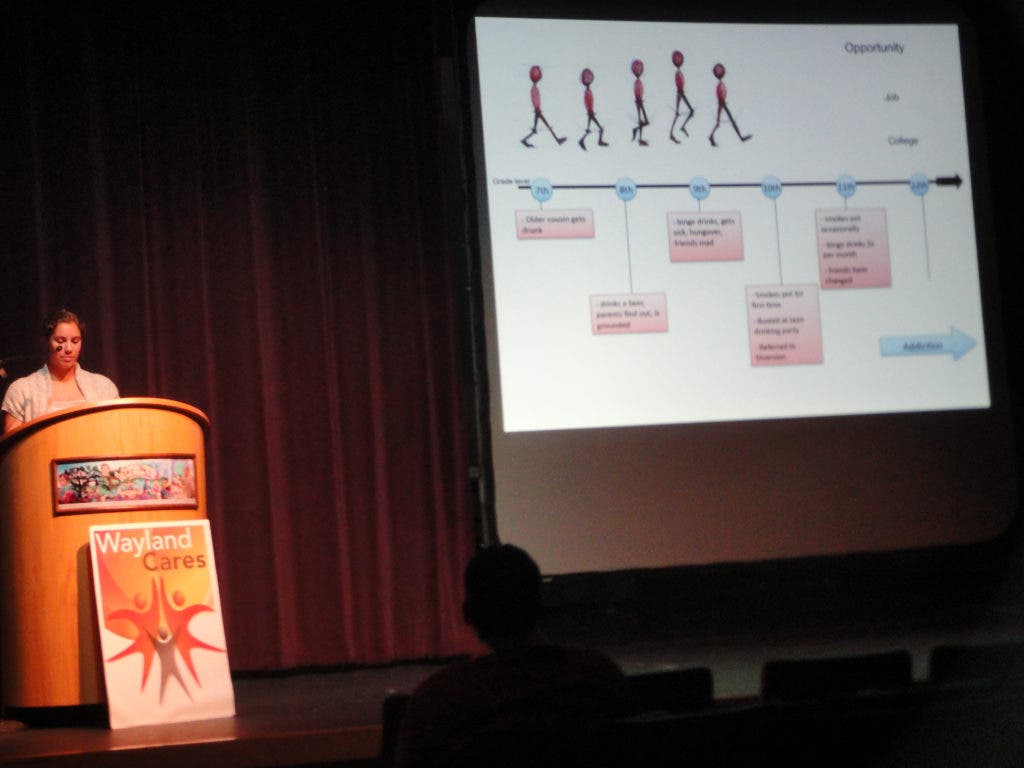


students Wednesday night presented data from a recent survey that shows parents are a critical defense when it comes to keeping their children marijuana and alcohol free.
The auditorium at became the setting Wednesday night for students to talk to parents, school officials and even officials from nearby towns about the substance use results of the 2010 Youth Risk Behavior Survey administered last fall to sixth through 12th grade students in Wayland.
“In Their Own Words,” organized by WaylandCares, was a first-ever event during which high school students, the very individuals who take the Youth Risk Behavior Survey, presented a portion of the results to the public.
The key takeaways? Parents need to work to increase the perceived harm of drugs and alcohol among Wayland youth; increase youth perception of parent disapproval when it comes to drug and alcohol use; communicate clear “no use” messages to their children; and recognize the intervention of schools or police as opportunities to redirect their child’s life journey.
The 2010 Youth Risk Behavior Survey showed that “there is a lot of good news,” according to student presenters.
“Most Wayland teens choose not to use drugs or alcohol,” Jaimie, a student presenter, said. “Tobacco is included in this trend.”
The number of students who choose not to use alcohol or marijuana does decrease with each grade level, but “In Wayland, the norm among students is to live a substance-free lifestyle.”
That may be the norm, but there is always room for improvement.
Since Wayland Schools began participating in this Youth Risk Behavior Survey in 2006, cigarette and alcohol use has declined among both middle and high school students. Among high school students, however, binge drinking and marijuana use has plateaued, with about 20 percent of students in grades nine through 12 reporting they binge drink or use marijuana.
“We’ve seen a large decrease in alcohol use over the last four years, but of those who do drink alcohol, the numbers that binge drink have largely remained the same,” a student presenter said. Data showed that 62 percent of students who drank alcohol in the past 30 days reported binge drinking. “The data indicates that the majority of students who do use alcohol are high risk drinking.”
When it comes to other risky behaviors, one in three WHS seniors reported riding in a vehicle operated by a minor under the influence of marijuana. In addition, in the 30 days prior to when the survey was administered last fall, 43 seniors reported they had driven a car while under the influence of marijuana.
When it comes to parents’ role in helping their children refrain from using cigarettes, alcohol and marijuana, “Perception of parent disapproval significantly influences the decisions the student makes about drugs and alcohol,” Isabelle told the audience.
Students reported that their parents’ disapproval of cigarette usage is highest; incidentally, student use of cigarettes is the lowest when compared to alcohol and marijuana use.
“Wayland students may be accurately perceiving that their parents disapprove more of their child using cigarettes than using alcohol or marijuana,” Jade said, relaying data gathered through a parents’ survey that indicated 84 percent felt it was very wrong for their child to smoke cigarettes, 77 percent felt that way about marijuana use and 69 percent reported feeling that way about their child having “one or two drinks of alcohol with their friends.”
While students say their parents are the No. 1 source for information about drugs and alcohol, only about one-third of parents report talking once per month or more with their child about alcohol (36 percent) and marijuana (29 percent).
“Given that half of our senior class is drinking alcohol and one in three are smoking pot, wouldn’t it be a good thing if parents were talking to their children more regularly about these two substances in particular?” Jade asked the audience.
Justice Smith, the K-12 wellness curriculum leader for Wayland Schools, took the podium following the data presentation to assure audience members that supports and resources are in place to help dissuade these risky behaviors as well as to provide intervention for students who are caught taking part.
Peer groups, an increased emphasis on wellness staff and education, substance-free activities for post-football games or other events, and a concerted effort to communicate social norms are all part of efforts to curb substance abuse among Wayland students. The results of the Youth Risk Behavior Survey, Smith said, help direct those efforts.
The survey itself is funded by the Metrowest Health Care Foundation and is administered to 24 communities in the region. Each district is able to customize 10-15 questions to assess unique aspects of that particular community’s interests. In Wayland, one of those customized questions explored driving and marijuana use.
The survey is anonymous and voluntary, which helps ensure truthfulness. In addition, trends in data suggest that students are answering the questions honestly.
“If students are lying on the survey, they’re doing so consistently on the same questions year after year,” Ariel assured the audience.
The PowerPoint presentation from “In Their Own Words” will be posted soon on WaylandCares.org. WayCam will also post video of the evening’s presentation on its website at WayCam.tv.
Get more local news delivered straight to your inbox. Sign up for free Patch newsletters and alerts.