Politics & Government
Pakistani Women Officials Stay in Westborough
Two women from Pakistan talk about their situation back home, and what they hope to learn here during their extended stay.


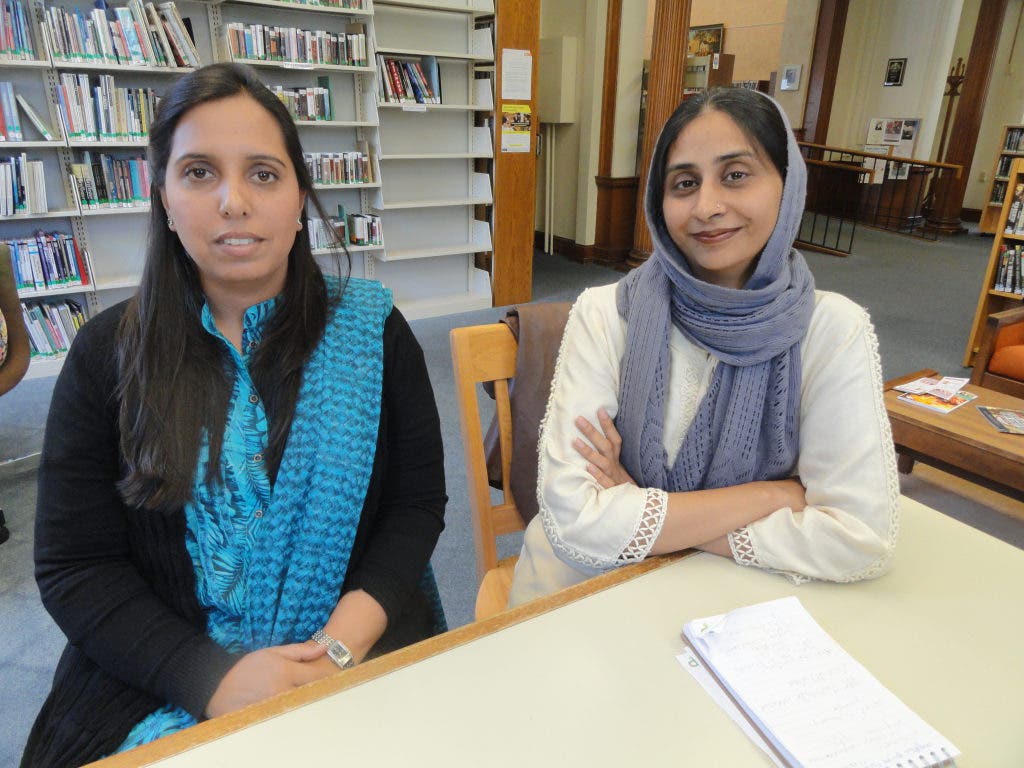


Uzma Naz wants to meet Hillary Clinton while she is in the United States. Saddia Hussain was hoping to connect with Michelle Obama.
Those meetings probably won’t pan out for the women while they’re here, but it wasn’t their main objective.
Naz and Hussain are among 14 Pakistani officials who responded to an ad in one of their newspapers to visit the States—Massachusetts specifically—as part of a collaboration between the Massachusetts Municipal Association and the United States Education Foundation in Pakistan. Others from the group stayed in Framingham, Medford and Brewster.
Find out what's happening in Westboroughfor free with the latest updates from Patch.
For nearly three weeks, these two women have settled in Westborough, in the middle of a more than month-long trip that will next take them to Wellesley next.
Naz, from Islamabad, is the assistant director of the Higher Education Commission. She works as a project manager for her department working to enable universities, formalizing and standardizing different programs and other activities in colleges across the country.
Find out what's happening in Westboroughfor free with the latest updates from Patch.
“This focuses a lot on entrepreneurship and student start-ups at different universities,” she said.
“We have centers where students come and have a place to start their business.”
Hussain is a gender expert on women’s rights, and explains her position as “trying to promote general equality in public sector policies and programs; I introduce gender reform to the mainstream.’”
She helped establish a gender resource center (one of only three in the country), and founded a committee that tries to get the word out to women about the opportunities they might not know exist.
Hussain and Naz have met with Westborough’s town officials and educators, and toured such buildings at the Senior Center, the schools, the library and the town offices.
Both said they’ve walked away with an overwhelming amount of information, and ideas that they’d like to introduce to the Pakistani system.
“I would like to visit a senior center in Pakistan and try to start some of the things I see here at the Senior Center," Hussain said.
"Here, women are engaged in skills and activities, and I like to see this type of thing. There are very few in Pakistan. There is one old age home … I’d also like to see all of those display boards I see here in our schools at home. It’s very impressive.”
“We are already working on an action plan,” Naz added.
“There are specific items we can work on when we get back. I will visit my school, and I will go to the principal and brief her about all of this and what I observed. I will go to the decision makers and have them understand what I have observed here and how they can collaborate and how we can all volunteer to make things better. We have to increase the knowledge of society members and how we all play a part. It’s community awareness.”
Both women are concerned with education, women’s issues and equality in Pakistan, a country that has long suffered inequality, but has also welcomed remarkable improvement. Naz mentioned the Women’s Protection Bill passed in 2006, an anti-harassment act in 2010, and a bill in 2011 that would punish those who force women into marriage. Pakistan, too, has elected a female Prime Minister, twice. Naz said that women have long had jobs such as doctors, nurses and air force pilots, as well as executive seats, in Pakistan, but the areas of electrical, mechanical and software engineering are growing.
“Civil society is getting stronger," Naz said.
“Our ambassador for the United States is a very brave woman. We have many role models; the challenge we face is education.”
Hussain added that both extensively use the media in Pakistan to get their voices heard. When asked about media constraints or oversight, Naz laughed and said, “We’re not China.”
Both women exude a quiet confidence, but are also outspoken, well read, and seemingly fearless in their opinions. Still, they admit they face resistance and oppression in Pakistan.
“I have faced much resistance,” said Hussain, “especially from public sector officials. We are very brave persons, and you would be amazed to listen to what we listen to, but I am not afraid. It’s very hard work working on gender issues. I’m alone in my unit.”
“I may write into the newspaper or start blogging to transfer my knowledge,” Naz said.
“I’m very brave. At home, there is no fight. But in society, we do face resistance.”
While Pakistan’s constitution places no constraints on women in political roles (in fact, Hussain said 33 seats are reserved for women), there are still large gaps in equality in both the private and public sector. Cultural attitudes, as well as geography, are the bigger obstacles toward equality, said Hussain. Women in urban areas are not as sheltered, and are aware of more opportunities, particularly educational.
“Women are doing so excellent, and they are topping the merit list,” said Naz, who adds that all the male members of her family are incredibly supportive of her. “We have to reserve spaces for males, now. If you don’t reserve for the men, women will take them all.”
Hussain argues that women are much more empowered than they were, say, ten years ago.
“They work among many powerful men, and I think the men are jealous and are afraid if we have more power,” she said.
Still, Naz, Hussain and many others involved in education and government in Pakistan insist that there are many changes that can, and should, be made.
“The basic problem is education in Pakistan,” said Naz, adding that only two percent of taxes is marked for education. “We don’t have the resources that you do in America, such as investing in libraries. It’s all about money. Even if a child gets into a school, they can’t train them or keep them because of lack of resources. We have all the problems you can think of. The dropout rate is much lower here. The demand for education is in Pakistan, but when they go, they just can’t keep them. Every family wants their kids in school.”
“The way of teaching here is really good,” Hussain said.
“There are a lot of things we are missing. The teacher student relationships are great.”
Naz said not only is education hard to come by, but the style is “much more regimented” than what they have witnessed here. Naz described it as “strict,” rather than allowing the student to challenge a teacher, form opinions or think abstractly. In Pakistan, it truly is “reading, writing and arithmetic.”
In Westborough, she talked with members of the school committee about fundraising, something she envisions happening someday in Pakistan. But now, “community and school are two different islands, basically, and only through community … through members of society … can improvement like that happen.”
When asked what Pakistan’s general impression of America is, Naz said, “The family would say they would love to come to America to study. But the policies in every country have to be reconsidered. It’s not becoming a good place to live anywhere. Our day-to-day lives are affected by everyone’s policies. It’s a backlash. Our countrymen, they are being killed and paralyzed every day. There is not a single day that lives aren’t lost, and we need to rethink the old academic ways, and get together.”
Naz has visited the United States before. It’s Hussain’s first trip to the states.
“I have found people very friendly and give a helping hand, and people give you space,” she said.
“I have only one fear, and that is that I can’t learn as much as I think I need to learn here.”
“Believe me, we have a mountain of problems,” said Naz, “and we don’t know where to start, but we will definitely do it. This is an excellent opportunity and we are so grateful for it. We have seen so much and absorbed so much and we’re eager to transfer it when we get back.”
And they are having some fun while they are here, trying to find some time to shop (they did make it to the Wrentham Village Premium Outlets), explore Boston, enjoy restaurants and take in some community events and theatre productions.
“The more we miss our families, the more we go shopping,” Naz said.
Get more local news delivered straight to your inbox. Sign up for free Patch newsletters and alerts.