Politics & Government
Sean Ryan Wants Boston Redevelopment Authority Dismantled
Boston Teachers Union member would've voted down Boston Fire Department contract.
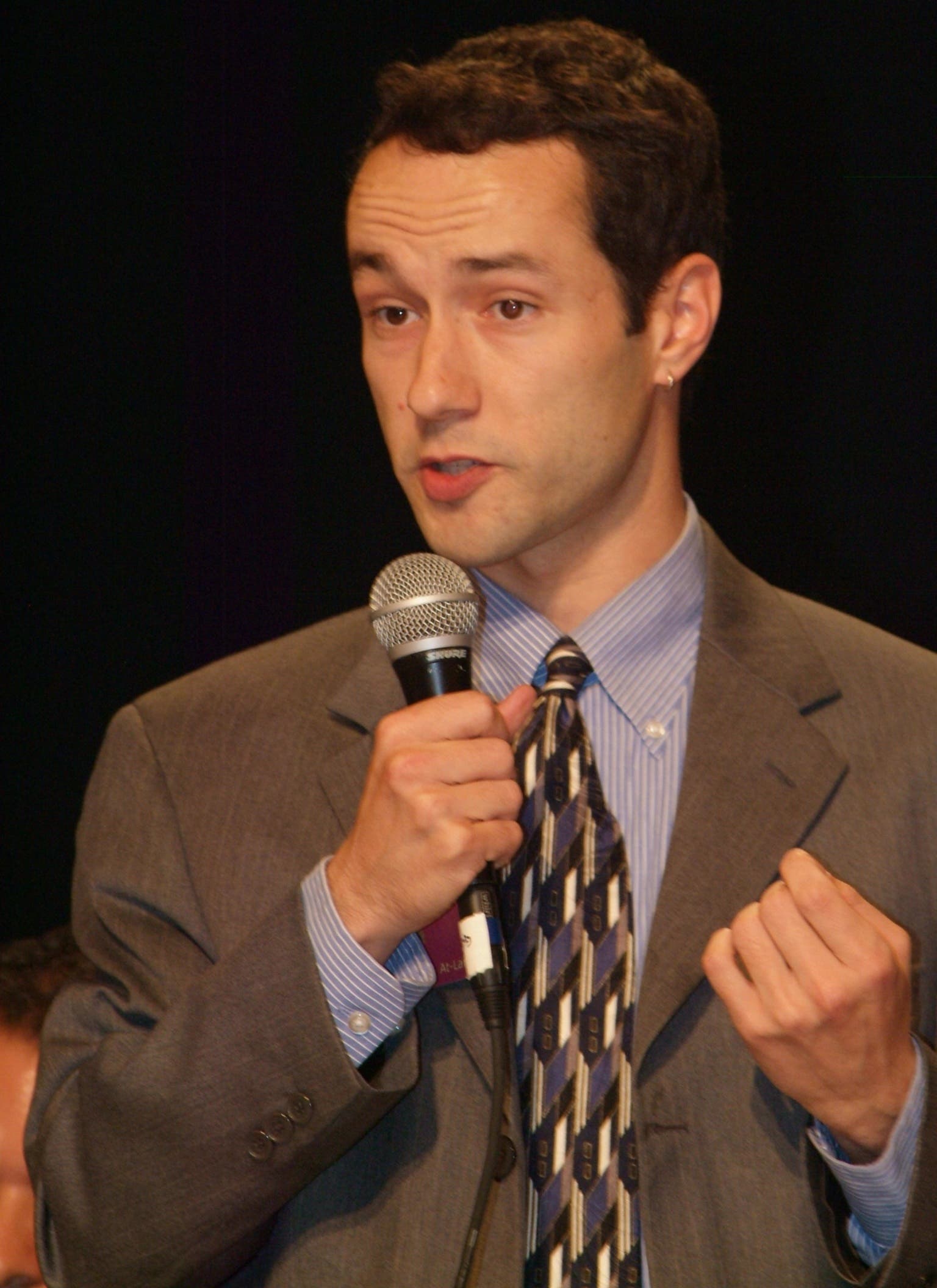
Sean Ryan is one of five candidates running for the vacant Boston City Council District 6 seat. Former City Councilor John Tobin stepped down in August. There will be a special preliminary election on Oct. 19 to get down to candidates. The special election to select the District 6 councilor will be on Nov. 16. District 6 includes West Roxbury and Jamaica Plain.
What is the number one issue facing the city of Boston?
The state of the public school system (coming in second and third: balancing the budget during a prolonged and serious recession; and creating lasting solutions to the violence and drug problems in our neighborhoods).
Find out what's happening in West Roxburyfor free with the latest updates from Patch.
What is the number one issue facing West Roxbury?
The state of the public school system.
Find out what's happening in West Roxburyfor free with the latest updates from Patch.
What experiences in your private or work life have prepared you to serve on the council?
I have spent over half of my life in the Boston Public Schools, as a student, volunteer, teacher and BTU member. I have an accurate sense of the problems in the schools. I believe that I understand the concerns of parents, and my experiences will lend credibility to my suggestions for reform. I cannot be painted as out-of-touch or biased on this issue. I am advocating ideas with which a majority of Bostonians (of all races and classes) now agree – and that could be implemented speedily, were it not for the natural inertia of government activity.
Would you hold regular office hours with district residents?
Yes. I will have a district office, I intend to be out of City Hall and in my district every day, for as much time as possible. Modern communications technology allows a councilor the privilege of spending much of her time in the neighborhoods – with neighbors, business owners and constituents.
Which current member of the council do you think your votes would most resemble?
My voting record will be unique, because my political philosophy is unique. But because I am "different," I will be able to build coalitions between councilors of varying political outlooks and sensibilities. These coalitions will change, depending on the particular issue being addressed. I will not vote down the line with any party or interest group, but always in the interests of the people of Boston, and with the utmost regard for the opinions of the people of my home district.
How would you have voted on the Boston Fire Department contract?
I would have cast the second "no" vote, joining Councilor Turner. Although I disagree with Chuck on many important issues of economic policy, in this case I believe that government simply cannot afford to spend more of the people's money – at a time when the people themselves have less money to spend. We are in a serious recession; these are not normal times. As a member of two unions, I support the collective bargaining process and I will defend union members from unilateral reductions in benefits they have received through previously-concluded good faith negotiations; but as a councilor, I must represent the interests of all Bostonians – residents and union members alike.
Which city program or agency is most in need of protection from cuts?
The public school system. We must not make any cuts that adversely affect the quality of our children's education. But in order to improve the schools without raising taxes or fees, we must be willing to reallocate resources away from a downtown bureaucracy – which has had four decades to implement permanent reforms in the system – and back to semi-autonomous, largely neighborhood schools, which will be controlled by principals, parents, teachers and students.
Is there waste in the city budget? If so, where?
The BPS transportation system serves little educational purpose and should be phased out over time. Simply put, we can spend these 80 million dollars more effectively. Accounting for roughly 10 percent of the BPS budget, busing policies have failed to integrate the schools, which are now segregated along racial as well as class lines. If we are to have permanent improvement in the schools, we need to invite the middle and working classes to attend our public schools again. Neighborhood schools for those who want them (including a reform of the school assignment lottery) will do the most to attract young families, who will be more likely to stay in the BPS, and stay in the city. We can't afford to continue alienating the people whose property taxes pay for the school system. We should provide as many options as possible for parents, including charter schools and city-wide magnet schools, along with neighborhood options.
What do you think of Mayor Menino's administration? How will you work with him on district issues?
I respect the Mayor's management abilities and admire the many successes the Mayor has achieved in the areas of elderly affairs, small business ownership (Boston Main Streets), and youth violence prevention. I will work with the Mayor to improve the schools, a goal that we have in common.
Did you vote for Thomas Menino or Michael Flaherty in the election last fall?
I prefer to keep my voting record private, in the spirit of the secret ballot. I'll have to keep that one between me and my guardian angel.
What should be done to improve the Boston Public School system? Did you support the state's recent education reform package?
One immediate step that could be taken to improve the lot of over 8000 kids and their parents would be simply to do away with the cap on the number of charter schools allowed to operate in Boston. Charter schools are funded by government, and they are therefore a public service. It is unfair arbitrarily to provide a public service to some citizens and not others, and the cap is no excuse for this disparity. Should we have a cap on the number of stop signs, so that only the lucky few are able to have them on their streets? I am not in favor of charter schools, per se – but I believe that any parent who would like access to a charter school should be given access. Not to do so is unfair, and possibly illegal. The state's reform package, although probably a step in the right direction, does not address the root cause of the problems in Boston's public schools – the abandonment of the system by a large number of middle and working class families.
Does the MBTA serve Boston and District 6 well? What public transportation changes would you work to achieve?
The MBTA operates inefficiently. It does not cover costs with revenues, and is bailed out by each year via state income tax revenues. It is my opinion that agencies providing a general service of this kind should be able to break even each year. A major drag on the MBTA's finances is the $405 million the agency spends each year on debt servicing – out of a total budget of $1.62 billion! Roughly one in every four dollars that the T collects goes to pay interest. The only sensible reason for any individual or enterprise to go into debt is in order to increase future productivity/profitability. Improvements like the automated fare collection system installed in 2006 have failed to yield improved profitability, which would have translated eventually into lower prices. We need to make the T pay its expenses out of the voluntary contributions of those who use its services – this will force the T to act like a business, and to serve its consumers efficiently.
Is there an "epidemic" of violent crime in Boston? How would you address public safety city-wide and in District 6?
There is an epidemic of well-intentioned but failed drug and violence prevention policies. Our court systems are clogged with non-violent drug offenders, and a significant portion of organized (gang) crime and violence is drug-related. The BPD should de-emphasize enforcement of certain drug laws, drug addiction should be decriminalized and treated as the health problem it is, and drugs like marijuana should be legalized and regulated like other potentially harmful, but legal, substances (nicotine, alcohol, etc.). When our city declines to take part in an expensive and failed "war" on its own citizens, we will have more money to spend on sensible solutions: officers will walk and be on bicycle beats again, making sure that no one in a highly-trafficked area of the city is ever out of earshot of their friendly, neighborhood police officer. Community policing will be more effective when law enforcement is not persecuting people for non-violent private activities, and in some cases for an unfortunate and serious health problem. Boston can take the lead on this issue, and our people will be better off.
Does the Boston Redevelopment Authority work well for the city? Should it be reformed?
The BRA no longer serves the purpose for which it was created (urban "renewal"), it politicizes and delays the development process (resulting in higher construction and therefore housing costs), and should be dismantled in favor of simplified, realistic and community-approved zoning rules. Only large developments should be required to submit their plans for approval in advance, while small home-improvement projects and the like should be scrutinized only if in possible violation. We don't need to centrally plan development. The most beloved neighborhoods in Boston were created through sensible laws and private initiatives. We need simple rules – the market will take care of the rest.