Politics & Government
Capital Planning Committee Discusses GIS Mapping and ADA Plan
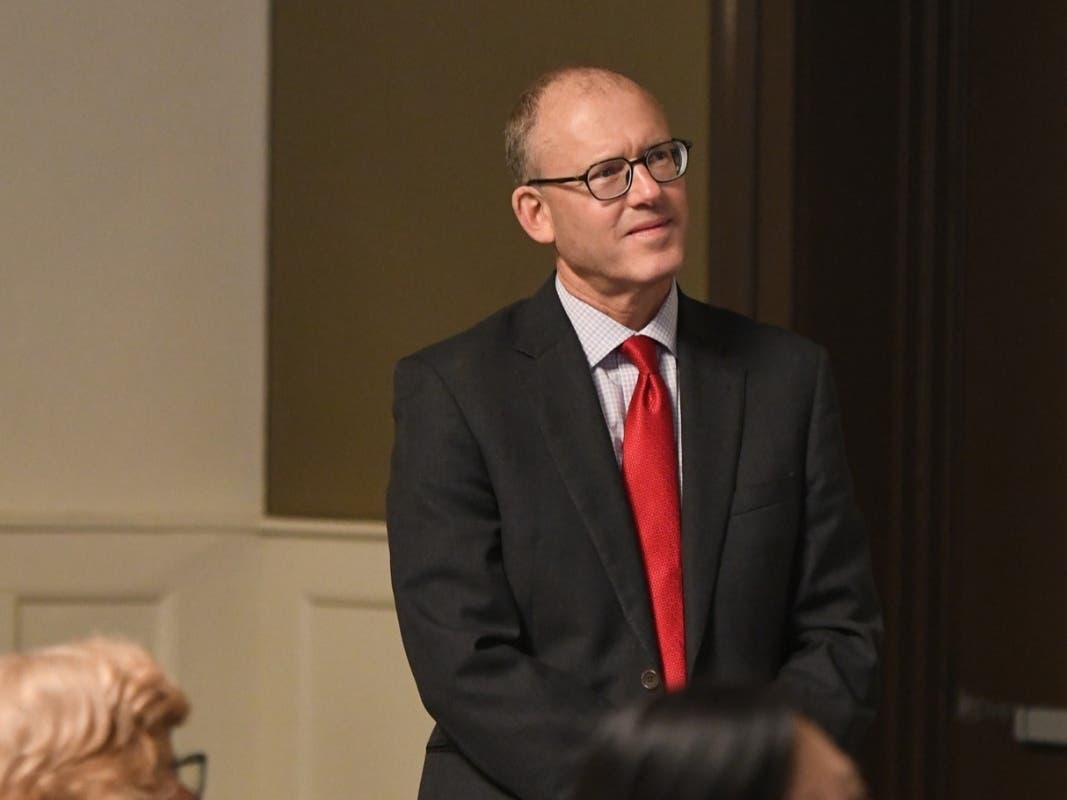
According to Beth Rudolph, the town needs to have a GIS flyover to update the town's maps.
The Capital Planning Committee met Wednesday night to discuss the need for funds for a GIS mapping software, which was brought in front of the board by Beth Rudolph of Winchester's Engineering Office.
Rudolph explained that the GIS mapping software is used by the town's Engineering Office to geographically define Winchester. The GIS software also aids in parcel tracking, re-defining old and out-of-date maps, defining property lines, calculating water and sewage flow and a host of other implementations including data mark-ups and general information gathering.
Rudolph explained that the GIS needs to take aerial photos of the town every decade in order for the maps to stay current and useful. Added to this, there is a digital rendering cost for creating the maps. Upping the cost is also the fact that the photos must be taken at a certain time of year. Rudolph cited April as the prime month.
Find out what's happening in Winchesterfor free with the latest updates from Patch.
Rudolph requested $71,200 in funds in order to update the old 2001 aerial photos - $27,000 for capturing the photos and $44,200 as costs to digitize the maps.
Board member Richard Kazanjian was dissatisfied with the GIS software costs and thought it was never properly explained to the board the last time funds were requested.
Find out what's happening in Winchesterfor free with the latest updates from Patch.
Rudolph responded by defending the project, claiming that, although the public may not have such a need for the expensive software and operation, it's invaluable to the Engineering Office for data gathering and performing necessary tasks.
The Board seemed concerned over the continuing costs of the constantly changing, moving target project but Rudolph ultimately convinced them that the project was needed, otherwise problems concerning the Planning Board, building new projects and determining general housing information in terms of property lines, additions, zoning, etc. would result.
The second major issue the Board raised was looking over fellow Board member Betsy Cregger's report on ADA Compliance – a project to add more handicap access around town for disabled citizens.
Her addendum said, "[ADA is] recognized as an overall planning and maintenance program effort, these programs benefit almost every Winchester citizen at some point in their lives, whether being disabled temporarily or permanently." The document also stated that the Board thinks the ADA Compliance is necessary in order to "due the right thing" for Winchester.
The project is a long-term affair, spanning over 10 years. Most pressing, the town must hire an ADA Coordinator to oversee the project.
Capital Planning recommends $125,000 to be allocated from capital for 2012 for general and specific ADA projects. These include two major projects: an elevator and lifts at the Mystic School and developing more refined cost estimates of varying projects in coordination with the ADA Coordinator.
The stated costs the Board discussed are just rough estimations however, as a true price tag can't be allotted to the project until an ADA Coordinator is hired and finds and examines everything the town needs to adhere to as stated on a C3 Report issued by the Disability Access Committee.