Community Corner
In Winchester, The Budget Numbers Tell A Bleak Story
Town starts override discussion leading to expected vote on March 26.


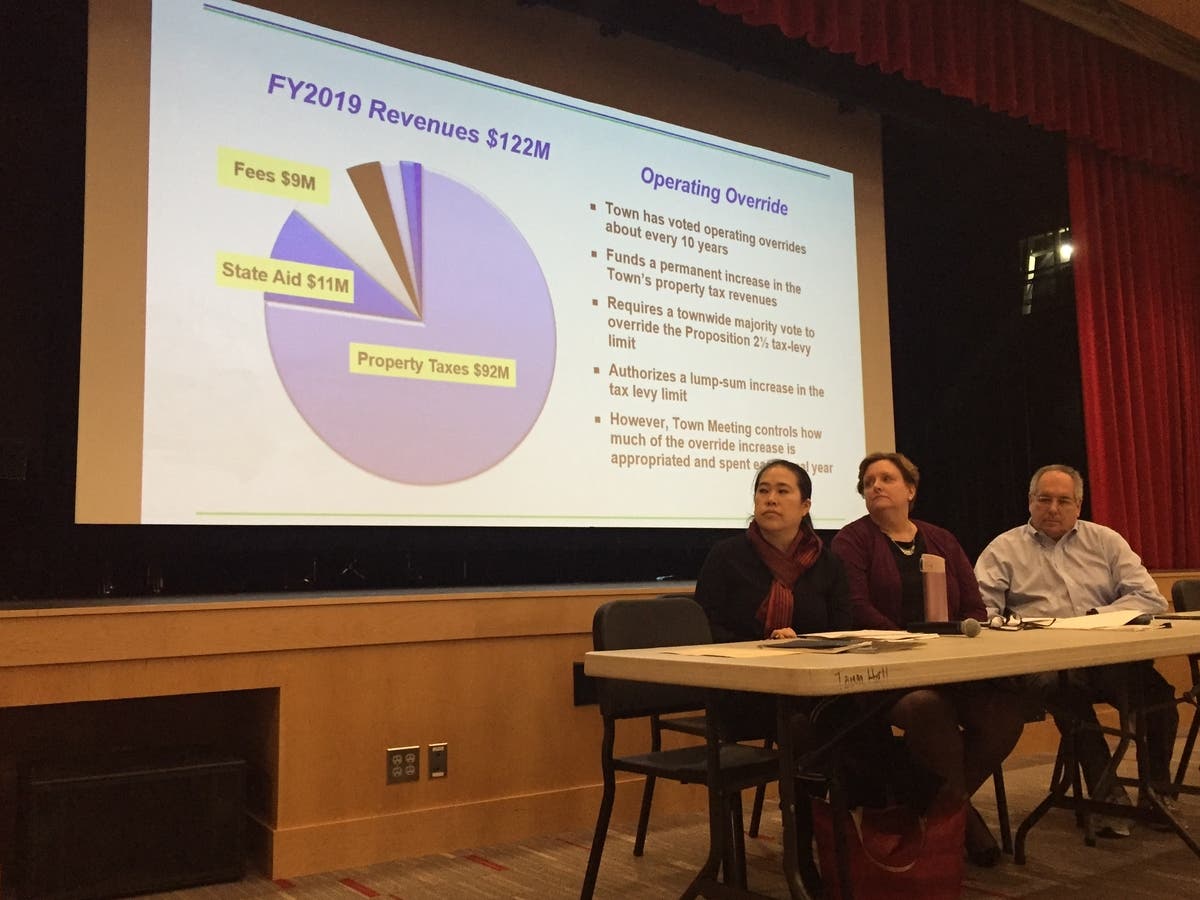
Winchester may be the best place to live in Massachusetts but the budget presentation in the high school auditorium Thursday night showed the town isn't immune to major economic challenges.
Just two weeks after a national website crowned Winchester No. 1, residents gathered to hear its leaders talk about a March override. After years of covering shortfalls in the budget, Winchester can't dip into its savings any longer.
"It's not fun telling people that we need to take more tax money out of their pockets," said Select Board chair Lance Grenzeback. "We've basically been scrimping for the last 7-8 years."
Find out what's happening in Winchesterfor free with the latest updates from Patch.
The last override in Winchester was 2008 and the only question about 2019 is how much the town will ask for in the March 26 vote. The estimate Thursday was $12 million with $10 to support the operating budget, $2 to replenish the capital and building funds. The Select Board determines the final figure and that will be done in early February.
From the outside Winchester may seem special, but from the inside the town is facing a budget shortfall for reasons shared by other towns across the Commonwealth. Property tax revenues, which make up 75 percent of the town's revenues, are capped at 2.5 percent. But expenses are going up roughly 5 percent and for many of the costs there's little town leaders can do. For years Winchester has found a way to make up the difference. Those days are apparently over.
Find out what's happening in Winchesterfor free with the latest updates from Patch.
Of Winchester's FY2019 budget of $122 million, $50.5 millions went to schools. It was said Thursday that education is Winchester's major industry, with a school population of 4,700 students that has grown by 17 percent over the past 10 years.
According to School Superintendent Judy Evans, if the override fails, 15-18 teachers will be laid off with most at the elementary level. Other possible cuts or increased fees would include afternoon buses, music, athletics (possibly reducing the number of teams), reductions in books, increases in class sizes, and a reduction in course offerings at the high school.
Remember that national website? It said, "Winchester is the best-educated place in Massachusetts and one of the most highly educated in the entire country." The same town with so many educated adults will decide in March whether that benefit extends to their children.
Town manager Lisa Wong is just three months into the job and must craft two budgets, one with an override, one without. Without an override, what was referred to as the Austerity Budget, the town cutbacks would hurt police and fire and reduce response time to emergencies. Any further cuts in police staffing and the town would be below the recommended level for its population of nearly 23,000.
Much of what Wong said was echoed by Roger McPeek in the capital budget. No override means road repairs, bridge repairs, and school repairs are all delayed. And the ADA and Highland Ave/Main Street intersection reconstruction would be off the table. Delaying work that eventually must be done only increases the cost to the town according to McPeek, a member of the Capital Planning Committee.
"Well feel more potholes," said McPeek.
But with the override, home owners will also feel a tax increase, with an estimate of around $1,000 to $1,100 in the first year for many.
Thursday was the first of a series of informational meetings leading up to the expected override. The next is Feb. 7 at the Jenks Center, followed by a Special Town Meeting on Feb. 11 back at the high school. On Feb. 15 Wong will submit her budgets to the Finance Committee.
Photo by Bob Holmes
Get more local news delivered straight to your inbox. Sign up for free Patch newsletters and alerts.