Community Corner
Founder of SCI Looks to Take ‘Social Capital’ Model National
David Crowley incorporated SCI in 2002.
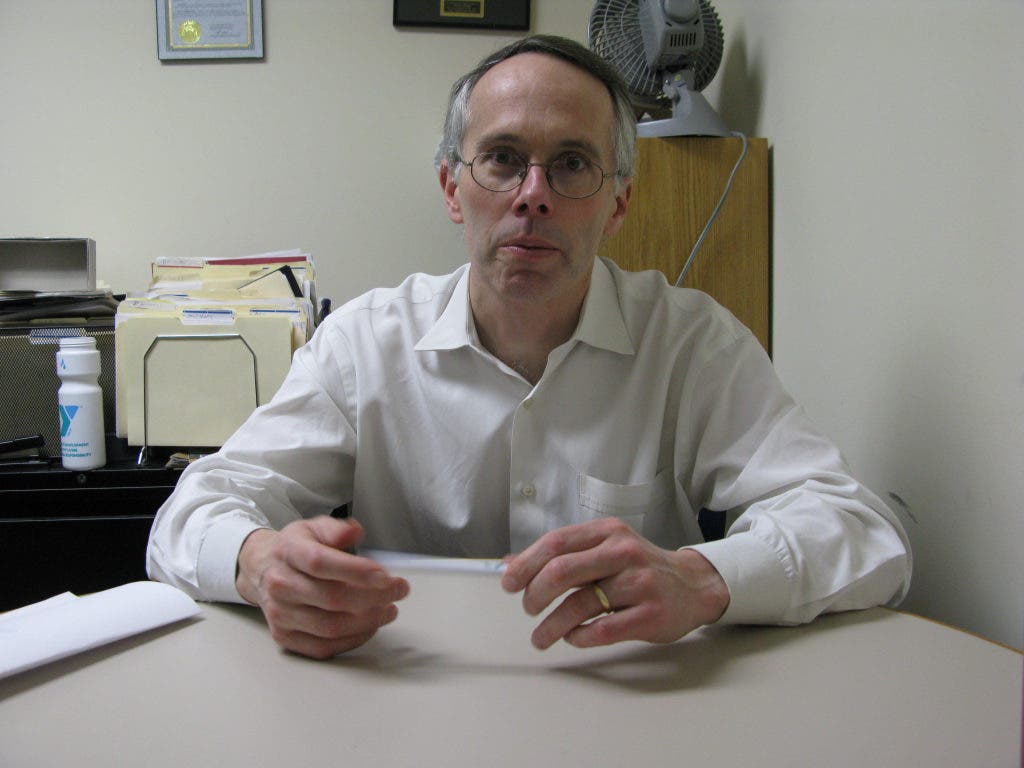
After college, David Crowley wanted to do a year of community service somewhere other than and different from Woburn-Cambridge-Boston.
But where?
He thought about joining the Peace Corps.
Find out what's happening in Woburnfor free with the latest updates from Patch.
Seeing needs stateside, he chose to go to Kentucky. He worked for what turned into five years there. He started an outreach program to give teens skills to make a difference in their community. Their first big project: Thanksgiving for elders who lived alone. When AmeriCorps started in Kentucky, he ran the program at the state level.
Find out what's happening in Woburnfor free with the latest updates from Patch.
Coming Home
In the late 90s, he and his wife, Jodi, returned to his hometown of Woburn. Two key things happened to him. Crowley said he found “a lot of barriers to getting involved in a meaningful way” in community organizations.
And Crowley read the book, “Bowling Alone” by Harvard professor Robert Putnam. Crowley is a 1991 graduate of Harvard College. He majored in government.
The premise of Putnam’s book, Crowley explained, is that both individuals and communities benefit from something called social capital—connections and interaction between people.
“We need community,’” Crowley said. “We need each other.”
“I literally put the book down and said, ‘I’m going to do something’ about this."
SCI Is Born
In 2001, Crowley began to create SCI brings together volunteers and community groups to encourage all city residents to participate in the life of the community.
Its mission: “to strengthen communities by connecting diverse individuals and organizations through civic engagement activities.”
More social capital means safer, healthier and more vital communities, according to Crowley.
SCI will soon be 10 years old.
Expanding Nationally
Crowley’s looking to take the concept to several sites across the country. He’s working on a proposal to work with Tufts, which has, he said, a nationally well-regarded group that works on the issue of youths getting engaged in their communities. He’s looking to partner with organizations in several locations, including Chicago, San Antonio and Minnesota, by this coming September. A Chicago connection looks “fairly solid,” he said.
Civic engagement can mean arranging during the summer or for a second police officer in a community shot in the line of duty in a year or starting a Those are some of the activities SCI has sponsored or supported in Woburn.
Social capital declined, Crowley said, from the 1960’s to 2000. During that period, fewer people joined civic organizations, according to the SCI president. Voting rates dropped. So, Crowley said, did church attendance. In contrast, around 100 years ago, during the Progressive era, Crowley said, a number of community organizations, like the YMCA, Rotary and Kiwanis were founded.
What SCI Does
Crowley admits he had no blueprint for SCI when he founded it.
Early on he decided that one priority should be teaching young people “the importance of being involved in their communities” and how to be leaders. An early SCI program, a youth council, “flourishes” today, he said, with about 30 members.
SCI gets youths to talk about issues that are important to them, Crowley said. One group focused on hunger. The group learned that the local food pantry tended to run low on nonperishable supplies in the summer. They developed strategies, Crowley said, to connect with their neighbors and collect supplies.
SCI is also focuses on “using technology for social good,” Crowley said. SCI put up its website in August of 2002, when sites were scarce.
Fellow social media user Rev. Keith Anderson, pastor of the Lutheran Church of Redeemer in Woburn, likes the way Crowley and SCI use social media to connect to people in the community. One example: setting up the candlelight vigil. SCI also believes that live, face-to-face contact is important. Crowley pointed to a organized by SCI in Woburn this fall.
More personally, Anderson commends Crowley for "sharing his life as a Woburn resident and painting a picture of the community" with his firsthand accounts from around the city, from the Y, for example, or Horn Pond.
"What I admire" about Crowley, Anderson said, "is the way he lives his life," in synch "with the mission of the organization" he founded, which is "to nurture relationships and build community."
At the same time that Crowley lives "a local Woburn life," although he is, Anderson said, "a nationally recognized leader" in the subject of social capital.
When Crowley started SCI, he was its only employee for the first year. Then the staff doubled—to two people. Now the organization employs four staff, including Crowley, and 16 full-time AmeriCorps members, spread out among five locations. AmeriCorps is SCI’s biggest source of funding, Crowley said. SCI also holds a number of fundraisers, including in Woburn decorated for the holidays. This year the tour is on Sunday, Dec. 4.
At Home...
Outside the office, Crowley likes to cook. He writes a food blog. He and his wife, who works at the in Woburn, as member relations director, have a six-year-old son, Brendan, a first-grader at the Crowley graduated from in 1987.
What would make Crowley happiest, social capital-wise?
Having people in communities across America “feel they have a part to play” in their communities, he said, “and work to make that happen.”