Politics & Government
Conflict In Ukraine: Clark U Russian Politics Expert Explains
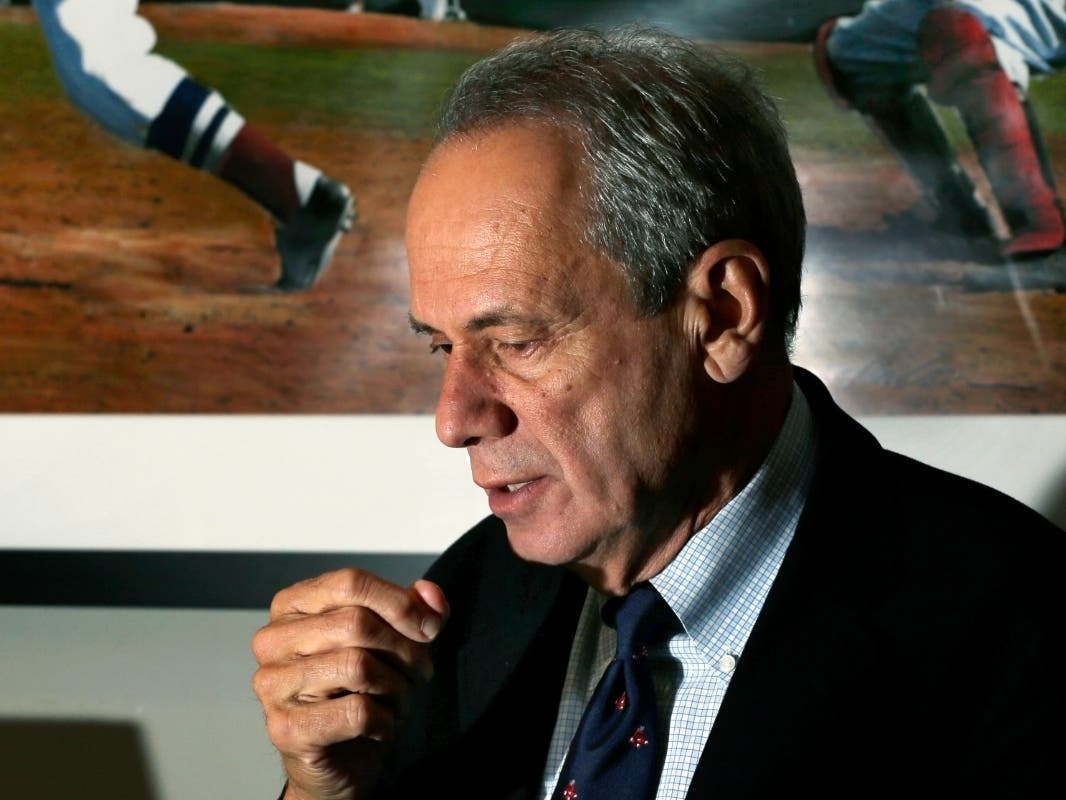
Clark University professor Valerie Sperling explains the origins of the Russia-Ukraine conflict and why Vladimir Putin's attack is a shock.


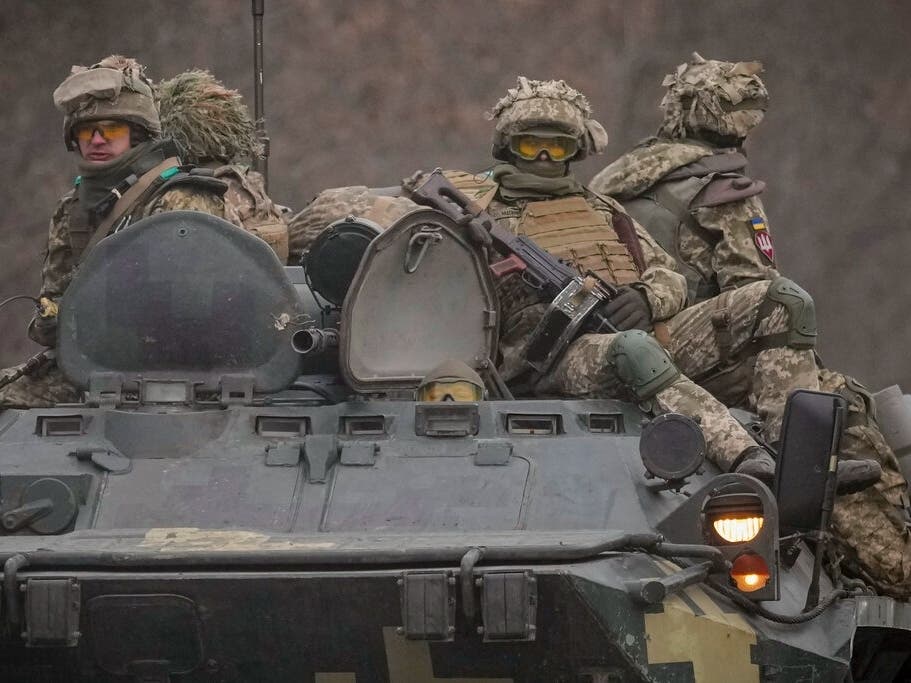
WORCESTER, MA — Russian President Vladimir Putin's military buildup along the Ukraine border a few weeks ago seemed to have at least have some rationale.
At the beginning of February, it appeared Putin may have been stoking conflict to prevent Ukraine from entering NATO, the post World War II security alliance. But weeks later, Putin's attack on Ukraine — what some are calling a war — now appears irrational, according to Clark University professor Valerie Sperling, who studies Russian politics.
There don't appear to be any real goals with Putin's attack, she said, except a march toward rebuilding Russia's historical borders.
Find out what's happening in Worcesterfor free with the latest updates from Patch.
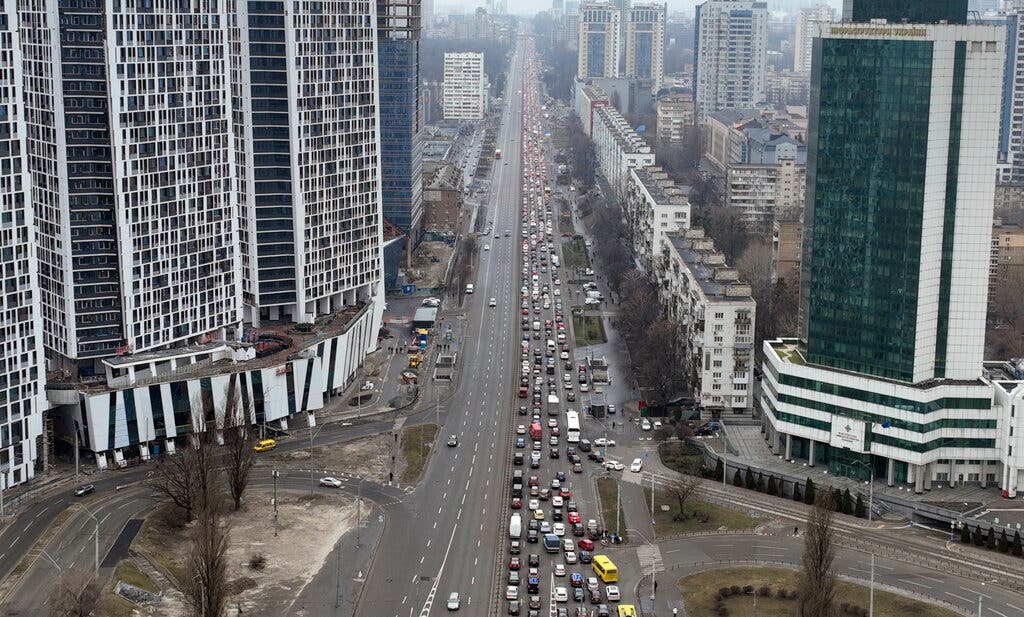
On Thursday, Russia launched a broad attack against Ukraine, hitting the capital Kyiv and other large cities like Odessa and Kharkiv. The U.S. and Britain announced a new round of sanctions in response.
Sperling, author of the recent book "Sex, Politics, and Putin: Political Legitimacy in Russia," spoke to Worcester Patch about the recent origins of the conflict, what may happen next and why this could be the closest the West has come to conflict with Russia since the Cuban missile crisis.
Find out what's happening in Worcesterfor free with the latest updates from Patch.
Patch: Can you explain to people living here in Massachusetts the origins of the conflict between Ukraine and Russia?
Sperling: In 2014, there was a Russia-sponsored separatist rebellion in the eastern provinces in Ukraine and around the cities of Donetsk and Luhansk and the annexation of Crimea. Since that time, there's been this frozen conflict. I don't mean that there hasn't been any military interaction, but for the most part, this was just acknowledged in Donetsk and Luhansk as an ongoing conflict. As of a month ago, Putin was saying he did not want Ukraine to go into NATO.
In the Soviet days, there was the Warsaw Pact, which was the communist countries' military alliance. Then there was NATO. After the collapse of communism, the Warsaw Pact went away and most of the countries in Eastern Europe became members of NATO. Putin has been saying that he was concerned that he didn't want Ukraine to go into NATO because it would be right up on Russia's borders.
Was Ukraine close to joining NATO?
It appeared that his buildup of forces was some kind of intimidation tactic to prevent Ukraine from going into NATO. But the fact is, Ukraine was not on the verge of entering NATO. That's at least in part because of that frozen conflict in Eastern Ukraine. NATO is not in the habit of accepting countries that have territorial disputes going on. By annexing Crimea, by sponsoring this separatist conflict in Eastern Ukraine eight years ago, Putin already got his guarantee that Ukraine was not going to go into NATO.
You recently talked about how Putin might be escalating the conflict to draw Europe and the U.S. into some kind of negotiation. Is that why we're seeing this attack on Ukraine?
I'm not sure what the negotiation would be other than to stop attacking [and] pull the troops out of Ukraine. That could still happen. The U.S. did move thousands of troops to Romania and Poland in recent weeks. And maybe that can be a bargaining chip.
I think after the invasion begins, I'm not sure what Putin would really want to negotiate about. I suspect at this point he might want regime change in Ukraine; even that, honestly, doesn't make that much sense to me. [Ukraine President Volodymyr Zelenskyy] was not really a thorn in Russia's side.
I'm not sure what the point of regime change would be. I'm sure it would turn practically the entire population of Ukraine against Russia for installing a pro-Russian president. I think it's going to be very difficult because that person wouldn't have any legitimacy or any support unless Russia is going to occupy Ukraine, which again is not going to be a cakewalk.
What could be Putin's goal here then?
I think [that] many of us, including me, assumed Putin was making a rational calculus. That he would have seen that the costs of invasion would be unacceptably high for Russia and for his regime. Now, it looks more like he was not making a rational calculus. He has a somewhat irrational goal: It's an obsession with re-establishing what he calls the historical Russia.
[Imperial Russia in the 19th century includes nations like Finland, Poland, Lithuania, Latvia and Estonia.]
For him, I think the crux of the matter would be staying in power. I suspect the invasion puts that at risk, because it's not going to be popular with Russians. The Russian people do not want war and they certainly don't want war with Ukraine, where a lot of people have relatives and friends. These two countries are very close.
And they are not going to want to see Russian body bags coming home; they're not going to want to see people dying in Ukraine, either. But in order to convince Putin that they feel serious enough about this, I think Russians will have to go into the streets in really large numbers.
But there's not a tradition of massive protests in Putin-era Russia, right? Before the Iraq war in 2003, hundreds of thousands of Americans protested, and that didn't stop the war.
It's a dictatorship. It's been an authoritarian regime over the last 10 years. There were Russian Parliament elections where there was quite a bit of fraud in 2011, and there were big protests. The media focused on Moscow and St. Petersburg, but there really were popular protests across the country.
But the regime has cracked down on freedom of speech, freedom of assembly, freedom of organization. There are enormous penalties for participating in an unapproved protest. People have been thrown in jail recently for something as defiant as using a red exclamation point in a social media post because that's the symbol of [Putin opposition leader Alexei Navalny's] Smart Voting campaign. So the fear that most Russians would feel at the prospect of going into the streets is very significant.
I think there have been a number of protests so far. There was a protest of about 150 people in Parliament that was quickly dispersed by the riot police. I haven't yet heard about anybody protesting in Moscow or St. Petersburg, but that doesn't mean it hasn't happened.
Is what's going on in Ukraine in fact a war, or is this something else, like testing the waters before all-out war?
It kind of looks like a war. You've got people going into subway stations to use as shelters. The Ukrainian army is fighting back as best they can. I think we're not getting a ton of information yet. All the evidence suggests that 20 or 25 Ukrainian cities have been attacked.
RELATED:
It's probably military installations being attacked. But I heard something on NPR that there had already been some civilian casualties registered. It sounds like war to me. We just have to hope it doesn't spread.
Some people keep talking about a World War III. But it wasn't a global showdown when the U.S. invaded Iraq. Do you think the Ukraine situation could go like that, where a superpower invades an effectively defenseless nation, but no other big nations get involved?
Hope dies last, right? I'm going to say that European states and the U.S. do not want to get involved with troops on the ground in Ukraine. Over the last few weeks, the U.S. has withdrawn troops. [President Joe Biden] has said repeatedly we're not sending Americans to go and fight in Ukraine.
Unless they decide to do something where Ukraine becomes an honorary member of NATO, which I don't think can be done, there's not going to be NATO troops on the ground, either. That's not to say the West, including the U.S., can't or won't send an enormous amount of military aid.
Is this about the closest the U.S. or the West has come to conflict with Russia since the Cuban missile crisis?
Both sides were involved in the Syrian civil war, and I think there was potential for some unintended conflict there. The U.S. and Russia had deconfliction processes going on to try to make sure nothing accidental happened. This certainly puts the U.S. and Russia in direct opposition to each other.
It really is scary, because Putin said that anybody who tries to get in the way of this is going to face consequences the likes of which their country has never seen. That sounds awfully like a nuclear threat to me.
Apart from nuclear weapons, what are the chances Russia will strike the U.S. with something like cyberattack or something that looks like terrorism?
I think that's more likely than nuclear war. I'm sure that when the U.S. imposes sanctions, there will be Russian countersanctions. Our sanctions on Russia are much more likely to have a significant impact on the Russian economy than anything that Russia can return.
It does go back to the Russian population. If the sanctions are such that they have an impact, not just on Putin but on his closest friends, on the Russian elite, and on the rest of the middle class and on the Russian population more broadly, then I think the barrier to protests will come down.
If the rest of the world lets Putin, for lack of a better word, take Ukraine, it wouldn't just end, right? Before World War II, other nations negotiated with Adolf Hitler to allow Germany to take pieces of other nations, but he didn't stop.
That's exactly the problem, because what this looks like is not just Ukraine. It's really threatening the whole [post-World War II] order in Europe, or the post-Cold War order.
Maybe in the U.S. we have the luxury and the privilege of not worrying that we're going to be taken over by Russian troops. But I think a lot of Eastern Europe and the former Soviet Union doesn't have that luxury right now.
What do you see in the near term for this conflict? What do you think might happen over the next few weeks?
A week ago, I didn't think this was likely to happen, so I can't even speculate. I would hope that somehow rationality will prevail, and Putin will stop the attack and pull back and return to the status quo. But I'm not confident about that.
Corrections: This story has been updated to reflect that countries near the Baltic Sea have joined NATO, and that Alexei Navalny founded the Smart Voting campaign.
Get more local news delivered straight to your inbox. Sign up for free Patch newsletters and alerts.