Politics & Government
DIA Millage Proposal Raises Delicate Questions for Suburban Voters on Aug. 7
Tri-county proposals spur debates over Detroit-suburbs ties, museum finances and property tax levels.
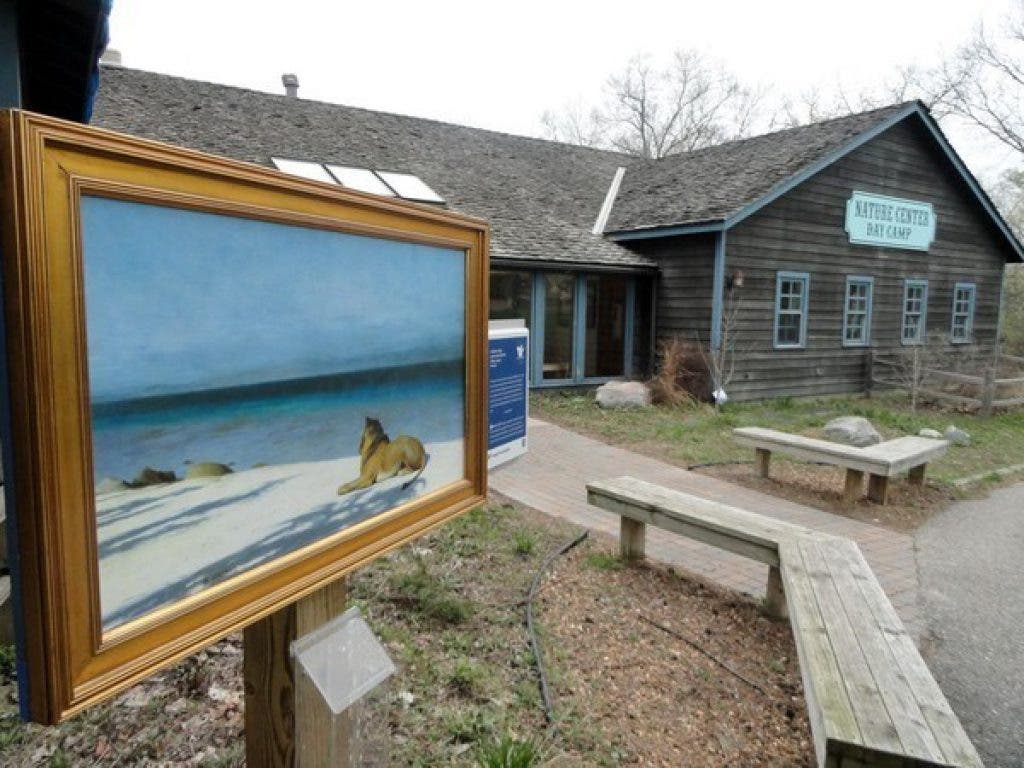


Editor's Note: This is the first in a two-part series exploring the issues and opinions surrounding the millage to support the Detroit Institute of Arts. Check back tomorrow for part II.
Mary Cassatt, Vincent van Gogh and Diego Rivera are among candidates for local support in Metro Detroit's Aug. 7 primary elections. A millage request by the Detroit Institute of Arts – the museum displaying their art – will be on ballots in Macomb, Oakland and Wayne counties.
Each county's elected commissioners this spring approved language for a 0.2-mill proposal to support the DIA as a regional resource. In addition to nominating candidates for congressional, state, county and local offices on Primary Day, voters will be asked to answer that yes-or-no DIA tax question.
Find out what's happening in Bloomfield-Bloomfield Hillsfor free with the latest updates from Patch.
An impassioned debate has begun to intensify, as it always does when property taxes and city-suburban relations are involved. The political landscape also is shaped by economic uncertainty and some communities' tax proposals for parks and recreation, public safety and education. Other countywide requests Aug. 7 include a .59-mill renewal for Oakland's Public Transportation Authority and a .04-mill renewal for Macomb veterans' services.
Facts and views about the DIA millage are summarized here:
Find out what's happening in Bloomfield-Bloomfield Hillsfor free with the latest updates from Patch.
Ballot language
The three county boards of commissioners this year established separate Art Institute Authorities, allowed under a 2010 state law, to submit the August millage question and monitor the use of funds if it passes. The four-sentence ballot wording (see attached PDF file) asks for a yes or no vote on a tax "to continue providing art institute services to benefit the residents" of the voter's county. The phrases "Detroit Institute of Arts," "DIA" and "museum" aren't used.
Tax impact
A levy of 0.2 mills means 20 cents per each $1,000 of taxable value. Property owners would pay $10 for every $100,000 of taxable value shown on municipal tax statements.
Duration
The 10-year tax would begin with December 2012 property tax bills and end in 2021.
Money for DIA
Voters will see one of these estimates of 2012 revenue to be generated: Macomb, $4.9 million; Oakland, $9.8 million; Wayne, $8.3 million.
In exchange, residents and school groups from counties approving the millage can visit the DIA anytime without a general admission fee.
Museum governance
Detroit owns the DIA’s collection, building and grounds. It transferred museum management last decade to a nonprofit operating authority, governed by a board of directors from the tri-county area.
Reason for proposal
"The DIA does not receive any funds from the state, city or county," the campaign's FAQ page states. "Elimination of all public funding for operations has required the museum to turn almost entirely to the private sector, an operating model that is not sustainable, particularly in the current economy."
Additional operating revenue for a decade is needed to avoid reducing the current DIA public access of 36 hours over five days each week, executives say. "An operating endowment of $72 million provides funding for approximately 20 percent of annual operations," millage campaign spokesman Bob Berg tells Patch.
Passage by all three counties, according to the online statement, "will allow an expansion of operating days and hours to better accommodate public and school groups. ... The museum's ultimate goal is to become financially self-sustaining ... [through] fundraising [that will] focus on building an operating endowment."
Impact of rejection
"The urgency of the situation requires success in all three counties for operational stability," the official statement says. "A DIA without millage support [in all three counties] will not be the DIA we know today."
The media handout suggests the possibility of "a severe reduction of museum services and programs," perhaps including the end of school tours and "opening selected galleries only on weekends." In , DIA director Graham Beal concludes: "The millage will help ensure that the DIA is around for future generations to enjoy."
The museum's TV ad campaign began June 26, as reported by Crain's Detroit Business. A half-minute commercial (attached to this report) uses the tagline "Art is for everyone –it's what we save for our kids." As museum scenes are shown, a narrator says: "Imagine this: special exhibits, school field trips, art workshops – gone. The Detroit Institute of Arts is at risk of closing its doors. But we can save it by passing a low-cost millage."
Those scenarios and emotional language are crafted as part of a campaign that also includes a website, Facebook page and high-caliber consultants from the Dewey Square Group, a national political advisory firm with a Grosse Pointe office, and Berg Muirhead and Associates, a Detroit public relations agency.
Come back to Bloomfield Patch tomorrow for a look at what people are saying about the proposal in part II.